Got raw deal in budget, no point in attending NITI Aayog meeting, says Deputy CM DK Shivakumar
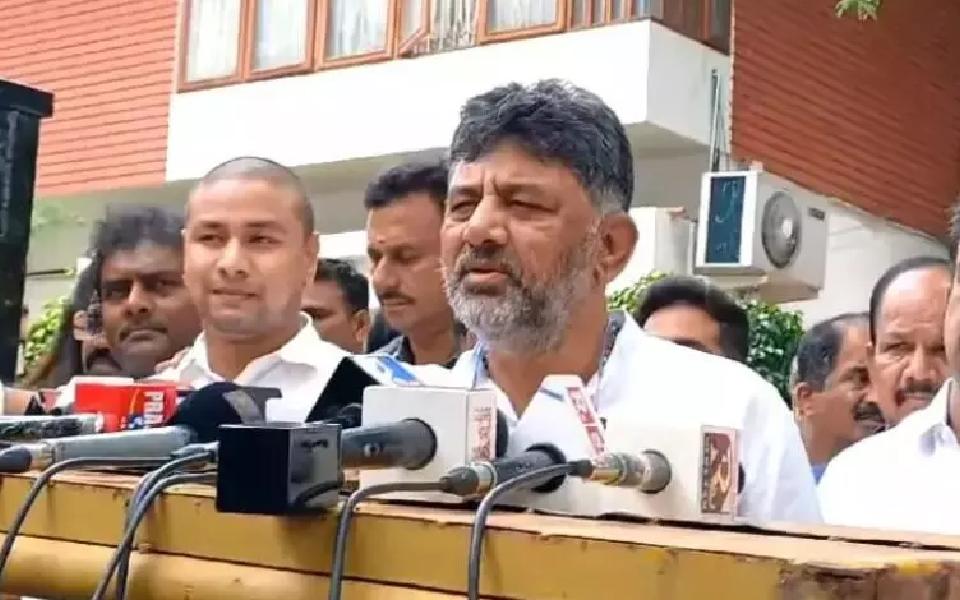
Bengaluru, Jul 24: Karnataka Deputy Chief Minister D K Shivakumar on Wednesday defended the Congress government's decision to boycott the July 27 meeting of the NITI Aayog, saying the State has got a raw deal in the Union Budget and its interests have not been protected.
Chief Minister Siddaramaiah said on Tuesday the decision was taken as a mark of protest against the "neglect" of the state’s demands in the Union Budget.
“What is the point of attending NITI Aayog meeting when it doesn’t have ‘neeti’? Karnataka has got a raw deal in the Union Budget. The State has not got any projects and its interests have not been protected. We have decided to boycott the NITI Aayog meeting and stage a protest instead,” Shivakumar told reporters here.
Siddaramaiah had said that despite his earnest efforts in calling for an all party meeting of MPs in New Delhi to discuss Karnataka's essential needs, the Union Budget has neglected the State's demands.
ALSO READ: K'taka to boycott NITI Aayog meeting chaired by PM, over neglect of state in budget: CM Siddaramaiah
"Finance Minister Nirmala Sitharaman, who attended the meeting, has ignored the concerns of the people of Karnataka. We don't feel Kannadigas are heard, and hence there is no point in attending the NITI Aayog meeting," the Chief Minister had said.
Meanwhile, when asked about the BJP's opposition to the proposed Greater Bengaluru Governance (GBA) Bill, Shivakumar said: “They are trying to politicise this. I don’t do anything in a hurry, I have only tabled it. Let them debate on it in detail and then take a decision. Bengaluru is growing in an uncontrolled way and it needs good governance.”
The Karnataka government on Tuesday tabled the proposed Bill which aims at establishing a maximum of ten city corporations in order to decentralise municipal administration.
The bill moots the founding of the GBA with Chief Minister as the ex-officio chairperson, the minister in charge of Bengaluru as vice-chairperson and the chief commissioner of the Greater Bengaluru Authority as member secretary.
Let the Truth be known. If you read VB and like VB, please be a VB Supporter and Help us deliver the Truth to one and all.
SC to hear pleas for reviewing wages of priests, temple staff
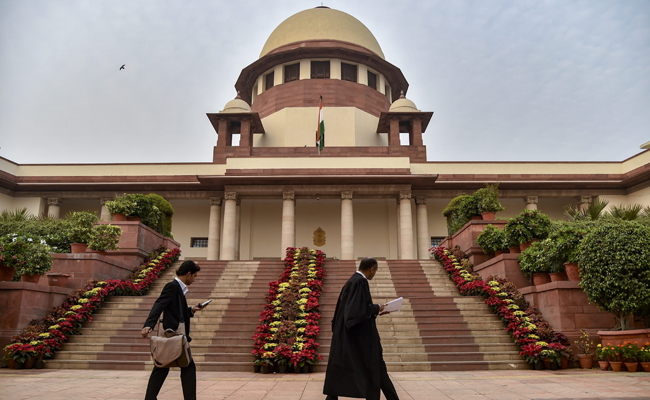
New Delhi (PTI): The Supreme Court is scheduled to hear on Monday a plea to constitute a judicial commission or an expert committee to review the wages and other benefits given to priests, 'sevadars' and temple staff in state-controlled temples.
A bench of Justices Vikram Nath and Sandeep Mehta is likely to hear the PIL filed by advocate Ashwini Upadhyay.
The plea, filed through advocate Ashwani Dubey, seeks directions to the Centre and states to constitute a judicial commission or an expert committee to review the remuneration and other benefits given to the priests and temple staff in state-controlled temples.
"Petitioner also seeks a declaration that priests and temple staff are employee' under Section 2(k) of the Code on Wages, 2019. Petitioner submits that once the State assumes the administrative, economic and financial control over temples, an employer-employee relationship arises and denial of dignified wages to priests and temple staff violates the right to livelihood guaranteed under Article 21," it said.
Upadhyay said the cause of action accrued on April 4, when he went to Varanasi to attend a public programme and after performing 'Rudrabhishek' in the Kashi Vishwanath temple, which is controlled by the state, he came to know that even the minimum wages to live with dignity are not given to the priests and temple staff.
"Recently, in Andhra Pradesh and Telangana, priests and temple staff organised a large-scale protest demanding the minimum wages. Priests and temple staff are not getting even the minimum wage prescribed by the State for unskilled and semi-skilled workers. This is a systemic exploitation. State is acting as a model employer through the endowments department, but violating the minimum wages Act and the directive principles of state policy (Article 43)," it said.
The plea further said the continued refusal to meet the minimum wages with the 2026 inflation-adjusted cost of living index has forced the petitioner to seek judicial intervention to prevent the further marginalisation of priests and temple staff.
Upadhyay further said the precarious nature of livelihood was starkly exposed on February 7, 2025, when a Tamil Nadu department issued a circular at the 'Dandayuthapani Swami Temple' in Madurai, strictly prohibiting priests from accepting 'dakshina' in 'aarti plates'.
"It is necessary to state that priests in such temples often receive no formal salary from the State and rely entirely on 'Dakshina'; the State's administrative order directly threatened them with starvation. Although withdrawn due to public outrage, the incident highlights the State's arbitrary power over the survival of the priests. This is also a bitter truth that States are controlling lakhs of temples but not a single mosque or church," the PIL claimed.
The petition, alternatively, sought direction to the Centre and states to take appropriate steps for the welfare of priests, sevadars and other temple staff in the spirit of the Allahabad High Court's earlier judgments.