Government committed towards welfare, development of ‘Kalyana Karnataka’: CM Yediyurappa
Chief Minister inaugurates ‘Kalyana Karnataka Utsav’ in Kalaburgi
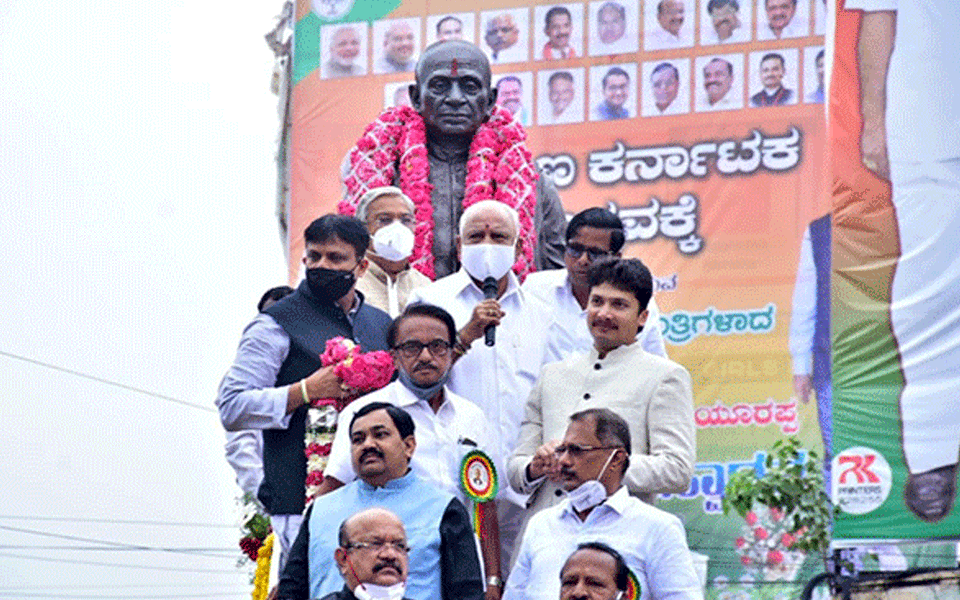
Kalaburgi: Karnataka Chief Minister BS Yeddiyurappa on Thursday inaugurated the ‘Kalyana Karnataka Utsav’, to mark one year of renaming the Hyderabad-Karnataka region as "Kalyana Karnataka", here in Kalaburagi after paying tributes to the statue of Sardar Vallabhbhai Patel.
Speaking after the inauguration, the Chief Minister added that his government was committed to deliver development and was working for the welfare of the region.
Yeddiyurappa also assured people that his government will put continued efforts for the development of Kalyana Karnataka region. After the event, he attended another ceremony at the Police DAR grounds.
Deputy Chief Minister and District Treasury Minister Govinda Karajola, Kalyana-Karnataka Region Development Board President Dattatreya Patil, NEKSRTC President and MLA Rajkumar Patil Telkur, MP Dr. Umesh Jadhav, MLAs Basavaraja Mathimuda, Ajay Singh, BG Patil, Former MLA Shashil G Namoshi, Doddappa Gowda S. Patil Naribola, Amarnath Patil, Chairperson of Kalyana Karnataka Festival Committee Laxman Dasti, and many others were present.
It has been a year since the state government renamed the ‘Hyderabad Karnataka’ area to ‘Kalyana Karnataka’. In view of this, The Hyderabad Karnataka Liberation Day is being celebrated as ‘Kalyana Karnataka Utsav’.


Let the Truth be known. If you read VB and like VB, please be a VB Supporter and Help us deliver the Truth to one and all.
Petrol, diesel prices hiked by Rs 3/litre after elections as crude costs bite
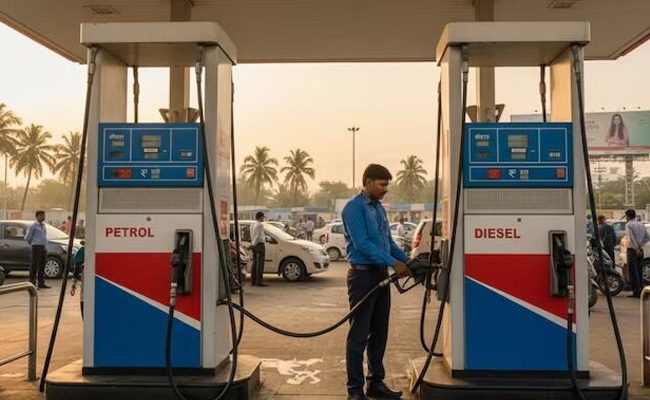
New Delhi (PTI): Petrol and diesel prices were hiked by Rs 3 per litre each on Friday, the first rate increase in more than four years, amid mounting losses of fuel retailers due to surging global crude prices.
The increase comes 16 days after assembly elections concluded in Assam, Kerala, Tamil Nadu and West Bengal. Fuel prices had remained unchanged through the polling period despite a sharp rise in international oil prices triggered by the West Asia conflict.
Petrol price was hiked to Rs 97.77 per litre from Rs 94.77 in the national capital. Diesel now costs Rs 90.67 as against Rs 87.67 per litre previously, industry sources said.
Prices have remained on freeze since April 2022 but for a one-off reduction by Rs 2 a litre each on petrol and diesel in March 2024, just before Lok Sabha elections. Rates were last hiked in April 2022.
Petrol in Mumbai now costs Rs 106.68 a litre and diesel comes for Rs 93.14 per litre. In Kolkata, petrol now costs Rs 108.74 per litre and diesel Rs 95.13, while in Chennai, prices increased to Rs 103.67 for petrol and Rs 95.25 for diesel.
Rates vary across states due to differences in value-added tax.
Although fuel prices are officially deregulated, revisions are often influenced by political considerations.
Energy prices globally shot up after the US-Israel attack on Iran on February 28, and the subsequent retaliation by Tehran effectively shut down the Strait of Hormuz - the sea lane through which a fifth of the world's oil and gas transits. Crude oil, the input raw material for making petrol and diesel, surged above USD 120 per barrel during the peak of the West Asia conflict, as opposed to the USD 70-72 range before the conflict.
More recently, prices have eased but remained elevated around the USD 104-110 per barrel range. This triggered massive losses for state-owned fuel retailers, but retail rates remained unchanged as five critical states went to polls.
The oil companies were losing Rs 14 per litre on petrol, Rs 42 a litre on diesel and Rs 674 a litre on cooking gas LPG before Friday's decision.
Earlier this week, Oil Minister Hardeep Singh Puri said the three fuel retailers were losing about Rs 1,000 crore per day, and the cumulative losses in a quarter were enough to wipe away all the profit they made in a full year. He had put the losses at about Rs 1 lakh crore.
To cushion consumers from rising global prices, the government, on March 27, reduced excise duty on petrol and diesel by Rs 10 per litre each.
Private fuel retailers had already increased pump prices. Nayara Energy, the country's largest private fuel retailer, in March raised petrol prices by Rs 5 per litre and diesel by Rs 3, while Shell increased petrol prices by Rs 7.41 and diesel by Rs 25 per litre from April 1. In Bengaluru, Shell sells petrol at Rs 119.85 per litre and diesel at Rs 123.52.
Domestic cooking gas LPG prices were raised in March by Rs 60 per cylinder, but they are still way lower than the actual cost.
Industry sources said the price hike appears calibrated - enough to partially ease margin pressure on oil companies without creating major inflationary shock.
The increase, however, will have some impact on inflation, they said.
India's retail inflation, measured by the Consumer Price Index (CPI), rose to 3.48 per cent in April 2026 from 3.40 per cent in March, while wholesale price inflation (WPI) surged to 8.3 per cent, a 42-month high, driven by a sharp rise in fuel and energy prices amid elevated global crude oil rates.
Petrol and diesel do not have a standalone category in the CPI basket, but are captured under the broader 'transport and communication' component and 'fuel and power' category. Petrol and diesel themselves carry relatively smaller but still significant weights through transport-related items, and economists say fuel price hikes have a wider indirect impact because they raise freight, logistics and input costs across sectors.
State-owned Indian Oil Corporation (IOC), Bharat Petroleum Corporation Ltd (BPCL) and Hindustan Petroleum Corporation Ltd (HPCL) had abandoned the daily price revision in April 2022 to insulate domestic consumers from a steep price increase that was warranted because of international oil prices shooting through the roof post Russia's invasion of Ukraine.
They incurred heavy losses in the first half of the 2022-23 fiscal year, which they recouped when rates fell in subsequent months.
But the war in West Asia has again sent international oil prices soaring by over 50 per cent.
The basket of crude oil that India imports averaged USD 69 per barrel in February before the war in West Asia broke out. It averaged USD 113-114 per barrel in subsequent months.
Prime Minister Narendra Modi recently urged citizens to reduce fuel consumption and use public transport and work-from-home options more frequently to help curb foreign exchange outflows on oil imports.