Government employees good news! 4th Saturdays to be government holiday in Karnataka
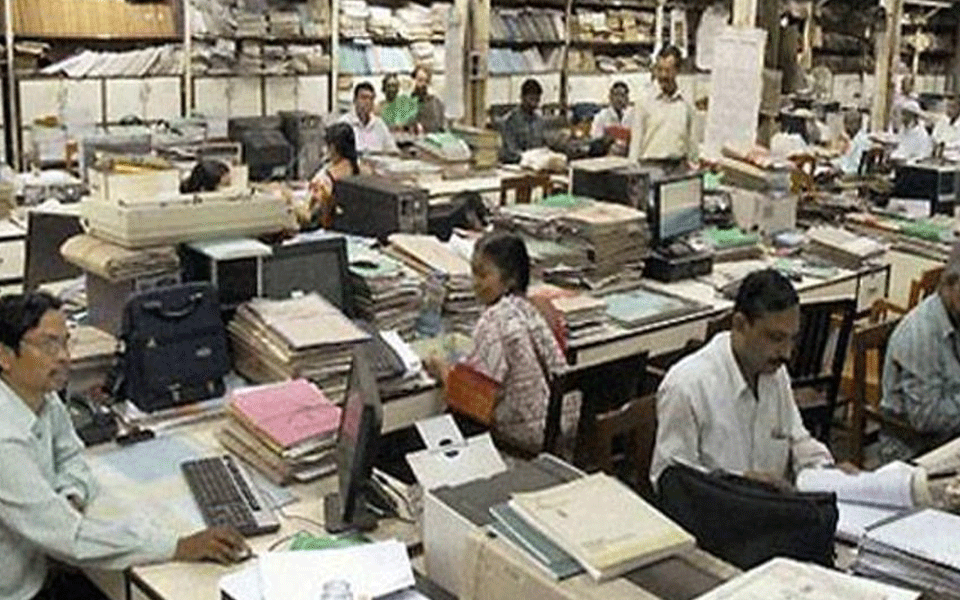
Bengaluru, June 6: Karnataka Cabinet Thursday decided to declare fourth Saturdays a holiday for state government employees in addition to second Saturdays.
The in principle decision was taken based on a recommendation of the state Pay Commission, Rural Development Minister Krishna Byre Gowda said.
The cabinet also decided to bring down the number of casual leaves from the existing 15 days to ten for the government employees, he told reporters here.
He said that in 2011 the Pay Commission had recommended five-day week and the recent paypanel also stuck to it.
Though the Cabinet discussed about reducing festival and other holidays such as on the occasion of 'jayantis', it felt such a move might hurt sentiments of certain sections.
It was decided to reduce the number of days of casual leave, he added.
He said whether the changes will be implemented immediately or from next year will be decided after discussions with the Chief Minister.
The cabinet also decided to go for counselling through computerised system for transfer of group C and D government employees to bring in transparency. A draft Bill to this effect was approved.
Among the other decisions, it resolved to outsource the maintenance of pure drinking water units by calling for tender.
As many as 16,000 pure drinking water units out of the 18,000 approved by the Rural Development department had been installed across the state at taluk levels, Gowda said adding there was no clear policy on their maintenance.
The cabinet asked the Chief Secretary to implement an ordinance promulgated to protect the interests of gazetted officers in 1998 in a way that it does not affect the promotions of officers recruited in subsequent years.
On whether the cabinet discussed about the opposition to its last week decision on sale of 3,667 acres of land to JSW Steel, Gowda said, the issue did not come up.
Let the Truth be known. If you read VB and like VB, please be a VB Supporter and Help us deliver the Truth to one and all.
Lakhimpur Kheri violence case: SC expresses disappointment over non-production of witnesses in trial
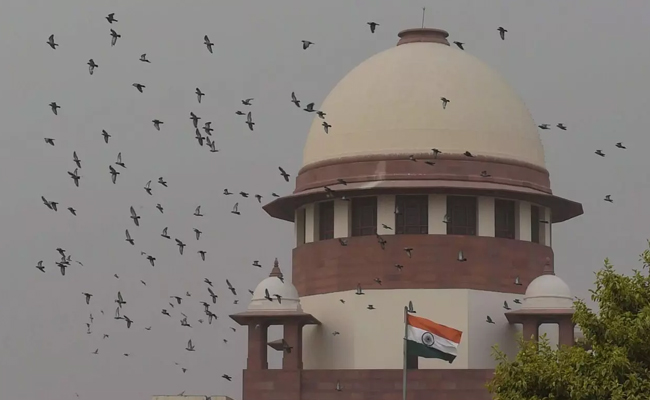
New Delhi (PTI): The Supreme Court on Friday expressed disappointment over the non-production of witnesses in the ongoing trial against Ashish Mishra, son of former Union minister Ajay Mishra, and others in the 2021 Lakhimpur Kheri violence case.
A bench of Chief Justice Surya Kant and Justice Joymalya Bagchi said the status report filed before it by the Uttar Pradesh government has not assigned any reason whatsoever for the non-production of witnesses.
It noted that no witnesses have been examined in the trial for the last two months.
"We direct the presiding judge to take lawful measures to secure the presence of witnesses," the bench said.
It asked the trial judge to make an endeavour to conclude the trial in a time-bound manner, and also to file a status report before it.
The trials in two cases related to the incident are going on before a court in Uttar Pradesh.
The bench noted that in the first case, out of 131 witnesses to be examined, 44 have been examined, 15 have been discharged and 72 are still to be produced.
In the second FIR, out of 35 witnesses, 26 have been examined and nine were left, it said.
Senior advocate Siddharth Dave, appearing for Ashish Mishra, said that as per the latest status report filed by Uttar Pradesh, 44 witnesses have been examined so far in the first FIR.
"No witnesses have been examined in the last two months," Dave said.
He argued that the last status report filed by the state in March also said that 44 witnesses had been examined.
"What have you done from March till today?" the bench asked the counsel appearing for Uttar Pradesh.
The state's counsel said that 3-4 witnesses were summoned for the recording of their deposition during the trial.
The bench said at least 7-8 witnesses should be summoned instead of three or four for a day, so that even if some of them do not turn up, the trial court could proceed with the recording of statements of those appearing before it.
The top court also wondered how official witnesses can remain absent during the trial.
"We are disappointed to note that the so-called status report does not assign any reason whatsoever for non-production of witnesses...," the bench said.
Advocate Prashant Bhushan, appearing for the relatives of the farmers who were allegedly mowed down in the incident, said the apex court will have to do something regarding the manner in which the trial was going on.
The bench noted that besides the two FIRs, another FIR was registered in October last year concerning alleged witness intimidation.
It said that, as per the state's status report, the chargesheet was filed against the main accused in that case.
The bench noted that the status report reveals that, as far as Ashish Mishra is concerned, his alleged role in the third case is still being investigated.
The top court directed the investigating officer of the third case to conclude the pending probe and ensure that the appropriate report is filed before the concerned court within four weeks.
The bench posted the next hearing in the Lakhimpur Kheri violence case for July.
On October 3, 2021, eight people, including four farmers, were killed in Tikunia in Lakhimpur Kheri district during a protest by farmers against Deputy Chief Minister Keshav Prasad Maurya's visit to the area.
Four farmers were mowed down by a sports utility vehicle. A driver and two BJP workers were then allegedly lynched by angry farmers. A journalist also died in the violence.
In one of the cases, the trial court in December 2023 framed charges against Mishra and 12 others for alleged murder, criminal conspiracy and under other penal laws in the case of the farmers' deaths, paving the way for the trial.