GST compensation cess period already extended till March 2026: FM Nirmala Sitharaman
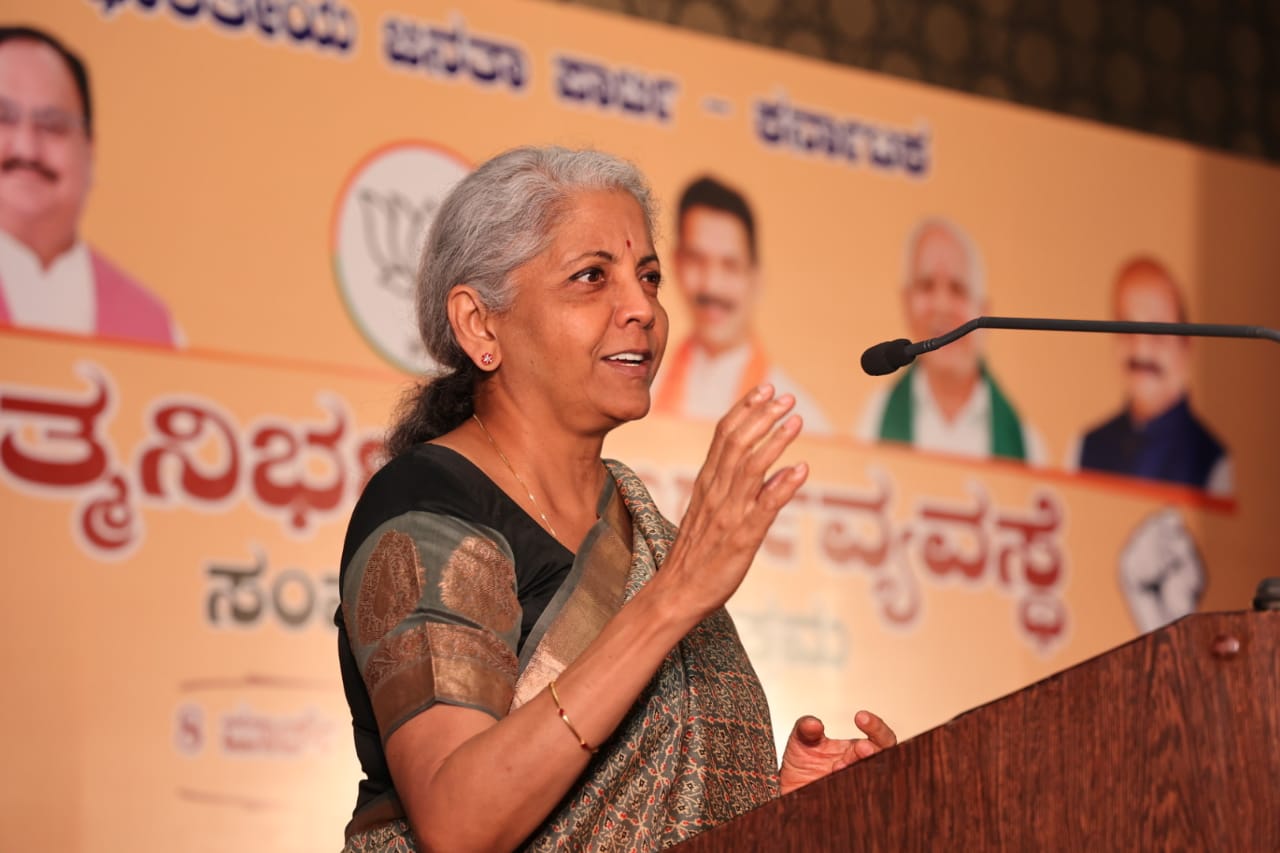
Bengaluru, Mar 9: Union Finance Minister Nirmala Sitharaman on Wednesday said the GST compensation cess period has already been extended till March 2026 to enable the Centre to repay loans taken to compensate all states for the year 2020.
During an interaction with reporters here, she said, "It's not just for me to take a call. It's for the GST council to decide and we have discussed it." The Union Minister was responding to a query on Karnataka Chief Minister Basavaraj Bommai's statement requesting the Centre to extend the GST compensation period, which ends in June. Elaborating further, Sitharaman said the GST council has already decided to extend the compensation cess period till March 2026. "It is already extended for paying off the loan, which was taken for all the states, for the compensation that could not be paid in 2020. And again, which could not be somewhat, not fully, paid in 2021," the Finance Minister said.
As for the GST amount between 2020 and 2021, which was due to the states, with compounded interest at 14 per cent each year, she said in view of it, the central government took a conscious decision at the GST council meeting that it will borrow back-to-back and give it to the states.
"Both the loan and the repayment, together with the interest itself, will require compensation cess to be extended till March 2026 and that's what we have done. So the amount collected from the extended cess collection will go towards payment of the compensation amount borrowed and the interest on it," the FM explained.
On the impact on import of edible oil into the country due to the Ukraine crisis, Sitharaman said India is looking for alternatives.
"Edible oil is also an area where we have challenges, where we have to see how we can address it," she said.
India is encouraging farmers in the north east region to grow palm, since the climatic condition there is similar to Malaysia and Indonesia.
We have taken up palm mission and are helping farmers get into production of palm oil in those areas, where palm can be cultivated, because we import huge quantities of palm oil, both the crude and refined, she added.
Let the Truth be known. If you read VB and like VB, please be a VB Supporter and Help us deliver the Truth to one and all.
NEET student hangs self in Rajasthan's Sikar

Jaipur (PTI): A student preparing for the NEET examination allegedly committed suicide by hanging himself in a rented room in Rajasthan's Sikar on Friday, police said.
According to the police, the student allegedly hanged himself from a ceiling fan using his sister's scarf while one sister was attending coaching classes and the other was in the bathroom.
He had appeared in the NEET UG exam 2026, which was cancelled due to paper leak, they said.
Udyog Nagar SHO Rajesh Kumar said that the deceased, identified as Pradeep Meghwal, was a resident of Kanika ki Dhani village in Jhunjhunu's Gudha Gaudji area.
He had been living in a rented room in Sikar's Jaldhari Nagar area with his two sisters while preparing for NEET over the last three years.
His elder sister later found him hanging and informed the landlord and police after bringing him down, officials said.
The SHO said the body was kept at SK Hospital mortuary, and a postmortem had not been conducted.
The student's father, Rajesh Kumar Meghwal, told police that Pradeep's NEET examination had gone well and the family was expecting him to score around 650 marks.
Former Rajasthan deputy chief minister Sachin Pilot expressed grief over the incident and linked it to anxiety among students after reports of irregularities and paper leaks in NEET 2026.
Pilot said repeated paper leak incidents and cancellation of examinations were affecting students' mental health and demanded a time-bound investigation and strict action against those responsible.