GST on petroleum products not on agenda: Sushil Modi
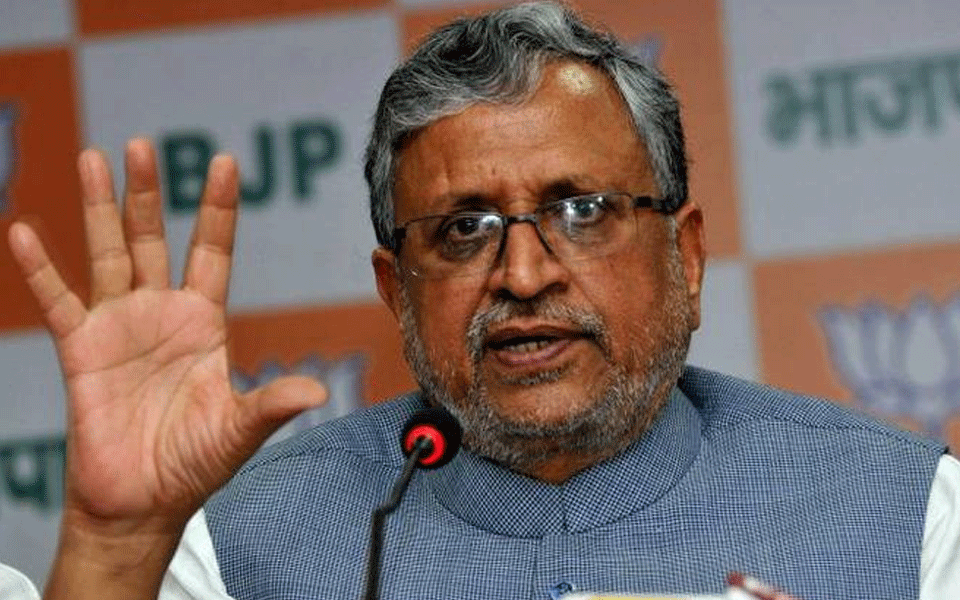
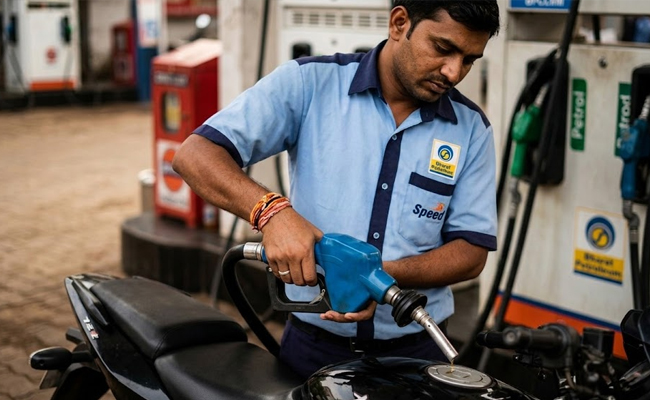
BENGALURU: Bihar finance minister and chairperson of GST Group of Ministers (GoM) for technology, Sushil Kumar Modi on Saturday said that levying taxes on petroleum products was not on the agenda of the GST council and even if that happens people should not wrongly perceive that GST can control taxes on petrol and diesel.
Speaking to reporters after a GoM meeting here, Modi, while reiterating that petroleum products are already under GST and that only the date to start levying taxes must be fixed, said: "The GST council is meeting on September 28. But I don't think this is on the agenda as the Centre and several states feel that the immediate need is to stabilise revenue and increase compliance. Taxing petrol and diesel under GST will only be considered thereafter."
He also warned people not to believe that GST would control the taxes on petrol and diesel and reduce their burden with a fixed tax component. "...Even if you bring them under GST, you cannot control what the states or the Centre levies as taxes. There is a provision for both of them to levy taxes over and above GST, which is provided based on global practices. With this, both states as well as the Centre can levy additional taxes even after GST is levied," he said.
Arguing that it is not an opportune moment to begin taxing motor fuels and other petroleum products under GST now, he said that presently states and the Centre together levy about 50 per cent tax on petrol and diesel. "They will first want revenue
stabilisation."
He also gave an overview of the progress made so far in terms of the number of taxpayers, e-Way bill generation, tax collection et al.
GST in numbers
* 15.71 crore: Total number of returns filed under GST so far
* 5.35 crore: Total number of payment transactions made under GST so far
* 62.9 lakh: The number old migrated taxpayers under GST
* 50.6 lakh: The number of new approved registered taxpayers under GST
* Rs 93,960 crore: GST collections for the month of July
* 23.61 crore: Total number of e-Way Bills issued so far
* 48%: Percentage of e-Way Bills generated for inter-state transport of goods
* 52%: Percentage of e-Way Bills generated for intrastate transport of goods
* 99.08%: Percentage of goods transported by road
* 8.65 lakh: The number of verifications of e-Ways bills carried out in the country
* 3,588: The number of inspections reports on goods transport filed in the country
Annual returns & new form
Modi said that Infosys has been directed to ready the forms required for the filing of annual returns-which will be done for the first time since the inception of GST-by November 15. "December 31 will be the last date to file annual returns and all those dealers with a turnover of more than Rs 2 crore will also be required to file an audit report by the same date," he said, adding that the new, simplified return forms have been finalised by the GSTN. Stating that the new forms should be ready for people to use in the next few months, Modi said that all dealers with a turnover of less than Rs 5 crore or up to Rs 5 crore can file quarterly returns. "More than 92 per cent of all dealers fall in this category. Moreover, two systems 'Sahaj'- for all those dealers dealing only with customers and 'Sugam'- for those dealing with customers and also other businesses are ready for use. They will be launched soon," he said. While the returns can be filed quarterly, dealers will have to continue paying taxes every month. He also said that all those who have not filed GSTR-1 for the month of July can now do it without a late fee. "The time has been extended up to October 31 and we've recommended to the GST council that there be provisions for this," he said.
Tax on e-commerce
Modi said that the levy of taxes on e-commerce will begin from October 1 and that most states are ready with the software and requisite training for their staff. "It won't increase revenue immediately, but it will surely have a positive impact in the long term," he said.
He further added that 18 firms have been shortlisted for the development of a 'common accounting software' by the GSTN and that small traders will soon be able to get this for their use.
Audit to probe revenue shortfall in states
Sushil Modi said that the GSTN will conduct an audit to find out why some of the states-four main ones: Bihar, Himachal Pradesh, Jammu and Kashmir and Uttarakhand-have been facing huge revenue shortfall, in the range of 20 to 42 per cent. "
(Mr) Hasmukh Adhia has been visiting these states, he was in Bihar just yesterday. And, prima facie, it appears like the taxes from the service sector is not reflecting. So the DG-audit will be conducting an audit into the banks, railways, airlines and telecom sectors to see if the 'place of supply' rules are accurate in their softwares," he said, adding that they do not suspect any large scale evasion.
He also said that the issue of shortfall is being addressed by the Centre and the states and that it has come down from 17% earlier to about 13 per cent now. "In some states like Maharashtra, Gujarat and Tamil Nadu it is below 3 per cent," he said, adding that states like Bihar, which are under the special category also have a lot of money stuck in the IGST.
Exporters' refund
Answering a specific question, AB Pandey, chairman, GSTN, said that processing and settlement of refunds for the exporters, which has been a pain point, has been going on smoothly and that so far, Rs 43,000 crore has been settled.
So far as the e-wallet facility for exporters is concerned, Modi said that the GSTN has decided that it needs more deliberation in terms of its implementation.
Courtesy: timesofindia
Let the Truth be known. If you read VB and like VB, please be a VB Supporter and Help us deliver the Truth to one and all.
Karnataka: SP’s gunman among two arrested for extorting money from rice smuggler

Ballari (Karnataka) (PTI): An armed police constable serving as the district superintendent of police’s personal gunman, along with his accomplice, was arrested for allegedly extorting money from a rice smuggler, police said on Friday.
Devaraj, who had been serving as the SP’s gunman for the past four and a half years, was identified as the mastermind behind the incident.
Following an investigation, Devaraj and his accomplice Sairam were arrested on May 6, while efforts are underway to nab a third accused, Gadilinga, a practising advocate in Ballari, who is absconding, police said.
The matter came to light after a complaint was filed by Sharabappa, a habitual offender allegedly involved in illegal rice transport, they added.
According to police, the incident occurred on the intervening night of April 27 and 28, when a group of masked men intercepted Sharabappa’s rice-laden vehicles near the Moka forest area.
The accused allegedly introduced themselves as members of an “SP squad”, threatened to seize the vehicles and file criminal cases, and demanded money to avoid legal action.
Police said the accused initially demanded Rs 5 lakh and later extorted around Rs 3 lakh from the complainant.
Investigation revealed that Devaraj was the main person involved in demanding and collecting the money, while Sairam and Gadilinga were also involved in the offence. Sairam was allegedly involved in similar activities earlier as well.
Devaraj and Sairam were arrested under Sections 308(2) (extortion) and 3(5) (common intention) of the Bharatiya Nyaya Sanhita.
Police also seized the extorted cash, the four-wheeler, and mobile phones allegedly used in the crime. Efforts are underway to trace Gadilinga.
Addressing a press conference, Ballari Superintendent of Police Suman D Pennekar described the incident as a serious offence that has tarnished the image of the police department.
"There is no official ‘SP squad’ or ‘DSP squad’ operating in the district. Such labels are often misused by impostors or corrupt individuals to commit extortion," the SP clarified.
She said no involvement of other police officers has been found so far.
Departmental proceedings have been initiated against Devaraj, and suspension proceedings are underway. The SP added that strict action will be taken against anyone involved in such offences.
Police said Sharabappa, the complainant, is a known habitual offender involved in illegal rice smuggling, and several cases have already been registered against him in the Moka and Peddihalli areas. A separate case has also been registered against him in connection with rice smuggling on the night of the incident.
Authorities are also exploring the possibility of initiating externment proceedings against him under applicable legal provisions.
The SP urged the public to report any extortion attempts by persons claiming to be part of an “SP squad”, assuring that the identity of informants will be kept confidential.