Hate Speech Prevention Bill was not passed in haste: Speaker U.T. Khader
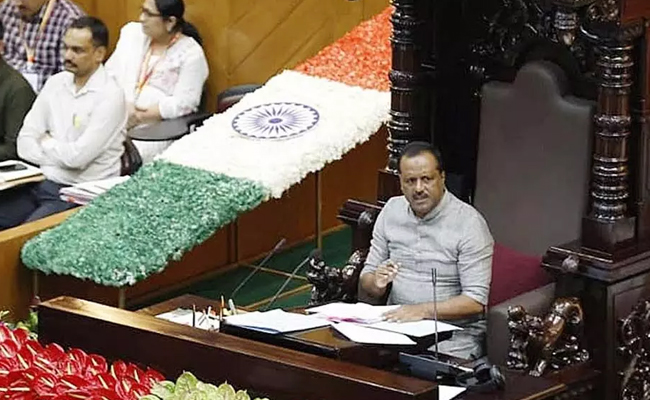
Bengaluru: Karnataka Legislative Assembly Speaker U.T. Khader on Monday clarified that the Hate Speech Prevention Bill was not passed in a hurry during the winter session of the Legislature held at the Suvarna Vidhana Soudha in Belagavi.
Addressing a press conference at the Vidhana Soudha to brief the media on the proceedings of the session, Khader said that the bill was discussed, but confusion arose as multiple issues were taken up simultaneously.
“When an important bill is being discussed and opposition members enter the well of the House and protest, what option is left? There was a detailed discussion on the Hate Speech Prevention Bill in the Legislative Council as well,” he said.
ALSO READ: Bengaluru: Yellow Line to get 6th train from December 23; peak-hour frequency to improve
Khader added that the Assembly had provided ample opportunity for discussion, but opposition parties chose not to participate. “There was no restriction on debate in the Assembly. However, the opposition did not take part in the discussion,” he said.
Responding to a question on the venue of future sessions, the Speaker said discussions are underway on holding the monsoon session in Belagavi instead of the winter session. He explained that the winter season coincides with a large number of religious and social events, and ministers and MLAs often have prior commitments during that period.
On the reported expenditure of ₹43 lakh for the Speaker’s Bench at the Suvarna Vidhana Soudha, Khader said the work was carried out by the Karnataka State Forest Development Corporation and the Public Works Department.
“We are aware of the history and significance of the bench. However, the Speaker’s office does not deal with expenditure details,” he said, adding that the Speaker of the Uttar Pradesh Legislative Assembly had appreciated the design and was replicating it there. “That itself is a matter of pride for us,” he remarked.
On a question regarding Minister Lakshmi Hebbalkar giving an incorrect reply in the House on the release of installments under the Lakshmi Housing Scheme, the Speaker said the minister had acknowledged the mistake and apologised on the floor of the House. “She has also assured that the department will examine how the error occurred,” Khader said.
Providing details of the session, Khader said the Legislature sat for 57 hours and 35 minutes over 10 days, during which 23 bills were passed.
As many as 39 members debated issues related to North Karnataka for 17 hours and 2 minutes, and seven resolutions were unanimously passed for submission to the Central government.
ALSO READ: GBA razes down 400 houses in Yelahanka, minority families including Muslims worst affected
A total of 2,109 questions were received during the session. Of the 135 questions listed for oral answers, 134 were answered, while 1,750 out of 1,974 questions listed for written replies were responded to.
Under Rule 351, 180 notices were admitted and 70 answered, while 228 out of 368 matters raised for attention were addressed. Two matters were discussed during Zero Hour.
Khader also noted that school and college students, along with members of the public, visited the Legislature during the session. A park was inaugurated within the Suvarna Vidhana Soudha premises, and the world’s second-largest national flag was unfurled during the session, he added.
Let the Truth be known. If you read VB and like VB, please be a VB Supporter and Help us deliver the Truth to one and all.
AI-based monitoring strengthens PPP dialysis programme in Karnataka: Health Minister
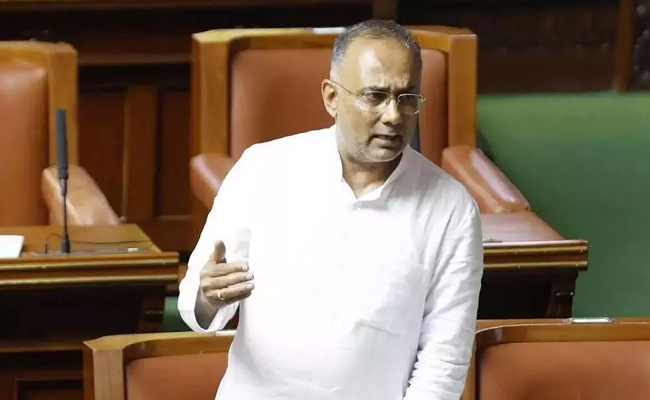
Bengaluru (PTI): The introduction of an AI-enabled monitoring system will significantly enhance patient safety and treatment quality under Karnataka's public-private partnership dialysis programme, Health Minister Dinesh Gundu Rao said on Thursday.
Launching the AI-based smart monitoring system at KC General Hospital in Bengaluru, the minister said such technological innovations bring dialysis services delivered under the PPP model on par with private healthcare standards.
"The introduction of an AI-enabled monitoring system will significantly strengthen patient safety and treatment quality under Karnataka's PPP dialysis programme," he said.
The system, introduced by dialysis care provider NephroPlus, enables real-time monitoring of critical treatment parameters such as blood pressure, fluid removal and electrolyte balance during dialysis, aiming to improve patient outcomes through continuous oversight, a statement said.
Currently deployed across seven dialysis centres, the platform tracks 28 key parameters, including patient care, safety, bed availability, staff alertness, emergency preparedness, infection control, hygiene and operational efficiency, NephroPlus said in a statement.
It allows administrators and clinical teams to take data-driven decisions through continuous performance monitoring, it added.
Officials said the technology replaces periodic audits with always-on monitoring, offering a more transparent and robust governance framework.
NephroPlus CEO Rohit Singh said continuous monitoring is critical in dialysis care and the AI-based system ensures consistent quality standards across centres while enabling safer and more reliable treatment for patients.
The launch event also featured a live demonstration of AI-powered dashboards, showcasing real-time tracking of dialysis procedures.