HC dismisses petition by Chinese national seeking nod to go back to her country; cites pending trial
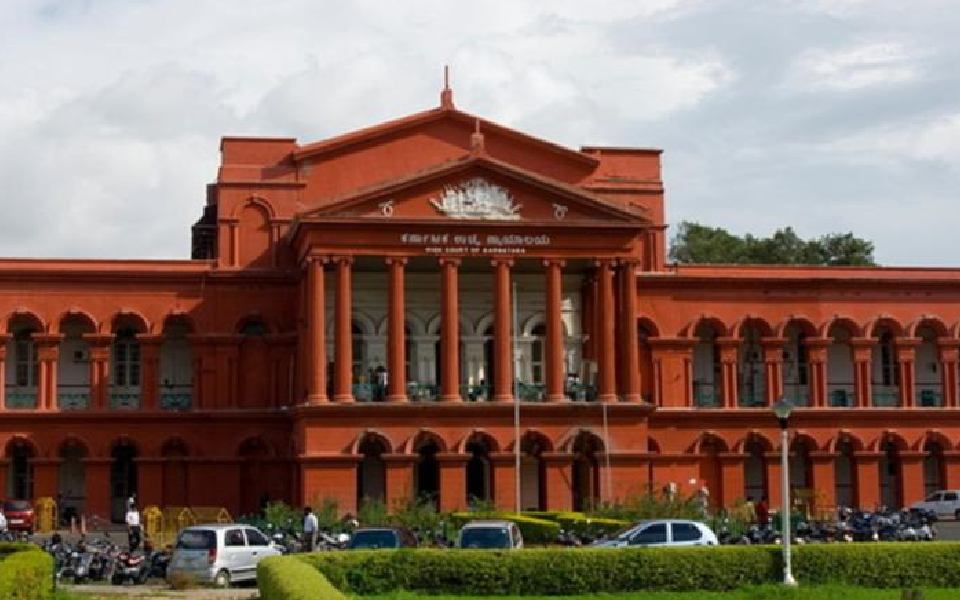
Bengaluru, Jul 9: The Karnataka High Court has dismissed a petition filed by a Chinese national accused in alleged loan app scams, seeking permission to travel back to her country pending trial on the grounds of meeting her ailing father.
A single judge bench of Justice M Nagaprasanna passed the order on the plea by 42-year-old Hu Xiaolin, who is allegedly involved in a series of Chinese loan app scams known as “Power Bank app scam”, in which customers were coerced and cheated of several crores of rupees in Karnataka and Kerala.
The court took note of the Chinese Criminal Code, according to which once a person becomes an accused, he is not permitted to move out of the country till the trial gets completed.
"The petitioner being a Chinese national is undoubtedly aware of the law that prevails in China in treatment to (of) a foreign national or an alien, as described in its laws. If laws in China prohibit such exit of a foreign national under the aforesaid circumstances, laws of India cannot be made flexible on any score whatsoever, as it is a case of a Chinese national who is involved in multiple crimes," it said.
ALSO READ: 23 school vehicle drivers booked for driving under influence of alcohol in Bengaluru
The court also said that, if the petitioner is permitted to move out of the shores of the nation, despite the plethora of crimes pending against her, it would become impossible to conclude trial, as it would be permitting her to flee justice and create a dent in the majesty of law.
According to sources, Xiaolin had come to India in 2017 and married Anas Ahmed, an Indian national, and is residing at present in Bengaluru.
The cases were registered against Xiaolin and her husband based on the complaint filed by Razorpay Software Private Limited, a payment gateway.
The petitioner was arrested and released on bail conditions which include that she would not leave the country without prior permission from the court.
According to sources, the petitioner submitted that the Kerala high court had permitted her to visit China and come back in connection with cases registered in Kerala.
To this, the Karnataka HC said: "The High Court of Kerala granting permission to travel will not bind this Court to consider the issue on merits, as the order passed by the High Court of Kerala does not indicate the crimes or the practice prevailing in China to other nationals including Indian nationals. Therefore, seeking permission to travel abroad does not merit any consideration in the peculiar facts of this case."
Let the Truth be known. If you read VB and like VB, please be a VB Supporter and Help us deliver the Truth to one and all.
Man dies by suicide after being 'duped of ₹1.5 crore' in stock market scam

Jaipur (PTI): A 42-year-old man allegedly died by suicide after jumping in front of a Sikar-Rewari passenger train in Jhunjhunu district on Saturday morning, officials said.
Police launched a probe into allegations in a three-page suicide note in which the deceased allegedly blamed several individuals for his death, accusing them of cheating his family out of around Rs 1.5 crore through stock market investment.
The deceased cited mounting debts and alleged harassment by creditors as reasons that drove him to take the extreme step.
Kotwali police head constable Mahendra Singh said the deceased, Vimal Kumar Sharma, was identified using a mobile phone recovered from the spot near the New Housing Board police line crossing.
"We contacted numbers stored in the phone, which helped establish his identity. A suicide note was also found in the deceased's pocket," he said, adding that Sharma was engaged in share market trading.
In the suicide note, Sharma alleged that despite lodging a complaint at the Kotwali police station, police conducted no proper investigation and closed the case file without inquiry.
He claimed to possess evidence such as call recordings, a pen drive and bank statements.
Meanwhile, family members reached the hospital and demanded the arrest of the accused persons named in the suicide note, refusing to accept the body until action is taken.
Police said an investigation is underway.
(Assistance for overcoming suicidal thoughts is available on the state’s health helpline 104, Tele-MANAS 14416.)