HD Deve Gowda for toning down "nationalist rhetoric" over Indo- China border face-off
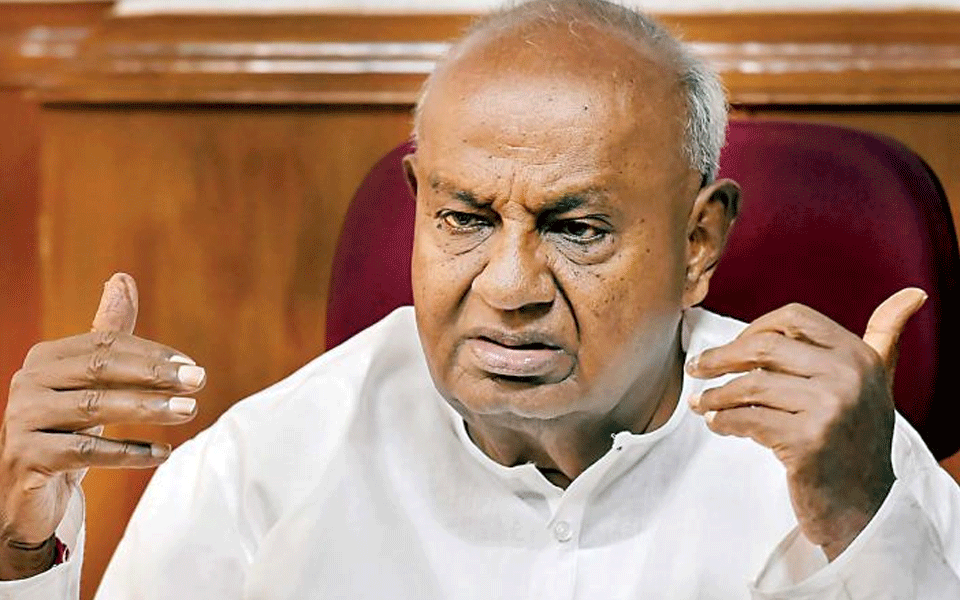
Bengaluru: Former prime minister H D Deve Gowda on Friday pitched for toning down "nationalist rhetoric" and cautioned government against encouraging calls for economic boycott of Chinese products in the backdrop of the death of 20 Indian soldiers in the Galwan Valley face-off.
He also said a detailed presentation should be made by a senior serving military officer and diplomat on the ground situation for opposition leaders at the all-party meeting on the border situation for a "meaningful" exchange of views.
Welcoming Prime Minister Narendra Modi's initiative in convening the virtual meet Friday evening, the JD(S) patriarch also urged his colleagues in the opposition not to use "intemperate" language.
He said the government should not encourage 'reactionary' language of economic boycott. "Its implications are deep. We should be guided by pragmatism," Gowda said in a statement, making a series of suggestions.
He said "nationalist rhetoric" should be toned down in order to ensure that "we do not escalate matters" and this was not the time for a "language of provocation and revenge".
Media outlets "spreading fake information" and "cheap rhetoric" endanger the lives of Indian soldiers and diplomatic staff, said Gowda, during whose tenure as PM in 1996 a pact was signed with China that made it binding on soldiers to exercise self-restraint and go for immediate consultation in case of a face-off.
Also the social media retribution was of particular concern, he said, adding the government should take steps to check this.
"By this I do not mean that critical mainstream opinions, analysis and reporting should be stopped," he added.
His remarks came amid rising voices for boycott of China- made products after a violent clash between Indian and Chinese troops in the Galwan Valley in Ladakh left 20 Indian Army personnel dead early this week.
On Thursday, Union Minister Ram Vilas Paswan appealed to people to boycott products from China and also directed officials of his ministry not to procure any Chinese products for day-to-day office use while his ministerial colleague Ramdas Athawale said all restaurants and hotels that sell Chinese food in India should be closed down.
Gowda said he fully appreciated the Prime Minister's decision to call the all-party meet. "In national interest, and to ensure a bipartisan environment for discussions, I would like to make the following suggestions."
Gowda suggested that a senior serving military officer and diplomat should make a detailed presentation to opposition leaders on the ground situation, and the progress of talks.
"Only with this information could there be a meaningful exchange of ideas between the government and the opposition leaders... The demand here is not for classified details, but truthful information," he said.
The meeting comes in the backdrop of demands by the opposition seeking details of the fierce clash in Ladakh, the biggest military confrontation between India and China in over five decades.
However, Gowda would not attend the meeting as he had not been invited, his office said.
Also urging opposition leaders not to use intemperate language, Gowda said, this was an hour for cooperation and domestic politics and national security interests cannot be equated.
"Having said this, I do not mean we should not question the government. It should be done keeping in mind that there are larger issues at stake," he said.
Gowda said there was a feeling that India was engulfed by hostile nations and it was the duty of the political leadership to ensure that such anxiety is quelled with proper information.
It was important to keep the nation informed at all times. Underplaying certain developments and overstating certain information may be a bad strategy in the long run, he said.
Pointing out that in recent times, there was an effort to politicise the armed forces and terming it "dangerous", the former prime minister said, they should be allowed to remain a professional force.
When they remain a professional force, they will advise the government of the day fearlessly and correctly.
"As we are on the topic of the armed forces, it is important to institute an inquiry into the deaths of soldiers in the Galwan Valley, and know exactly what led to the tragic events," he said.
Let the Truth be known. If you read VB and like VB, please be a VB Supporter and Help us deliver the Truth to one and all.
Real Madrid fines Valverde and Tchouaméni half a million euros each for altercation
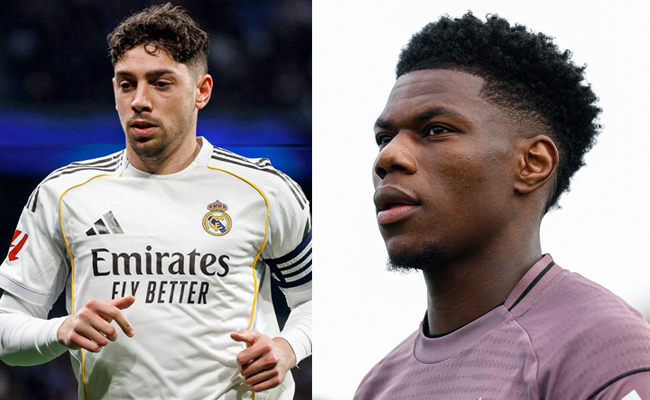
Barcelona (AP): Real Madrid slapped players Federico Valverde and Aurélien Tchouaméni with half-a-million-euro ($588,000) fines on Friday for their altercation during practice.
The massive fines came a day after the midfielders tussled when the team trained. Valverde said in a post on social media on Thursday that no punches were thrown. But Valverde knocked his head on a table and he suffered a small cut that required a brief hospital visit.
On social media, Valverde initially called it a “meaningless fight” with a teammate and said “everything has been blown out of proportion."
His employers, however, considered it a significant enough breach of team discipline to nail both Valverde and Tchouaméni with fines that bite even the bank account of a top soccer player. The half-a-million euro penalties reflect the reputational damage the club was enduring in a chaotic end to a disappointing season.
In a statement, the 15-time European champion said its disciplinary action was concluded after both players expressed to the club “their complete remorse for what happened and apologized to one another.”
Madrid added they also apologized to their teammates, the coaching staff and club supporters, as well as showing their willingness to accept whatever disciplinary action the club deemed “opportune.”
Tchouaméni was back training with Madrid on Friday, two days before they play at Barcelona in a clasico. Madrid has to win otherwise Barcelona will be crowned La Liga champion.
After being notified of the fine, he posted a public apology to the club and its fans on social media.
“What happened this week in training is unacceptable,” Tchouaméni wrote. "I say this while thinking about the example we are expected to set for young people, whether in football or at school.
“Above all, I am sorry for the image we projected of the club.”
Valverde was not at practice due to the head knock.
Both players are set to play in the World Cup next month, with Tchouaméni playing for France and Valverde for Uruguay.
Chaotic end to a poor season
===================
The run-in between the players, who for seasons have played side by side in Madrid's midfield, came after they argued this week in previous training sessions. But tempers boiled over on Thursday. Spanish media was rife with reports that the players previously disagreed over the club's decision to let coach Xabi Alonso go after just months on the job.
It was not the only altercation involving Madrid players during training this week. Álvaro Carreras confirmed he was in a “minor” incident with a teammate. Spanish media said he and fellow defender Antonio Rüdiger got into a scuffle.
Álvaro Arbeloa, the coach who was promoted from Madrid's reserve team when Alonso was fired in January, will face tough questions on what went wrong inside the changing room when he gives a press conference on Saturday ahead of the clasico at Camp Nou.
Madrid is facing a second consecutive campaign without a major trophy amid rumors in the Spanish media that club president Florentino Pérez is considering bringing back Jose Mourinho to straighten out his underperforming team.