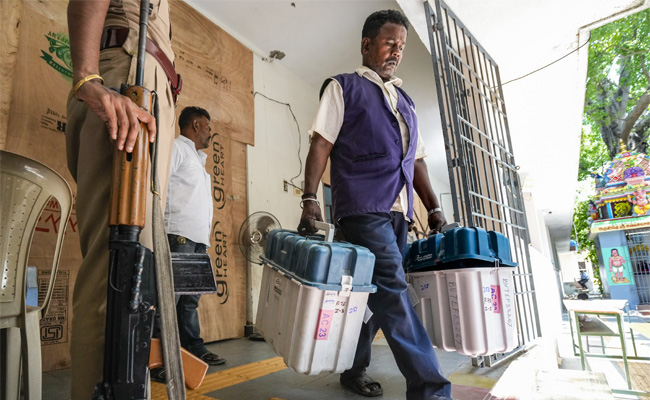
House panel ready to address gov's concerns over Greater Bengaluru Governance Bill: Rizwan Arshad
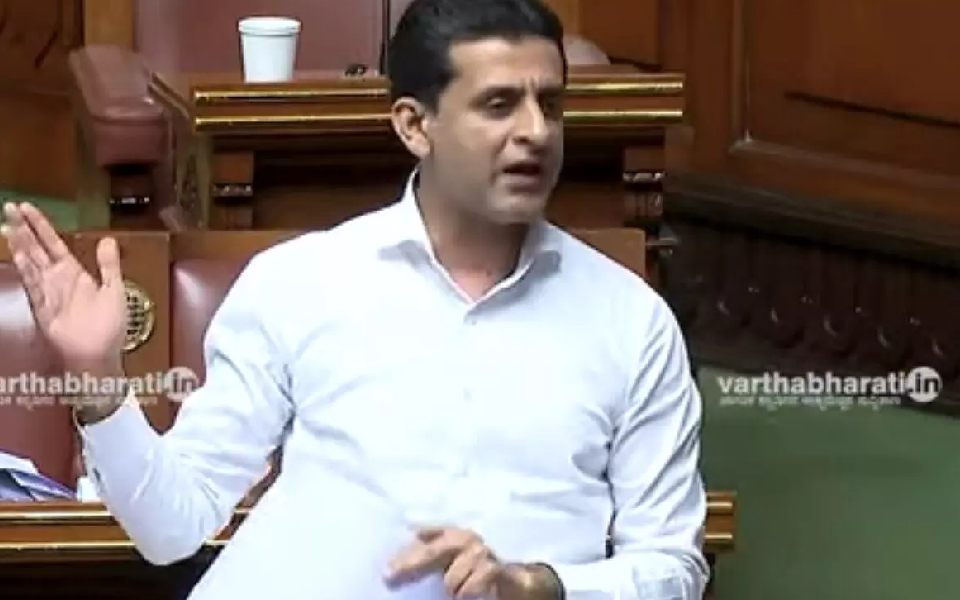
Bengaluru: Rizwan Arshad, MLA and head of the Select Legislative Committee that reviewed the Greater Bengaluru Governance Bill, stated that the governor’s action does not signify a rejection of the Bill but rather a request for specific clarifications.
Speaking to The New Indian Express, Arshad downplayed the concerns, especially those surrounding the 74th Amendment, and said, “No exact point of the Act was raised.” He dismissed claims of constitutional flaws in the Bill.
Addressing concerns about the proposed Metropolitan Planning concept, first introduced by the Congress government, Arshad assured that the committee would take the issue seriously. “Metropolitan Planning was proposed when Congress was in power. We will consider all aspects of it moving forward,” he said, noting that the committee remains open to making refinements to the Bill.
One of the most contentious issues has been the proposal to split the Bruhat Bengaluru Mahanagara Palike (BBMP), with critics fearing it could follow the path of the Delhi civic body’s trifurcation, added the report.
However, Arshad remained confident, stating, “Delhi civic body’s trifurcation failed due to unequal revenue distribution. In contrast, we’ve carefully accounted for that, ensuring a balanced approach for Bengaluru’s future. Bengaluru has to be divided for administrative efficiency, and we have taken all objections into consideration.”
Reaffirming that the governor’s request for clarifications was not a setback for the state government, Arshad concluded, “We’re fully prepared to provide all clarifications. There is no cause for alarm.”
Let the Truth be known. If you read VB and like VB, please be a VB Supporter and Help us deliver the Truth to one and all.
Polling begins for 152 assembly seats in 1st phase of Bengal elections
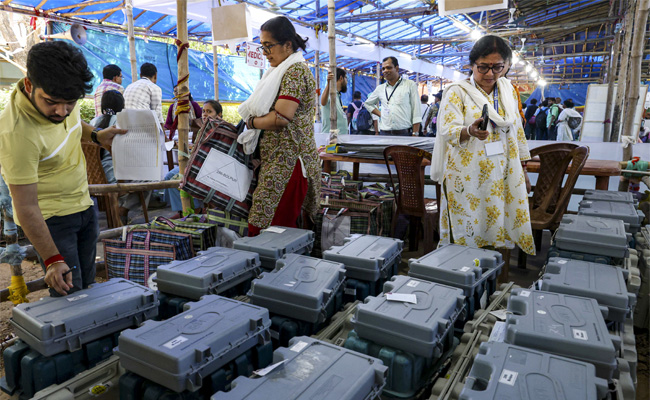
Kolkata (PTI): Voting began on Thursday in 152 constituencies in the first phase of the West Bengal assembly elections, amid unprecedented security arrangements and a high-stakes battle that could shape the direction of the entire contest.
Polling started at 7 am with voters queueing up outside booths in districts ranging from Darjeeling and Jalpaiguri in the north to Murshidabad, Nadia, Birbhum and Hooghly in the south.
The opening round covers more than half of the state's 294 assembly seats and is being seen as the BJP's best opportunity to make an early breakthrough and the ruling Trinamool Congress' most important test in its bid for a fourth consecutive term.
According to the Election Commission, over 3.60 crore electors are eligible to vote in this phase, including around 1.75 crore women and 465 third-gender voters.
A record 2,450 companies of central paramilitary forces, comprising nearly 2.5 lakh personnel, have been deployed across the state for the polls, with over 8,000 polling stations identified as highly sensitive.
The Election Commission has placed districts such as Malda, Murshidabad, Uttar Dinajpur, Cooch Behar, Birbhum and Purba Bardhaman under special surveillance.
More than 2,193 quick response teams, surveillance units and flying squads have also been deployed to prevent violence and ensure free and fair polling.
The first phase assumes political significance because it includes all 54 seats in north Bengal, the region that powered the BJP's rise in the 2019 Lok Sabha elections and helped it emerge as the principal challenger to the TMC in the 2021 assembly polls.
Of the 152 seats, the BJP had won 59 in 2021, while the TMC had secured 93.
For the saffron camp, retaining its dominance in north Bengal is crucial if it is to remain in contention in the statewide battle. For the TMC, led by Chief Minister Mamata Banerjee, preventing a BJP sweep in the north is equally important to establish momentum before the second round.
This phase is also being closely watched because it comes after the Special Intensive Revision of electoral rolls, which resulted in the deletion of around 91 lakh names from the state's voter list.
The controversy has sharply polarised the campaign, with the BJP alleging that the revision weeded out infiltrators and bogus voters, while the TMC has accused the Centre and the Election Commission of disenfranchising genuine electors, especially minorities and migrant workers.
Several high-profile candidates are in the fray in the first phase.
Key candidates in this phase include leader of the opposition Suvendu Adhikari (BJP, Nandigram), former Union minister Nisith Pramanik (BJP, Mathabhanga), state minister Udayan Guha (TMC, Dinhata), Goutam Deb (TMC, Siliguri), and Adhir Ranjan Chowdhury (Congress, Baharampur).
The second phase of polling will be held on April 29. Counting of votes will take place on May 4.