‘How many such cases has Dharmasthala case probe officer handled?’ SC Adv.KV Dhananjay questions
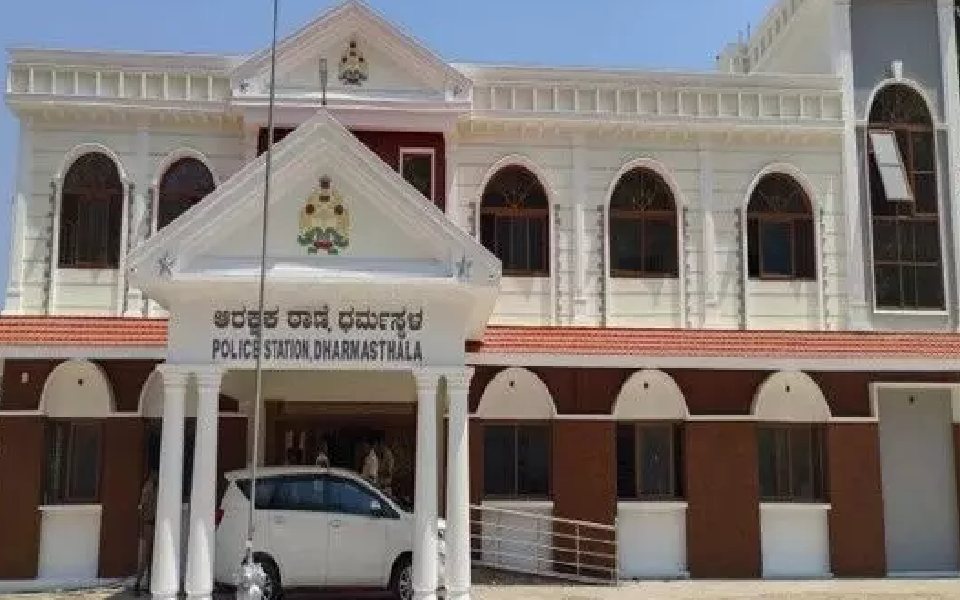
Bengaluru: Supreme Court Advocate K V Dhananjay has raised serious concerns about the qualifications of the police officer appointed to investigate the Dharmasthala mass burial case complaint, questioning how many rape, murder, and body-exhumation cases the officer has handled in the past. “Does this officer possess the expertise required for a case of this scale and sensitivity, which the police department claims?” he asked.
In a press release, Dhananjay remarked that the alleged incident in Dharmasthala, where hundreds of rape and murder victims are said to have been buried, is unprecedented in the past 100 years of Indian judicial history. The officer appointed to lead the investigation is reportedly around 29 years old and serves as a Sub-Inspector at the Dharmasthala police station.
“How many similar cases involving rape, murder, and exhumation has this officer solved? Does the police department officially state that this officer is qualified for a case of this nature?” he reiterated.
Dhananjay stressed that if the government genuinely cares about public concern, it must issue a clear statement about the credentials of the appointed investigation officer. Only after this clarification should discussions on the investigation’s progress continue, he asserted.
The advocate also provided a timeline of developments in the case, the complainant’s legal team publicly announced their intent to file a complaint on June 22, 2025. The complaint was submitted to the Dakshina Kannada police on July 3. That very night, a revised version of the complaint was made public. The FIR was officially registered on July 4, and its updated version was also released to the public, Dhananjay said.
He further pointed out that even in Bengaluru, where murder investigations are handled by experienced officers, only 9 out of every 100 cases result in conviction. His team studied judgments from Bengaluru’s Sessions Courts over the past seven years and concluded that conviction rates remain alarmingly low despite expertise, raising concerns over entrusting such a grave case to a relatively junior officer.
Let the Truth be known. If you read VB and like VB, please be a VB Supporter and Help us deliver the Truth to one and all.
Two arrested in K'taka for assaulting minors, uploading CSAM content

Bengaluru (PTI): Two men were arrested for allegedly sexually assaulting two minor girls, recording the acts on mobile phones and uploading the videos online as child sexual abuse material, police said on Thursday.
The accused have been identified as Kiran Kumar (29), hailing from Chitradurga district, and Aditya M K (20), hailing from Shivamogga district, they said.
A probe was initiated after information was received from the NCRP portal regarding a suspected instance of creation of Child Sexual Abuse Material (CSAM) for online dissemination, police said.
Accordingly, a case was registered at Kaggalipura Police Station under relevant sections of the IT Act on May 10, they added.
Investigation revealed that two minor girl victims were exploited and videos were created and uploaded to the internet. The child victims have subsequently recorded their statements as per procedure and further necessary legal steps have been taken, Pronab Mohanty Director General of Police, Cyber Command, said in a statement.
Based on the statements of the victims, the accused persons, who allegedly assaulted the minors, recorded the acts on mobile phones and uploaded the videos online, were arrested, he said.
Following the probe, sections 65(2) (rape) and 70 (gangrape) of the Bharatiya Nyaya Sanhita, along with relevant sections of the POCSO Act, have been added to the FIR, police said.
Officials collected relevant information and on May 12, arrested the accused persons and seized three mobile phones belonging to them, in which the videos had allegedly been recorded, he said.
The accused were later produced before the court and taken into police custody for further investigation, he added.
According to him, in CSAM cases, police usually apprehend offenders who have downloaded such content or have kept them in their possession after obtaining them from elsewhere, usually the internet.
"The present case is one of the very few instances where content creators and uploaders have been apprehended," Mohanty added.