Hundreds protest in Bengaluru against Israel's actions in Palestine amid flag hoisting restrictions
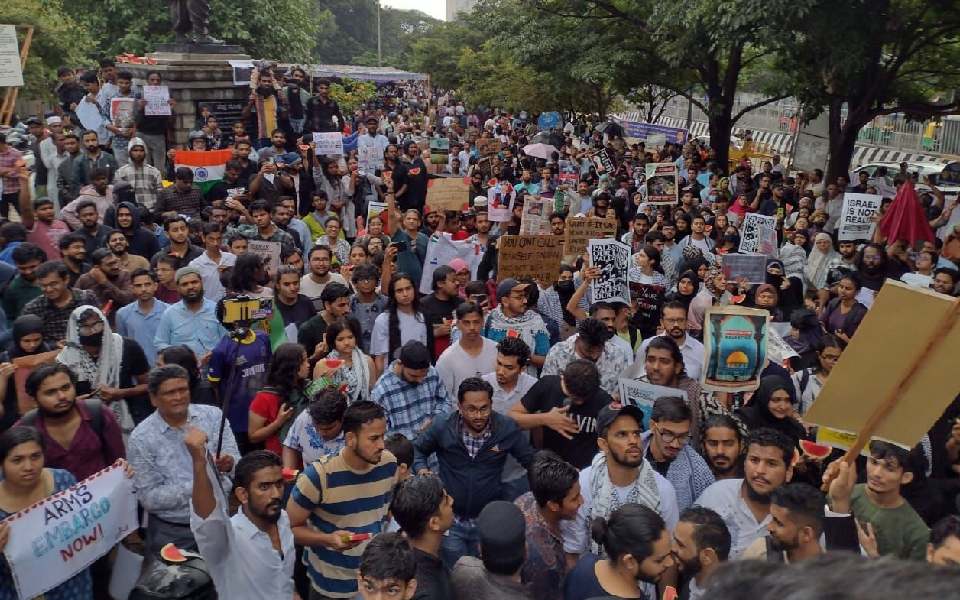
Bengaluru: Approximately 600 people from various parts of Karnataka gathered at Freedom Park on Saturday to protest against Israel's military actions in Gaza, the West Bank, and the recent bombings in Lebanon, Yemen, Iran, and Syria. The protestors called on both the Indian and Karnataka governments to sever ties with Israel and denounced what they termed as complicity in the genocide of Palestinians.
The protest, organized by Bengaluru for Peace and Justice, saw participation from citizens, student activist groups, women’s rights organizations, farmers’ associations, and trade unions. The demonstrators highlighted the staggering humanitarian toll in Palestine, with an estimated 1,86,000 Palestinians killed, including over 16,500 children, and more than 2.3 million people displaced from their homes.
Aishwarya R. from PUCL-K pointed out that the Bengaluru police had threatened to file FIRs against anyone hoisting the Palestinian flag. “The Israeli government banned the Palestinian flag and even the watermelon, as it contains the colors of the flag, turning it into a symbol of Palestinian resistance. Today, we distribute watermelons here as a response to the threats we received,” she said.
Addressing the gathering, Sachin from AISA spoke about imperialism's role in the ongoing conflicts, pointing to Israel’s attacks on multiple Middle Eastern countries. “Despite the devastating loss of lives, Palestinians continue to resist. The Karnataka Police’s fear of the Palestinian flag only exposes their support for a genocidal state,” he remarked.
Shrilakshmi from Students for People’s Democracy expressed concern over the attacks on educational institutions in Gaza and called for increased student solidarity. “The Indian government has clamped down on voices of solidarity across universities in Delhi, Hyderabad, and Bengaluru,” she said.
Other speakers echoed similar sentiments, condemning India’s military collaborations with Israel and urging the government to take a stronger stance against the ongoing violence. Prakash from CPI(M) criticized the shift in India’s policies under Prime Minister Narendra Modi, citing India’s increased military cooperation with Israel, including the controversial Pegasus spyware deal.
Yusuf Kanni from Jamaat-e-Islami Hind Karnataka condemned the widespread loss of lives and humanitarian crises faced by Palestinians and neighboring countries. He called for a complete academic and cultural boycott of all state-run Israeli institutions.
Representatives of the protest group issued a set of demands, including a complete embargo on Israel akin to India’s boycott of apartheid South Africa, the withdrawal of Indian workers from Israel, and an end to all military and surveillance technology collaborations with Israeli companies.
The protestors called for an immediate cessation of ties with Israeli institutions, termination of training programs involving Indian police and security forces, and an end to joint operations.
Let the Truth be known. If you read VB and like VB, please be a VB Supporter and Help us deliver the Truth to one and all.
UP SIR: Over 84 lakh voters added in final list, total electorate rises to 13.39 crore
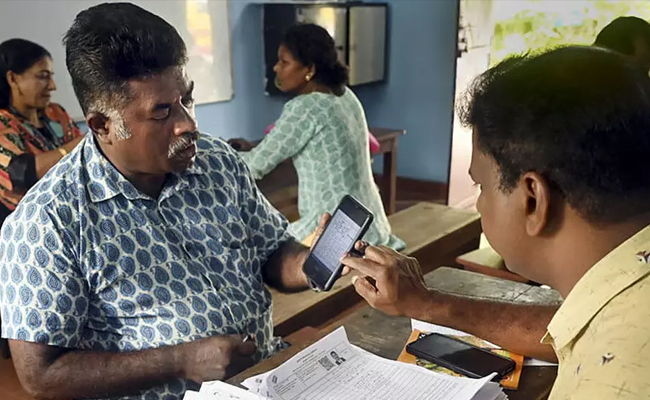
Lucknow (PTI): Uttar Pradesh's electorate grew by over 84 lakh to 13.39 crore after the completion of the Special Intensive Revision (SIR), according to the final voter list published on Friday.
Addressing a press conference at the Lok Bhawan Media Centre here, Uttar Pradesh's Chief Electoral Officer Navdeep Rinwa said the SIR exercise was conducted from October 27, 2025, to April 10, 2026, covering all 75 districts, 403 assembly constituencies and polling stations across the state.
He said the 166-day exercise was carried out with the contribution of 75 District Election Officers (DEOs), 403 Electoral Registration Officers (EROs), 12,758 Assistant EROs, 18,026 BLO supervisors and 1,77,516 Booth Level Officers (BLOs). In addition, 5,82,877 booth-level agents of recognised political parties and crores of voters extended cooperation.
Print, electronic and digital media also played a key role in awareness efforts, he added.
Rinwa said the draft electoral roll published on January 6, 2026, had a total of 12,55,56,025 voters, including 6.88 crore male voters, 5.67 crore female voters and 4,119 third gender voters.
The number of voters in the 18-19 age group stood at 3,33,981, while the gender ratio was 824 female voters per 1,000 male voters.
The final electoral roll published on April 10 shows the total number of voters at 13,39,84,792, he said.
Of these, male voters number 7,30,71,071 (around 54 per cent), female voters 6,09,09,525 (45.46 per cent) and third gender voters 4,206 (less than 0.01 per cent).
The number of voters in the 18-19 age group has risen to 17,63,360, accounting for 1.32 per cent of the total electorate. The gender ratio has also improved to 834 female voters per 1,000 male voters.
Comparing the draft and final rolls, Rinwa said the total increase in the number of voters is 84,28,767. This includes an increase of 42,27,902 male voters, 42,00,778 female voters and 87 third gender voters.
The 18-19 age group registered a rise of 14,29,379 voters, while the gender ratio improved by 10 points from 824 to 834, he said.
Among districts, Prayagraj recorded the highest increase in voters at 3,29,421, followed by Lucknow at 2,85,961, Bareilly at over 2,57,000, Ghaziabad at 2,43,666 and Jaunpur at 2,37,590.
The CEO said the successful completion of the revision exercise reflects coordinated efforts by election officials, political parties and voters across the state.