I have full confidence that Cong will win K'taka Assembly elections with clear majority:Rahul Gandhi
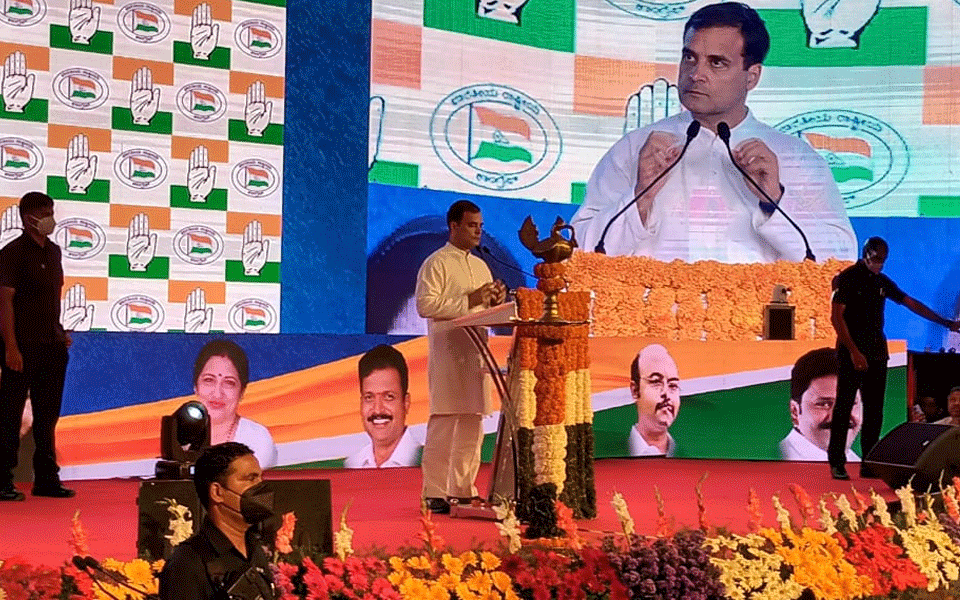
Bengaluru (PTI): Former Congress President Rahul Gandhi on Friday exhorted party leaders in Karnataka to work together and set a target to win 150 seats in the Assembly elections due next year.
Addressing a party meeting here, he said Karnataka has a "spirit of Congress" and is a "natural Congress State".
"....we should win with a minimum of 150 seats (in the 224-member Karnataka Assembly)," Gandhi said. "We should fight united, on right issues and with merit as criteria".
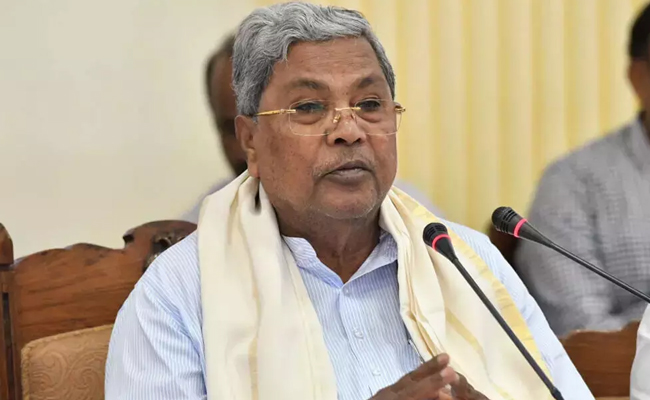
He said the "biggest responsibility" for party leaders Siddaramaiah, D K Shivakumar, and Mallikarjun Kharge and others is to fight together and win 150 seats.
"We should focus on youth and women in this election whether in giving ticket or in organisation," Gandhi said. "I have full confidence that the Congress will win with clear majority and give a government that works for the poor, small traders and all sections."
The Congress leader also attacked the BJP which, he alleged, is not in a position to generate jobs as "they have destroyed small and medium industries".
"The Prime Minister used to speak about corruption, but if he speaks about it in Karnataka, people will laugh as this (BJP government in Karnataka) is the most corrupt state with 40 percentage (commission) government".
Let the Truth be known. If you read VB and like VB, please be a VB Supporter and Help us deliver the Truth to one and all.
Two arrested in K'taka for assaulting minors, uploading CSAM content

Bengaluru (PTI): Two men were arrested for allegedly sexually assaulting two minor girls, recording the acts on mobile phones and uploading the videos online as child sexual abuse material, police said on Thursday.
The accused have been identified as Kiran Kumar (29), hailing from Chitradurga district, and Aditya M K (20), hailing from Shivamogga district, they said.
A probe was initiated after information was received from the NCRP portal regarding a suspected instance of creation of Child Sexual Abuse Material (CSAM) for online dissemination, police said.
Accordingly, a case was registered at Kaggalipura Police Station under relevant sections of the IT Act on May 10, they added.
Investigation revealed that two minor girl victims were exploited and videos were created and uploaded to the internet. The child victims have subsequently recorded their statements as per procedure and further necessary legal steps have been taken, Pronab Mohanty Director General of Police, Cyber Command, said in a statement.
Based on the statements of the victims, the accused persons, who allegedly assaulted the minors, recorded the acts on mobile phones and uploaded the videos online, were arrested, he said.
Following the probe, sections 65(2) (rape) and 70 (gangrape) of the Bharatiya Nyaya Sanhita, along with relevant sections of the POCSO Act, have been added to the FIR, police said.
Officials collected relevant information and on May 12, arrested the accused persons and seized three mobile phones belonging to them, in which the videos had allegedly been recorded, he said.
The accused were later produced before the court and taken into police custody for further investigation, he added.
According to him, in CSAM cases, police usually apprehend offenders who have downloaded such content or have kept them in their possession after obtaining them from elsewhere, usually the internet.
"The present case is one of the very few instances where content creators and uploaders have been apprehended," Mohanty added.