I won’t beg minister post: Horatti
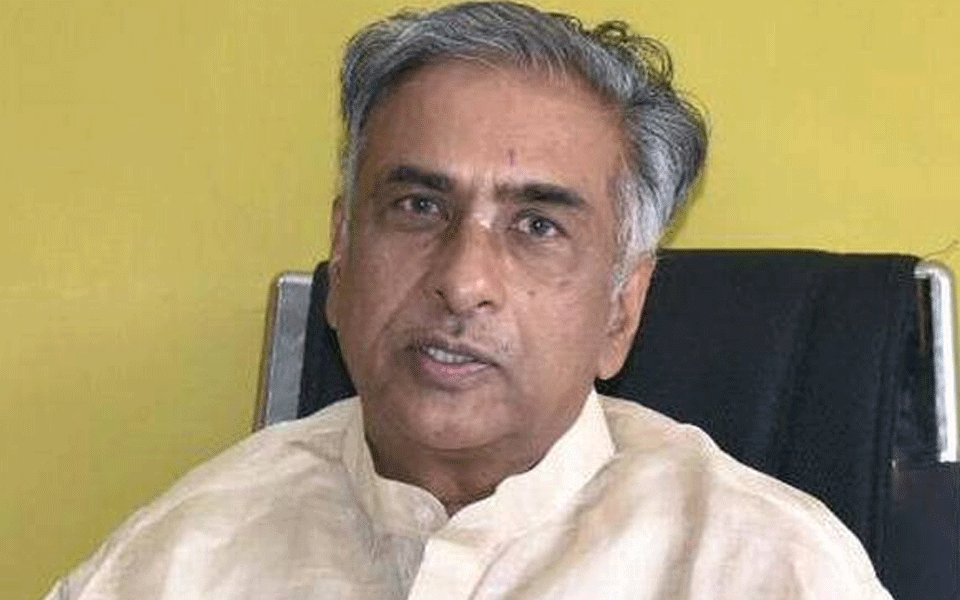
Belagavi, June 11: MLC and JDS leader Basavaraj Horatti said that being the senior member in the Legislative Council, he missed the minister post in the JDS-Congress coalition government, the reason for which is not known.
Speaking to reporters here on Monday, Horatti said that he expected an important portfolio in the coalition government. But in the last moment, his name was dropped for unknown reason. “I have seen in the media about giving Legislative Council Chairman post to me. Teachers in the state have lot of problems. I wanted to become the Education Minister to solve such problems. Now, I don’t require an idle post like Legislative Council Chairman”, Horatti said.
It is known factor that north Karnataka was meted with injustice for many years. But he would not beg ministerial post in the government. In his 38 years political career, he does not have single black mark on him. It is left to the party leadership to give minister post or not, he said.
Those who fought in favour of getting separate religion status for Lingayat community were kept out of the cabinet. MB Patil, Shamanur Shivashankarappa, Eshwar Khandre and himself who fought in favour of the issue were deliberately denied the ministerial berths. Some swamijis have spread false propaganda against them in this issue, he said.
“It is fact that we fought against the injustice to a particular community. We have done the same thing what others do. We have not done murder or robbery. We are helpless if they treated it as a crime”, Horatti said.
Let the Truth be known. If you read VB and like VB, please be a VB Supporter and Help us deliver the Truth to one and all.
'I go to Parliament to create impact, not ruckus': Raghav Chadha rubbishes AAP's allegations
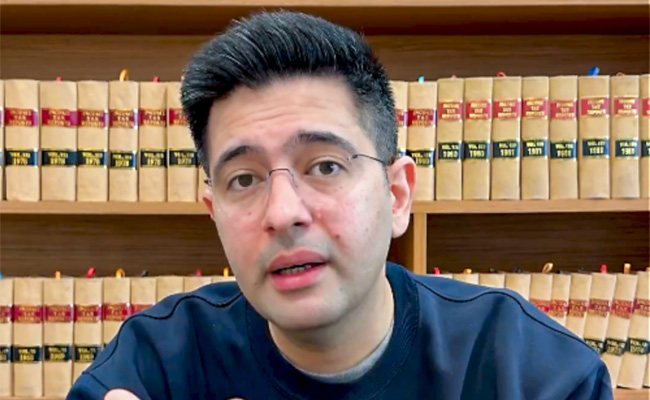
New Delhi (PTI): "I go to Parliament to create impact, not ruckus," said Rajya Sabha MP Raghav Chadha on Saturday as he rejected allegations levelled against him by the Aam Aadmi Party, calling them "false" and part of a "coordinated campaign".
In a video, Chadha dismissed claims that he did not join opposition walkouts, terming the charge a "blatant lie".
He challenged his detractors to cite even a single instance where he failed to participate and said parliamentary proceedings are recorded through CCTV cameras.
Refuting another allegation that he refused to sign a motion related to the Chief Election Commissioner, Chadha said no party leader had asked him, either formally or informally, to sign it. He added that several other MPs from his party had also not signed the motion.
The MP said his focus in Parliament has been on raising public issues such as GST, income tax, air pollution in Delhi, water concerns in Punjab, public healthcare, education, railway passenger issues, menstrual health, unemployment and inflation.
Chadha said that he goes to Parliament to "create impact not ruckus" as it runs on taxpayers' money and it is his responsibility to highlight their concerns. "Every lie will be exposed," he said.