Identities of nine victims of Hassan Ganesha procession accident confirmed
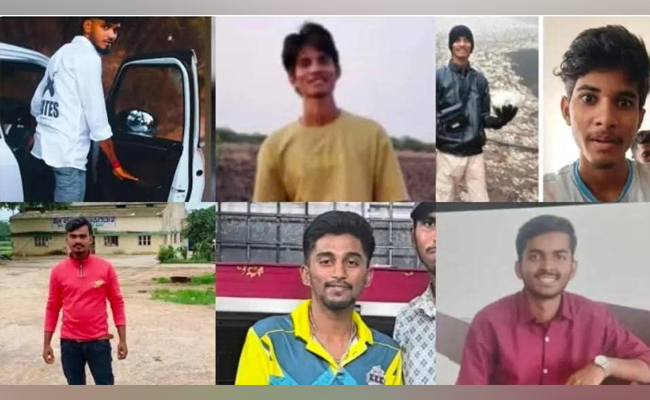
Hassan: The nine victims of the horrific accident that occurred during the procession for Ganesh idol immersion in Mosale Hosahalli in Hassan taluk on Friday night have been identified.
The speeding truck, which was traveling from Hassan to Mysuru, is learned to have hit a road divider and, losing control over the vehicle, ploughed into the procession. Nine people were killed and at least 23 others were injured in the accident on Friday night.
Five of the victims are identified as students of the Government Engineering College in Hosahalli. The accident victims are Suresh, a BE student, who is a native of Manenahalli Marle village in Chikkamagaluru district; Rajesh (17) of Holenarsipura taluk; Ishwara (17) of Danayakanahalli Koppalu village in KB Palya; Gokula (17) of Muttigeheeralli; Kumara (25) and Praveena (25) of Kabbinahalli; Mithun (23) of Gavigangapura village of Hosadurga taluk in Chitradurga district; Prabhakar (55) of Bantarahalli in Hassan taluk; and Praveen Kumar, an Engineering student from Ballari district, who died in hospital on Saturday morning as he failed to respond to treatment.
The bodies are said to have been shifted to the mortuary of Hassan Institute of Medical Sciences (HIMS) Hospital and the post-mortem examination will be conducted on Saturday.
Let the Truth be known. If you read VB and like VB, please be a VB Supporter and Help us deliver the Truth to one and all.
Yadgir: Six people burnt alive in private bus-car collision on Bidar-Bengaluru Highway in Surapura
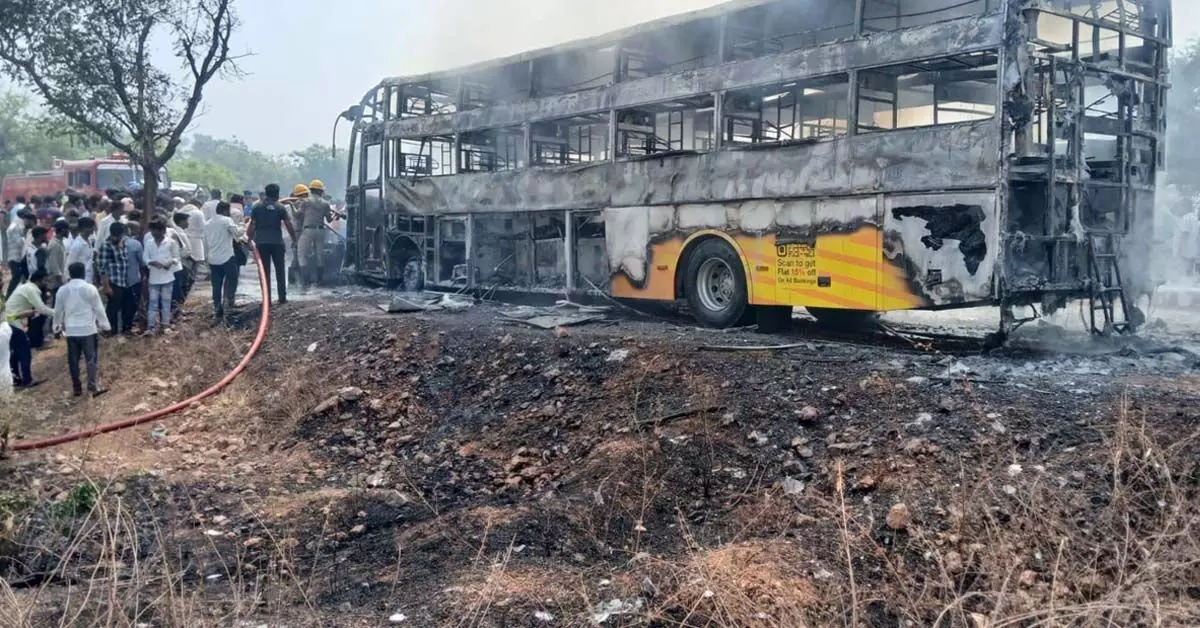
Surapura: In a tragic road accident reported from the taluk, six people were burnt alive in a collision between a private bus and a car on the Bidar-Bengaluru Highway near the Shanthapura Cross close to the Thinthani Bridge on Friday morning.
A fire broke out due to the force of the collision, and both vehicles were gutted in the flames.
The bus is learned to have been traveling from Lingasugur to Kalaburagi, and the car was going towards Lingasugur. While none of the passengers in the bus was reportedly endangered in the accident, all six people traveling the car died in the accident and are learned to have burnt in the fire.
The local fire brigade has successfully doused the flames.
Inspector Umesh M and team of the Surapura Police Station is learned to have arrived at the accident spot and conducted an inspection.
The skulls of four people are said to have been found among the debris.