If I wanted to, I could’ve taken several MLAs to Delhi with me: DK Shivakumar
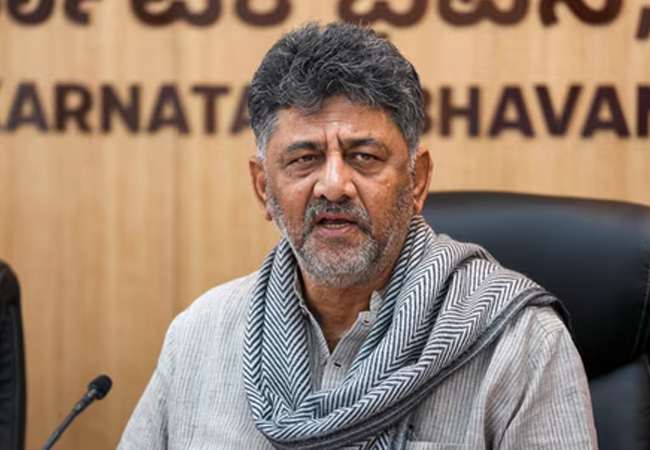
Bengaluru: Karnataka Deputy Chief Minister and KPCC president D.K. Shivakumar has said there is no disagreement between him and Chief Minister Siddaramaiah. He was responding to questions from reporters near Sadashivanagar on Sunday.
When asked whether the recent breakfast meeting between him and the Chief Minister marks a new beginning in the party, Shivakumar said they are working together and must meet the expectations of the people of Karnataka. He added that the party’s next goal is the 2028 Assembly election.
He made it clear that he has never encouraged group politics. If he wanted to, he could have taken several MLAs along with him to Delhi, but he chose not to. As party president, he said, it is his duty to take everyone along and treat all 140 Congress MLAs equally. Shivakumar also recalled that he had worked with full commitment in the past with H.D. Kumaraswamy and said his loyalty was known to Kumaraswamy's father as well. He said some statements may be made due to personal reasons, but he does not take them to heart.
When asked about his discussions with K.C. Venugopal, he said he has spoken to many leaders but would not reveal those conversations publicly. On BJP’s criticism that he is acting like a “super CM,” Shivakumar said the BJP makes such comments only to stay visible as an opposition party.
Responding to a question on whether his trip to Delhi was politically motivated, he said discussions with MPs are needed on issues such as irrigation, maize prices and sugarcane. He suggested that an all-party meeting should be held in Delhi so that all MPs can attend. He added that ministers from Karnataka should also be part of these discussions.
Asked about Minister Priyank Kharge meeting Mallikarjun Kharge in Delhi, Shivakumar dismissed any political angle, saying it was simply a meeting between father and son. He said Priyank had introduced new AI technology and was called to Delhi to explain it, adding that not every meeting should be seen as political.
Shivakumar also said arrangements are ready for the foundation-laying ceremony of the new Congress office, and dates are being finalised. On BJP’s plan to move a no-confidence motion in the Assembly, he said he welcomes it.
When asked about his visits to temples, he said prayer is part of personal discipline and not a political exercise. He added that he visits temples, mosques, churches and Jain basadis for peace of mind and follows the traditions taught by elders.
On his popular line that “efforts may fail, but prayers never fail,” Shivakumar said he stands by it, even if people try to twist its meaning.
Let the Truth be known. If you read VB and like VB, please be a VB Supporter and Help us deliver the Truth to one and all.
CM Siddaramaiah alleges ‘criminal conspiracy’ in Sringeri recount, vows legal action
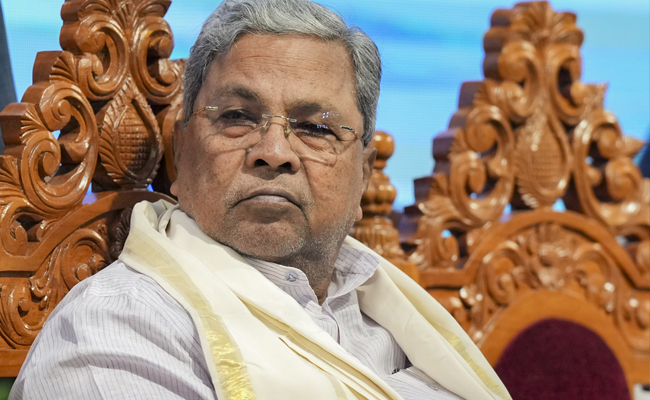
Bengaluru (PTI): Alleging a “criminal conspiracy” by BJP candidate D N Jeevaraj in the Sringeri Assembly poll recounting, Karnataka CM Siddaramaiah on Tuesday said the outcome was manipulated after valid postal ballot votes in favour of Congress leader T D Raje Gowda were tampered with during the recounting process.
Following a Karnataka High Court order on an election petition filed by Jeevaraj, challenging Raje Gowda’s election, the reverification and recounting were conducted on Saturday.
After the reverification and recount of postal ballots for the Sringeri Assembly constituency, votes polled in favour of Raje Gowda were reduced by 255, the returning officer said.
A report on the matter has been submitted to the Election Commission of India for further action, the officer added.
Congress leader Raje Gowda had won the 2023 Assembly polls from Sringeri by 201 votes, defeating his nearest rival Jeevaraj.
Addressing a press conference in Bengaluru, Siddaramaiah said the High Court had directed the recounting of postal ballots and that irregularities were noticed during the exercise conducted on May 2.
“This is a clear case of criminal conspiracy,” Siddaramaiah said, alleging that valid votes cast in favour of Raje Gowda were altered after being accepted by counting agents of all parties, including Congress, BJP, and JD(S).
He claimed that during the recounting of postal ballots, 255 votes were initially accepted as valid by all agents but were later tampered with by subordinate officials.
“There is a second mark on the votes polled in favour of Raje Gowda. They had accepted these as valid votes. Subsequently, another mark was made by officials. This is a clear case of criminal conspiracy,” he said.
When asked who was behind the alleged conspiracy, the CM replied, “It was hatched by Jeevaraj and others. It is planned.”
Siddaramaiah further alleged that the returning officer acted improperly by declaring the result despite the presence of an Election Commission observer during the recounting.
“Immediately after the counting, the returning officer announced the result. He should not have done so; this is against the law,” he said.
He pointed out that Raje Gowda had originally won by 201 votes, but after the recounting, the BJP candidate was declared the winner by 52 votes.
“The BJP has committed a criminal act of conspiracy. This is not vote chori but vote dacoity,” he alleged.
The CM said a police complaint had already been filed by Raje Gowda’s election agent, Sudhir Kumar, and emphasised the need for electoral integrity.
“We want transparency and free and fair elections. That is what our Constitution mandates,” he added.
Stating that the government would pursue legal remedies, Siddaramaiah said, “We are preparing an appeal challenging the returning officer’s announcement in a court of law.”
Responding to a separate query on elections in other states, the CM said there appeared to be an anti-incumbency factor in West Bengal, while results in Tamil Nadu were “surprising,” adding that Vijay’s party was emerging as the largest there.
Following the victory of party candidates in Bagalkote and Davanagere South, Siddaramaiah expressed confidence about future electoral prospects in Karnataka.
“Even in 2028, we will win the Assembly elections. We will come back,” the CM said.
Siddaramaiah added that he would order a forensic examination into the alleged tampering of postal ballots.