IIM-B director, seven others booked over caste discrimination against Dalit professor
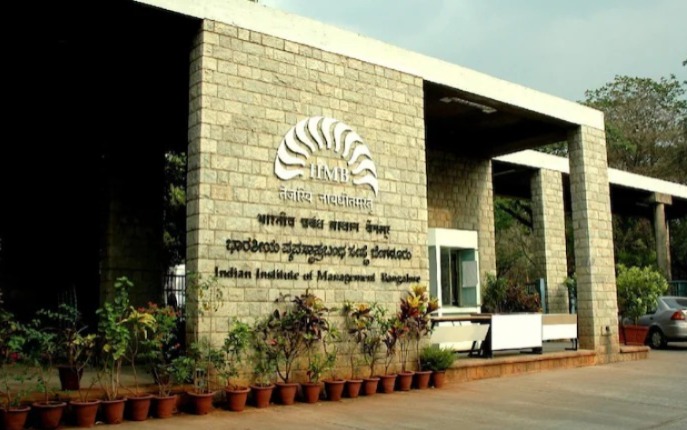
Bengaluru(PTI): A case has been registered against the director and seven professors of the Indian Institute of Management, Bangalore (IIM) for allegedly discriminating against a Dalit associate professor on the basis of his caste, police said on Saturday.
Based on the complaint from the associate professor, a case was registered on Friday against the director and other faculty members of IIMB under the Scheduled Castes and the Scheduled Tribes (Prevention of Atrocities) Act and Bharatiya Nyaya Sanhita.
"We received the complaint and filed a case. However, those named in the FIR claimed that they obtained a stay order from the court the same evening. But we are yet to receive the order," a senior officer said.
Based on an investigation report of the Directorate of Civil Rights Enforcement (DCRE), the Social Welfare Department directed the state police chief to initiate legal action on the complaint of the said associate professor.
According to police, Gopal Das, an associate professor at IIMB, alleged that eight persons deliberately revealed and publicised his caste at workplace and he was denied equal opportunity.
He further alleged that he was also threatened and mentally harassed.
In a statement issued earlier, the IIMB claimed that rather than harassment or discrimination, Das has received all forms of support from the Institute since his recruitment in 2018, starting with his applying for the position of Assistant Professor, but being offered the role of Associate Professor based on his qualifications and experience.
According to IIMB, he has received significant incentives since he joined IIMB for his research and teaching, in addition to his salary as Associate Professor as per the 7th central pay commission of the Government of India. He has been given positions of responsibility including Chairperson, Institutional Review Board; Member, Career Development Services Committee and Member, Diversity and Inclusion Committee.
"He has taught courses of his choice across different academic programmes of the Institute.
Dr Das’s allegations of discrimination against the Institute and its faculty arose only when his application for promotion was put on hold because of complaints of harassment lodged by some doctoral students against him. An enquiry conducted by IIMB as per the rules, with the committee including a reputed academic from the SC category from an eminent institution, found that the students’ complaints were justified," it stated.
"IIMB remains committed to fostering an inclusive academic community and will continue to uphold its legacy of excellence and integrity, and will take appropriate action in consultation with legal experts," the statement added.
Let the Truth be known. If you read VB and like VB, please be a VB Supporter and Help us deliver the Truth to one and all.
US–Iran first round direct talks conclude in Islamabad: Report
_vb_48.jpeg)
The first round of direct talks between the United States and Iran, held in Islamabad, has concluded, Al Jazeera reported citing sources close to the development.
According to the report, following the discussions, delegations from both sides agreed to exchange written documents, a move aimed at ensuring clarity and consensus on the understandings reached during the meeting.
Both the Iranian and US delegations arrived in Islamabad on Saturday, April 11, amid high security for the peace talks.

_vb_17.jpeg)