India needs to get into vaccine production in a big way: Kiran Mazumdar-Shaw
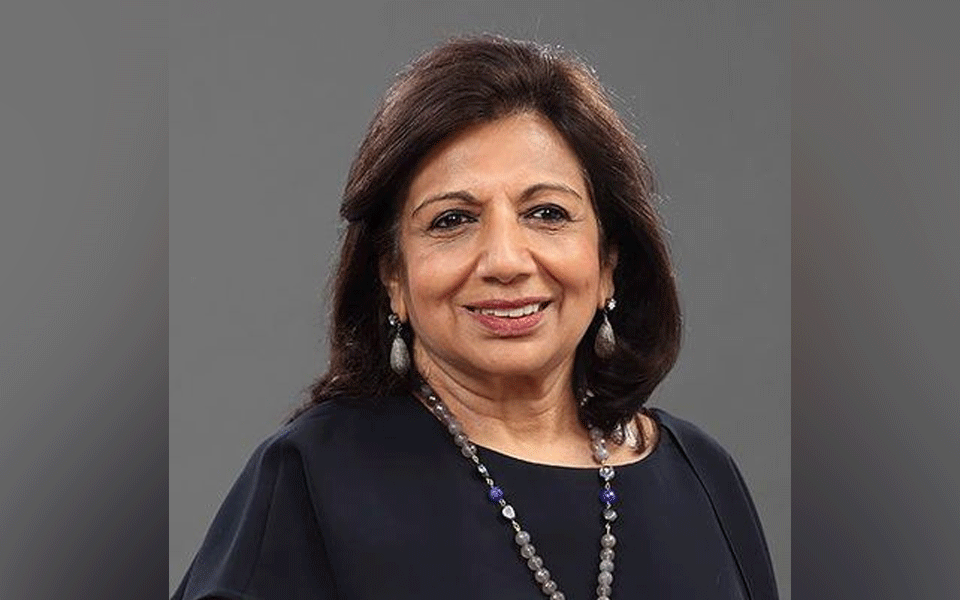
Bengaluru: India should step up research on communicable diseases and get into vaccine production in a big way, says biotechnology industry veteran Kiran Mazumdar-Shaw in the backdrop of the coronavirus outbreak globally.
The Chairman and Managing Director of Biocon Ltd also urged the government to rope in the private sector to boost diagnostic capacity to deal with the COVID-19 cases.
"Now we realise that it cannot be contained so easily," she said on the World Health Organisation's assessment that COVID-19 can be characterised as a pandemic.
According to her, the response of the US and Europe has been very slow in containing it.
"Now that they are responding, they realise that it has spread quite a lot", Mazumdar-Shaw told PTI in an interview.
What's even more scary is that there are not enough diagnostic kits available (in major coronavirus-affected countries) for quick diagnosis, she said.
"You can't even do mass screening. Even in a country like the US, even though people are exhibiting all these symptoms, they are basically taking chest x-rays and quarantining them.
They don't have enough kits to really deal with every case. So, it's quite worrying, because you can see how it's surging," Mazumdar-Shaw said.
Countries like China and parts of Asia such as Singapore have contained it, she noted.
In India, the coronavirus positive cases are low at the moment, but, one has to wait and see how far it can be contained, she said, adding companies in India are taking immediate rapid response steps.
Biocon for example has started checking the temperatures of all people entering its premises -- employees and visitors -- from Monday.
Mazumdar-Shaw stressed the need for the Indian government to focus on diagnostics now.
"Because just restricting it to a few government labs is going to be very difficult for the government to deal with huge volumes that could pile up.
Many of these could be negative but we have to check.
Private sector also should be roped in to offer some of these rapid tests," she said.
Biocon is willing to set up a testing facility for coronavirus, she said, adding, there is a need to very rapidly increase the number of diagnostic centres in India.
"Otherwise, we will not have capacity at some stage to screen people who are displaying these symptoms," she said.
Mazumdar-Shaw said data is needed to know the age profile of those exhibiting serious symptoms.
"All this data is very important; if you don't have diagnostic kits and if you are second guessing, then you are not going to get credible data on which to act," she added.
On the impact of coronavirus on the Indian biotechnology industry, she said there was an opportunity for the sector to start seriously looking at these kinds of viral diseases.
"Indian public health system does not even mandate a flu-shot every year. I always take an annual flu-shot when I go abroad or even here.
So, these kinds of things are very important that we get into vaccine production in a big way, and getting understanding of viral epidemics is important, we need to a lot of studies on viruses", Mazumdar-Shaw said.
Even before the coronavirus outbreak, she had asked the government to allocate a big fund to create a viral and microbial repository, so that more research can be done and India can be in a state of preparedness in terms of vaccines and antibiotics.
"All this research is going to be very important for the world. Now, the world has realised it has neglected antibiotics", she said.
Communicable diseases were dubbed "third world" or "developing world" diseases in some quarters.
"That's not true anymore; it (communicable diseases) affects the whole world because of travel and migration.
This is an opportunity to really strengthen the India biotech sector and make sure that you start researching on all these communicable diseases as well", Mazumdar-Shaw said.
Let the Truth be known. If you read VB and like VB, please be a VB Supporter and Help us deliver the Truth to one and all.
Sujit Nair raises concerns over speculation of DMK-AIADMK understanding to block TVK
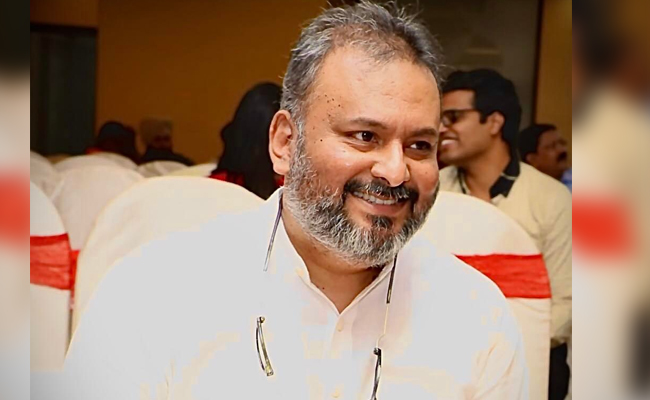
Chennai: Journalist and political commentator Sujit Nair has expressed concern over speculation that the Dravida Munnetra Kazhagam and the All India Anna Dravida Munnetra Kazhagam could explore a post-poll understanding to prevent Vijay-led Tamilaga Vettri Kazhagam from forming the government in Tamil Nadu.
In a social media post, Sujit Nair said the election verdict in Tamil Nadu reflected a clear public demand for political change and argued that the mandate should be respected irrespective of political preferences.
Referring to reports and political discussions surrounding a possible understanding between the DMK and AIADMK, he said he hoped such developments remained only speculative conversations and did not turn into reality.
Nair stated that if such an alliance were to take shape, it would raise serious questions about ideological politics in the country. He said TVK had emerged through a democratic electoral process and that the legitimacy to govern in a parliamentary democracy comes from the people’s verdict.
According to him, attempts to prevent an electoral winner from forming the government through unexpected political arrangements may be constitutionally valid, but many people could view them as politically opportunistic.
He further said that such a move could particularly affect the political image of the DMK, which has historically projected itself around ideology, social justice and opposition politics. Nair said that in ideological terms, the DMK appeared closer to TVK than to the AIADMK, and joining hands with its long-time political rival only to remain in power could weaken its broader political narrative.
He added that the same questions would apply to the AIADMK as well, as the party had spent decades positioning itself against the DMK and such an arrangement could create discomfort among its cadre and supporters.
Drawing a comparison with Maharashtra politics in 2019, Nair said he had expressed similar views when the Shiv Sena formed an alliance with the Indian National Congress and the Nationalist Congress Party after the Assembly elections.
He said post-poll alliances between long-standing political rivals often create a public perception that ideology and electoral mandates become secondary when political power equations come into play.
Nair also said such developments increase public cynicism towards politics and reinforce the belief among voters that ideology is often sidelined after elections.
He maintained that the Tamil Nadu verdict was emphatic and said respecting both the spirit and substance of the mandate was important for the credibility of democratic politics.