
Internal reservation: Karnataka govt to go for survey of SCs to gather empirical data
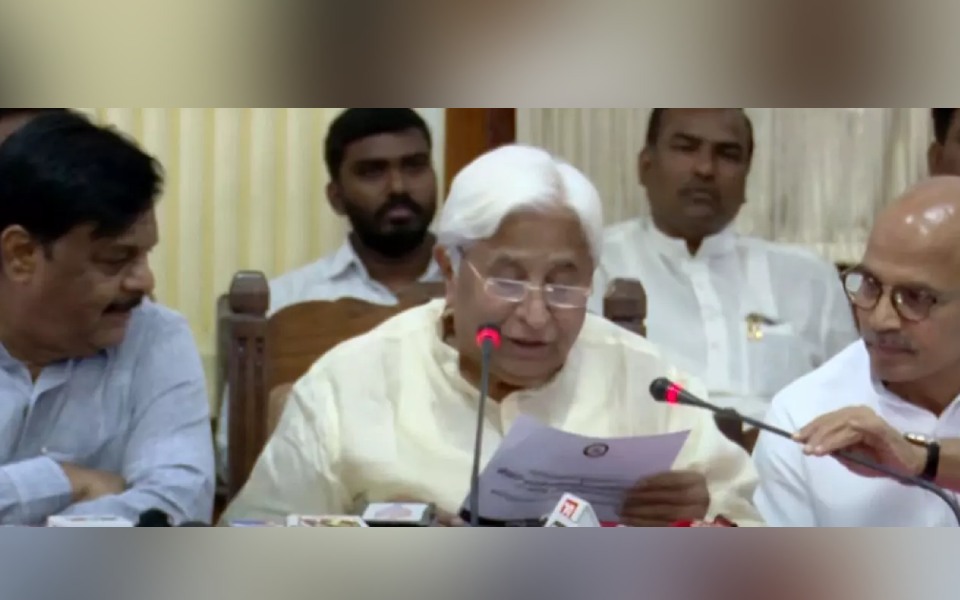
Bengaluru, Mar 27 (PTI): Accepting Justice H N Nagmohan Das Commission's interim report, the Karnataka Cabinet on Thursday decided to go for a survey of Scheduled Castes (SCs) in the state, to decide on internal reservation among them.
The one-man commission of the retired High Court judge submitted the interim report to Chief Minister Siddaramaiah earlier in the day, just ahead of the Cabinet meeting.
The government has been under pressure from SC communities and from within the ruling Congress party to implement internal reservation at the earliest, for which empirical data is needed, and the government has decided to go by the recommendation of the commission to gather the data.
The internal reservation is aimed at slicing up the 17 per cent reservation matrix given to 101 scheduled castes.
"The Cabinet has accepted the interim report submitted by Justice Nagmohan Das Commission," Law and Parliamentary Affairs Minister H K Patil said.
Briefing reporters about the Cabinet's decision, he said to ensure that the internal reservation process happens at a fast pace, it has been decided to request Justice Nagmohan Das Commission to oversee new survey and gathering of data.
"The commission has suggested that 40 days is required for the survey to be completed. Naturally it may take five to ten days for preparation, so it has been decided to extend the commission's tenure by two months, for it to complete the process and submit the report within 60 days--two months," he added.
Noting that the commission has made four major recommendations, Patil said they include conducting a fresh survey and gathering of data for scientific classification of sub castes among SCs in Karnataka; and that, using advanced scientific and technological devices, a new survey can be done in 30-40 days.
"It has also recommended for preparing a required questionnaire for a fresh survey, and constituting a high-level committee to oversee mobilisation of resources for the survey is to be conducted, and training of the staff required for it; and provisioning among the sub castes of SCs from quantum of reservation that is available by following the criterion mentioned in the report, on the basis of the data gathered from the new survey."
A section of SCs, especially 'SC Left', have been demanding internal reservation, alleging that only a few influential sub-castes were taking away a majority of the benefits, while many communities were still marginalised.
The government, in November last year, appointed Justice Nagmohan Das to head a commission to recommend internal reservation among SCs, after the Supreme Court last year allowed the states to provide internal reservation, and the State Cabinet agreed to implement internal reservation.
In a landmark verdict delivered by the Supreme Court on August 1 last year, it held that states are constitutionally empowered to make sub-classifications within the SCs, which form a socially heterogeneous class, for granting reservation for the uplift of castes that are socially and educationally more backward.
Social Welfare Minister H C Mahadevappa, responding to a question, said survey can be done in 40-45 days using advanced technologies. There are 6,000 panchayats and more than 300 urban local bodies, and a host of officials to manage things, he said.
"The Chief Secretary is holding a meeting with top officials in this regard, and the Cabinet has asked them to do it on a war footing, under the Chief Secretary's suprivision," he said.
Rejecting any "time pass or dodging of time" with the fresh survey, Mahadevappa said the government and the ruling Congress party are committed to providing internal reservation among SCs.
"If the data is scientifically accurate, there won't be any problem in the future. In Andhra Pradesh, Telangana, Haryana and other states they (internal reservation decisions) have landed in court, it should not happen. Things should be pucca and benefit people. That's our intention," he added.
To a question on the need for a fresh survey, and whether the Census data was not available, Mahadevappa said, "Four major groups among SCs are not there in the census. If we don't include that data, it may be challenged in the court of law. That's the reason why we want a fresh census within stipulated time."
Earlier in the day, Justice Nagmohan Das, after submitting the interim report to the chief minister, said, "After in-depth study for more than two months by me and my team, I have submitted a 104-page report. The report was not submitted hurriedly. The government in fact has not asked us to submit the interim report, we have voluntarily given it."
Asked by reporters whether the interim report was a delay tactic, the retired judge said he doesn't think so. "Giving a permanent solution to them (those waiting for internal reservation) is my intention..."
Let the Truth be known. If you read VB and like VB, please be a VB Supporter and Help us deliver the Truth to one and all.
Karnataka issues nutrition advisory for govt events; recommends millets, healthier options
_vb_61.jpeg)
Bengaluru (PTI): The Karnataka government on Monday issued a nutrition advisory recommending healthier food and beverage options at meetings, functions, and other official gatherings held in the state.
The advisory has been issued by the Department of Karnataka Health and Family Welfare Services to promote healthy dietary and nutritional habits among officials and staff, noting that food, refreshments and beverages served in government offices and official programmes are "often not aligned with nutrition standards."
The advisory recommends serving snacks such as millet-based, low-fat and low-sugar foods, fresh fruits, vegetable salads, sprouts, roasted nuts and seeds during in-house office meetings and breaks.
Beverages such as green tea, low-fat buttermilk, and locally filtered or boiled water served in glass bottles or steel flasks have also been suggested.
According to the advisory, for larger government events, conferences and exhibitions, departments have been advised to include at least one millet-based item during snacks and a minimum of two millet dishes in meals, along with local cuisine and at least one regional recipe.
It also recommends the use of brown rice instead of white rice, freshly prepared vegetable salads, and fresh fruits or low-sugar fruit juices.
If non-vegetarian food is served, it should consist of well-cooked lean or white meat, the advisory stated.
In eateries operating within government office campuses, the department has recommended millet-based foods, fresh vegetable salads, boiled pulses such as horse gram or chickpeas, and low-fat beverages.
It suggests serving food using reusable metal plates and glasses.
The advisory also recommends avoiding microwave-heated food, industrially processed food, fried snacks, high-fat or heavily spiced dishes, carbonated drinks, high-sugar fruit juices, and alcoholic beverages.
It further discourages serving milk-based tea or coffee and plastic-bottled water during official events.
“Overall, hygiene and cleanliness should be maintained while serving food and water. Local cottage industries, self-help groups, prison kitchens, nutri-gardens and others should be preferred for placing food and beverage orders,” the advisory added.
_vb_54.jpeg)
_vb_07.jpeg)
_vb_34.jpeg)