IPL final shifted for bigger stadium, not ticket issue: Shivakumar
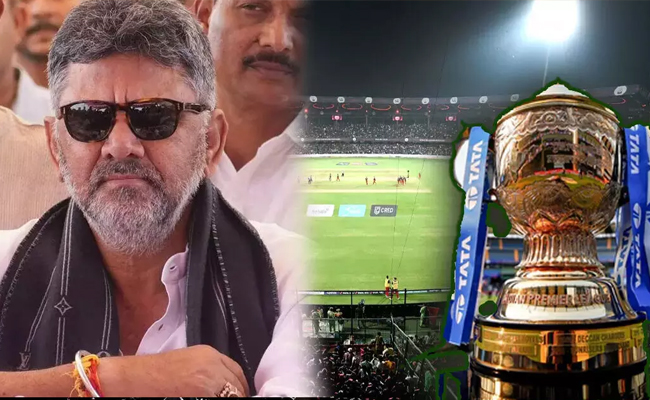
Bengaluru (PTI): Karnataka Deputy Chief Minister D K Shivakumar on Wednesday rubbished allegations that the IPL final venue was shifted from Bengaluru to Ahmedabad due to the distribution of tickets to MLAs.
Speaking to reporters, Shivakumar said the reason for the shift could be the availability of a larger stadium in Ahmedabad.
“Ahmedabad has a large stadium and can accommodate more spectators. That must be the reason the IPL final was shifted there. There is no connection between ticket distribution to MLAs and the venue change,” he said.
When asked about reports linking the venue shift to MLAs demanding tickets, he quipped, “In some places, 50 per cent of tickets are reserved.”
When reporters said the BCCI had indicated that the decision was linked to ticket issues, he responded, “Let them make such statements. I will respond appropriately.”
Bengaluru was originally expected to host the final as the Royal Challengers Bengaluru were the defending champions.
Ahmedabad will host the IPL final for a second successive season on May 31, the BCCI announced earlier in the day, while allotting Qualifier 1 to Dharamsala and two other playoff games to New Chandigarh.
The board, however, said the final venue was shifted “owing to certain requirements from the local association and authorities that were beyond the scope of BCCI’s established guidelines and protocols.”
Shivakumar declined to comment on the revocation of the suspension of Muslim leaders in Davanagere, saying it was a party decision.
Regarding the removal of MLC Naseer Ahmed as CM Siddaramaiah’s political secretary, he said the chief minister had already spoken on the matter.
“The CM has his own information. Party office-bearers have provided guidance. He was given certain responsibilities, which he did not handle properly, which is why he was removed,” Shivakumar said.
On MLC Abdul Jabbar, who resigned as the state Congress minority cell chief and was later expelled from the party, he said Jabbar had submitted his resignation, which the party accepted.
The Congress in Karnataka faced internal dissent in April when several Muslim leaders objected to the party fielding Samarth Shamanur as its candidate for the recently held Davanagere South Assembly bypoll.
They demanded that a Muslim candidate be fielded, citing the constituency’s substantial Muslim population. The party subsequently took disciplinary action against three leaders, including Jabbar and MLC Ahmed.
When asked about his and the CM’s visit to Delhi, he said, “We will go when the high command calls us. It is not appropriate to go without being called.”
On Congress supporting TVK in Tamil Nadu, Shivakumar said the decision was taken to keep the "BJP out of power and strengthen secular forces." Elections to the 234 Assembly constituencies were held on April 23, and the results were announced on May 4.
The Congress party, a long-time ally of the DMK, announced its support for TVK to form a government in Tamil Nadu and severed ties with the Dravidian major.
The incumbent DMK was trounced by the fledgling Tamilaga Vettri Kazhagam, led by Vijay, who secured 108 seats. “Despite pressure from the AIADMK and BJP, TVK did not align with them. Our party has taken this decision in the interest of secular forces and the welfare of Tamil Nadu,” Shivakumar said.
Let the Truth be known. If you read VB and like VB, please be a VB Supporter and Help us deliver the Truth to one and all.
Woman Police Commissioner goes undercover to assess women's safety in Hyderabad
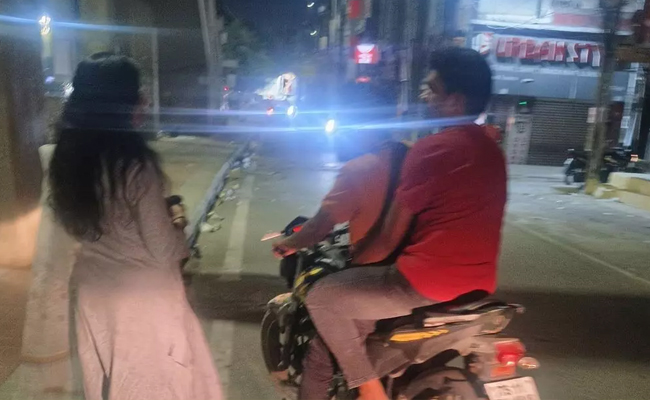
Hyderabad (PTI): Soon after taking over as Malkajgiri Police Commissioner B Sumathi went undercover and took up a field visit after midnight on May 1 to assess law and order, including women's safety.
Sumathi assumed charge as the Malkajgiri Police Commissioner on May 1.
On the same night, the senior IPS officer, in plainclothes, moved through the streets of Dilsukhnagar here, standing alone for some time to get a first-hand knowledge of law and order situation, official sources said on Wednesday.
"It was a general checking and she later interacted with police officials," they said.
The sources said about 30-40 individuals who approached her were counselled regarding their behaviour towards women in public places.
Sumathi, who earlier headed the Special Intelligence Branch (SIB), of the Telangana Police, oversaw the long drawn process of the Maoists joining the mainstream.