Irregularities in selecting Hajj pilgrims, alleges woman

Bengaluru, Jan 23: Nusrat Raza, a beneficiary who was denied Hajj pilgrimage, alleged that both State Haj Committee and Minority Welfare Department have involved in irregularities in selecting Hajj pilgrimages for the present year.
Speaking to reporters at the Press Club here on Wednesday, she said that during present year, the central Haj Committee has fixed 6,701 quota for the state. But more than 14,000 people have applied for it. But the state Haj Committee, after selecting the beneficiaries under the central quota through Khurra (lottery), has informed the beneficiaries that you were not selected.
The Committee has conducted the Khurra process at Vidhana Soudha Banquet Hall on January 16 in which Minority Welfare Minister Zameer Ahmed Khan, Committee president Roshan Baig, CEO Sarfraz Khan, Ministers, Religious leaders and state committee members were present.
As planned, in the beginning, Khurra of Bagalkot district was completed and later, Bengaluru Urban district held. In the same way, all 30 districts were covered. In that process, for Bengaluru urban district, lottery was held for 395 covers and in each cover, there would be three names. In the same way, total 994 names in 395 covers were selected and announced their names. But on the next day, she received a message that she was not selected for the Hajj pilgrimage from the Haj Committee, she alleged.
What went wrong?
The lottery was fixed on January 16. In order to avoid last minute lapses or mistakes, the officials have conducted rehearsal on January 15. Surprisingly, during the lottery on January 16, all the 395 covers of Bengaluru urban district were conducted as per the rehearsal list of January 15. This mistake was disclosed only after completing all 30 districts, she said.
In order to rectify the mistake of rehearsal, the officials held the lottery of Bengaluru urban district as per the January 16 list. So, due to the mistakes of officials, the beneficiaries who were selected during January 15 have lost the opportunity of pilgrimage. So, the minister should interfere and ensure justice to them. They were not interested for conflict. But they should be given opportunity. Otherwise, they would take up legal fight, she warned.
Action against erring officials: Minister Zameer Ahmed Khan
No irregularity was occurred in the present year selection process of Hajj pilgrims. Instead, some confusions were created due to some technical problems, for which, action would be taken against the erring officials, State Wakf and Hajj Minister Zameer Ahmed Khan said.
Speaking to reporters here on Wednesday, the Minister said that the lottery process was fixed on January 16. In order to avoid last minute confusions, the officials have conducted experiment on January 15 and this has led to some confusions, for which he would tender apology, he said.
Central Haj Committee has allotted 6,701 seats for this year to the state. But more than 10,000 people have applied for the selection. Even the selection process would also be monitored by the central committee. Everybody wanted to conduct Hajj pilgrimage once in their lifetime. So, some people have experienced the confusion due to some technical issues. He would initiate enquiry into such mistake and take action, the Minister said.
Let the Truth be known. If you read VB and like VB, please be a VB Supporter and Help us deliver the Truth to one and all.
First direct US-Venezuela commercial flight in 7 years to land in Caracas
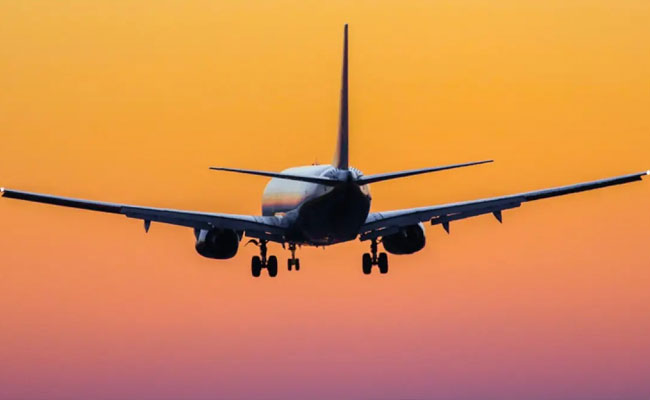
Caracas (Venezuela) (AP): The first direct commercial flight between the United States and Venezuela is scheduled to land on Thursday in the Venezuelan capital, Caracas, seven years after the US Department of Homeland Security ordered an indefinite suspension, citing security concerns.
The resumption of a commercial flight between the two countries comes in the wake of the US capture of Nicolás Maduro in a stunning nighttime raid on his residence in Caracas, Venezuela's capital, in early January.
It also comes a month after the US formally reopened its embassy in Caracas following the restoration of full diplomatic relations with the South American country.
Flight AA3599 operated by Envoy Air, a subsidiary of American Airlines, was scheduled to depart from Miami at 10:16 a.m. local time and arrive three hours later in the Venezuelan capital, returning to Florida later in the afternoon.
Earlier, the airline said a second daily flight between Miami and Caracas will start on May 21.
In late January, US President Donald Trump said he informed Venezuela's acting President Delcy Rodríguez that he would open up all commercial airspace over Venezuela, allowing Americans to visit.
“American citizens will be very shortly able to go to Venezuela, and they'll be safe there,” Trump said at the time.
The flights mark the resumption of nonstop travel between the US and Venezuela for the first time since diplomatic ties were severed in 2019. For the past seven years, passengers have relied on international airlines and indirect routes through neighbouring Latin American countries.
In January, when the airline announced the resumption of flights it said it would give customers the opportunity to reunite with families and pursue new business opportunities.
American Airlines was the last US airline flying to Venezuela. It suspended flights in 2019 between Miami and Caracas, as well as flights to the oil hub city of Maracaibo. Delta and United Airlines pulled out in 2017 amid a political crisis that forced millions to flee the country.