ISRO unveils bust of space pioneer Sarabhai in Bengaluru
Bengaluru, Aug 12 : Marking the 99th birth anniversary of India's space pioneer Vikram Sarabhai, the state-run Indian Space Research Organisation (ISRO) on Sunday unveiled his bust at its headquarters here.
The space agency's former chairmen K. Kasturirangan and A.S. Kiran Kumar and incumbent Chairman K. Sivan were present on the occasion at the Antriksh Bhavan.
Sarabhai was born on August 12, 1919, in Ahmedabad. Gujarat. He died on December 30, 1971, at the age of 52 at Thiruvananthapuram, Kerala.
As the founding father of the Indian space programme, Sarabhai set up the Physical Research Laboratory in Ahmedabad in 1947 as a precursor to the ISRO.
"Sarabhai chose space technology to reduce inequality. Under his guidance and leadership, India has been able to achieve what he had envisioned," Sivan said.
The space agency will mark Sarabhai's birth centenary in 2019 and celebrate the event through the year with space-related activities.
"To mark the centenary, knowledge centres will be set up across the country and scholarships, fellowships and the Sarabhai international award for innovation in space technology will be presented," said Sivan.
The unveiling of his statue (bust) is a curtain raiser to his birth centenary. The proposal to name Chandrayaan-2 lander as "Vikram" was approved by the Department of Space.
"As the true tribute we can offer Sarabhai is through our space missions, we will launch nine missions over the next five months, with at least two a month," asserted Sivan.
Sarabahi was awarded (posthumously) the Padma Vibhushan in 1972, Padma Bhushan in 1966 and Shanti Swarup Bhatnagar medal in 1962.
Let the Truth be known. If you read VB and like VB, please be a VB Supporter and Help us deliver the Truth to one and all.
Congress using hijab issue to pacify minority anger, alleges Karnataka LoP R Ashoka
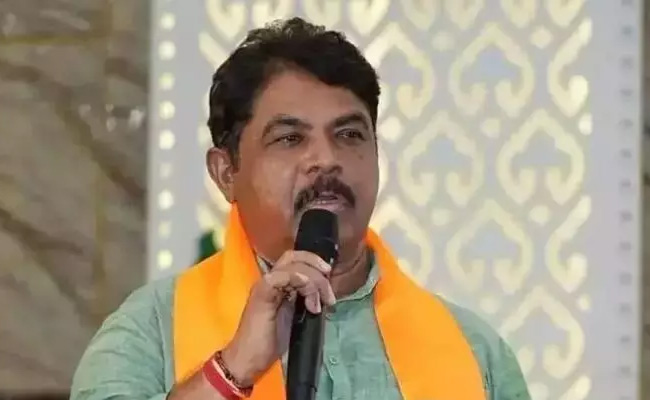
Bengaluru: Leader of Opposition in the Assembly R. Ashoka has accused the Congress government of using the hijab issue to placate what he described as discontent among minority voters after the Davanagere by-election.
In a post on X on Wednesday, Ashoka alleged that the state government, instead of addressing issues such as price rise, corruption, farmers’ distress and law and order, was attempting to retain its minority vote base by reviving the hijab issue.
Referring to the 2022 dress code introduced by the BJP government, which prohibited hijab in schools and colleges, Ashoka said the Karnataka High Court had upheld the policy and emphasised the importance of discipline in educational institutions.
He questioned the Congress government’s move to revisit the issue and asked whether setting aside the court-backed policy to benefit one community could be described as secularism.
Ashoka further alleged that while the government was willing to permit hijab, it continued to prohibit saffron shawls.
He accused the government of dividing students on religious lines rather than treating schools and colleges as spaces of equality.
Drawing a comparison with Mamata Banerjee’s government in West Bengal, Ashoka claimed that excessive appeasement politics had harmed the state and warned that the Congress in Karnataka could face a similar political response.
He said voters in Karnataka would teach the Congress a lesson for what he termed “vote-bank politics” and for compromising constitutional and judicial principles.