IT raid: DK Shivakumar moves HC seeking dismissal of ED summons

Bengaluru, February 4: Water Resources Minister DK Shivakumar on Monday moved the Karnataka High Court seeking dismissal of summons issued by the Enforcement Directorate (ED) asking him to attend the enquiry related to IT raid on his flats in New Delhi. But his writ petition has to be taken for the hearing.
About incident
In an IT raid, the officials have recovered Rs 8.90 crore from a house at KR Puram and Safdarjung Enclave Flats in New Delhi. The IT officials have alleged that Rs 6.68 crore recovered from the flat belonging to Sunil Kumar was transported from Bengaluru to New Delhi through hawala method.
The IT officials who have conducted raids on the houses and offices of Shivakumar and his associates, have prepared a report based on the documents they have seized. The IT officials also investigated into the case after recovering the dairies of the accused and prepared 33-page report enlisting the allegations. The same report was handed over to the ED which registered a case against Shivakumar.
When IT officials raided the house of Shivakumar, they got a dairy and in that dairy, there was a code word ‘KG’ and IT officials suspected that hawala transaction was done through this code word. It is the fourth case registered against Shivakumar related to this case. He has been facing the charge of transporting the money through hawala means from Bengaluru to New Delhi and IT officials alleged that 8.5 crore recovered in New Delhi was a hawala money.
Let the Truth be known. If you read VB and like VB, please be a VB Supporter and Help us deliver the Truth to one and all.
Miscreants decamp with 70 kg silver articles from jewellery shop in Bengaluru
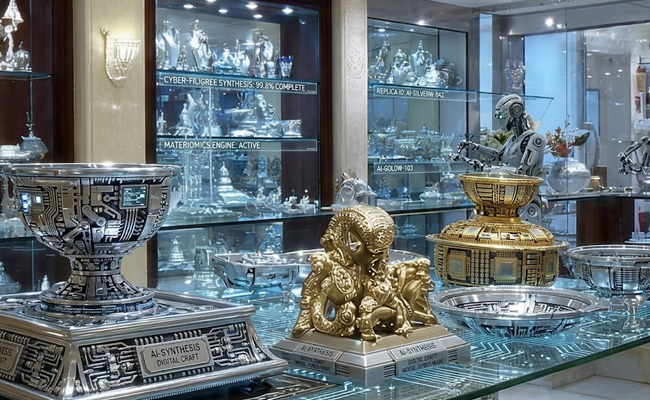
Bengaluru (PTI): Unidentified miscreants allegedly broke into a jewellery shop here and decamped with approximately 70 kg of silver articles worth crores of rupees, police said on Friday.
The incident was reported at a jewellery shop near 8th Mile, Havanur, on April 28, they said.
According to police, the accused are suspected to have entered the premises from the rear after breaking open the lock and drilling a hole through the wall of the shop.
The incident came to light at around 7 am on April 28 when shop staff opened the premises and discovered signs of forced entry and extensive damage to the rear section of the building, following which they alerted police authorities.
Preliminary estimates indicate that around 70 kg of silver articles, worth crores, were stolen. Most of the silver items displayed in the cupboards were taken, while valuables kept in the locker remained intact, a senior police officer said.
Police said CCTV cameras inside the shop were not functioning. Efforts are underway to identify the suspects using footage from cameras installed in the vicinity.
The miscreants also allegedly took away the Digital Video Recorder (of CCTV) of an adjacent shop, the officer added.
Investigators are also examining the tools and techniques used to gain access to the shop, suspecting the involvement of a professional gang with prior knowledge of the store layout.
A case has been registered at Bagalagunte Police Station, and further investigation is underway to identify and apprehend the accused, police said.