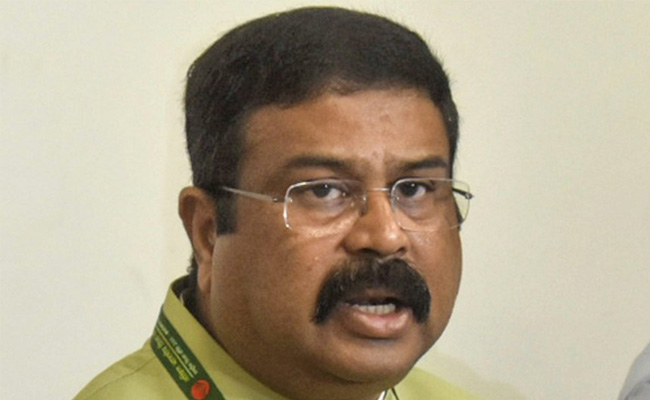
I’ve assaulted him for insulting me taking my caste: MLA Kampli Ganesh
New twist to attack on MLA Anand Singh

Bengaluru, Jan 23: Congress MLA J N Ganesh, facing an attempt to murder case after allegedly assaulting his lawmaker colleague Anand Singh, Thursday purportedly came out with his account, blaming the latter for the turn of events.
Ganesh, in a post in the facebook page titled "Kampli Congress" addressed to the people of his Kampli constituency, accused Singh of trying to finish him off politically besides threatening his family.
The absconding MLA claimed it was Singh who first attacked him and also passed derogatory remarks against his family members and also his caste.
Ganesh said he later retaliated and that three other party MLAs were witness to the incidents.
I had no intention to hit Anand Singh who spoke ill about my cast. If I had to do that I could have done it when I was with him in the room for two to three hours. There was no such intention, Ganesh said in the post that bares his photo in the profile of the page.
All these are known to all party leaders. The leaders said there was mistake on both our part and both of us have embarrassed the party and called doctors for give me first aid, he added.
Singh and Ganesh, both from Ballari district, had a heated argument and came to blows at the resort where the Congress MLAs were herded together amid alleged poaching attempt by the BJP.
Police have registered an FIR charging Ganesh with attempt to murder on a complaint by Singh, who is convalescing in a hospital here.
A red-faced Congress on Monday suspended Ganesh, who claimed he was also injured in the incident.
Karnataka Congress President Dinesh Gundu Rao Thursday asked Ganesh to surrender and face the law.
One has to surrender and face law, nothing should be done illegally, and there is no question of Congress interfering. No one is above law; everyone should function under law, he told reporters.
Meanwhile, a group of supporters of Kampli MLA met Roa and requested him to revoke Ganesh's suspension from party.
Let the Truth be known. If you read VB and like VB, please be a VB Supporter and Help us deliver the Truth to one and all.
'Godman' Kharat held in 8th sexual exploitation case; court denies police remand, sends him to jail
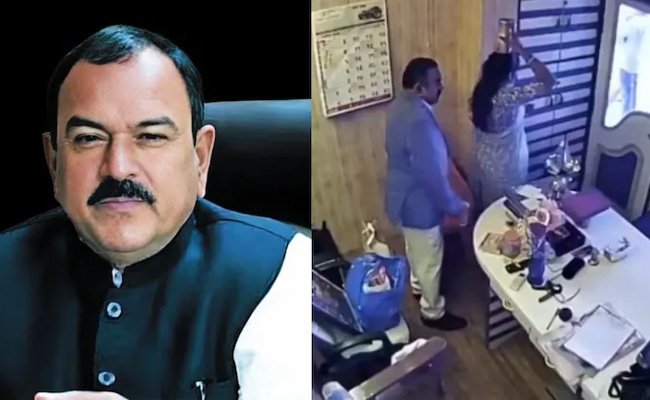
Nashik (PTI): Police took custody of self-proclaimed godman-cum-astrologer Ashok Kharat in an eighth case related to sexual exploitation of women and produced him before a Nashik district court which sent him to jail till May 12 after rejecting the plea for his police remand on Thursday.
On April 29, the Special Investigation Team (SIT) of the Nashik police in north Maharashtra filed a request application in the court demanding Kharat's custody in the eighth case.
After the court granted them the necessary permission, the SIT took custody of Kharat, who was in jail in connection with the seventh case of sexual exploitation registered against him.
The 'godman', named in a dozen FIRs related to rape and financial fraud, was produced before Chief Judicial Magistrate B N Ichpurani in the eighth case through video conferencing due to security reasons.
The eighth case related to Kharat allegedly sexually exploiting a woman who had approached him in search of solutions to her family problems, according to police.
During the hearing, the prosecution demanded police custody of the accused in the latest case.
However, the defence strongly opposed the demand and argued that the SIT was giving same reasons for police custody every time and there was no strong reason for accepting their plea.
The court accepted the argument put forth by the defence and remanded Kharat to judicial custody till May 12 in the eighth case.
The SIT will produce Kharat in the court on Friday again and seek his police custody in the ninth case. As the self-styled godman has been granted judicial custody in the eighth case, he will be sent to Nashik Road Central Jail and the SIT will take his custody from there.
Meanwhile, Kharat's judicial custody in the fourth case ended on Thursday. On April 18, the accused was remanded to judicial custody till April 30 in the fourth case of sexual exploitation of women.
In a related development, the SIT conducted a search at Kharat's office in the 'Canada Corner' area of Nashik city on Wednesday. A 'panchnama' (record of search and seizure proceedings) was conducted and the office was locked and sealed again.
Kharat, a well-heeled man with political connections, was arrested for the first time on March 18 after a woman alleged he had repeatedly raped her for three years.
He is accused of sexually exploiting several women by claiming to have divine powers and knowledge of black magic, and also committing large-scale financial fraud.
The SIT is conducting a probe into 12 cases of sexual exploitation and financial fraud registered against the astrologer in Nashik and Ahilyanagar districts.