JD(S) chief HD Deve Gowda expresses displeasure over Karnataka govt's handling of Cauvery issue
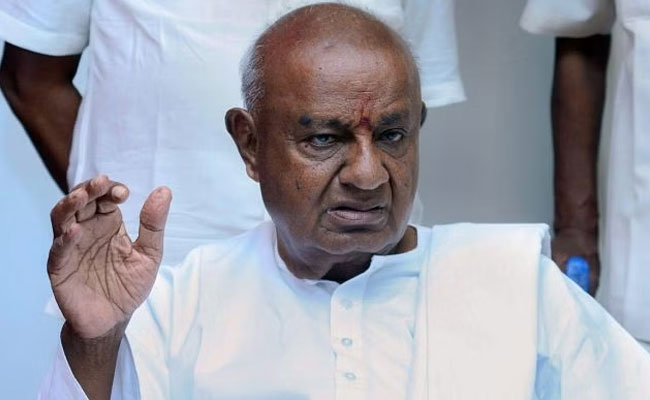
New Delhi (PTI): Amid protests in Karnataka against the release of Cauvery river water to Tamil Nadu, JD(S) chief H D Deve Gowda on Friday expressed displeasure over the Congress government's handling of the inter-state water dispute.
The Supreme Court has refused to interfere with the order of the Cauvery Water Management Authority (CWMA) and the Cauvery Water Regulation Committee directing the Karnataka government to release 5,000 cusecs of water per day to Tamil Nadu for 15 days.
Karnataka has been maintaining that it is not in a position to release water, taking into account its own need for drinking water and irrigation in the Cauvery basin areas, as there has been water scarcity due to deficit monsoon rains.
"The state officials are not attending CWMA meetings physically. They are participating in it virtually... Will things work if you attend virtual meetings?" Gowda, a former prime minister, told reporters expressing dissatisfaction over the way the issue was being handled.
He said that since the Supreme Court has already pronounced its decision on the Cauvery water issue, he does not want to comment on it as a former prime minister.
Gowda, however, said that he had raised the Cauvery issue in the Rajya Sabha during the just concluded session of Parliament. But none of the MPs from the state, including Leader of Opposition Mallikarnju Kharge, spoke about it.
Farmers' bodies and members of various organisations in Karnataka, especially in the Cauvery heartland of Mandya and Mysuru, have been holding protests for the last few days against the release of the river water to Tamil Nadu. Farmers body Raitha Hitharakshana Samiti has also called a bandh in Mandya on Saturday.
The Tamil Nadu government had approached the apex court seeking an increase in the share of water to 7,200 cusecs from 5,000 cusecs per day. However, the court refused to interfere in the CWMA orders.
Let the Truth be known. If you read VB and like VB, please be a VB Supporter and Help us deliver the Truth to one and all.
Unidentified men set fire to TVK campaign office near Srirangam
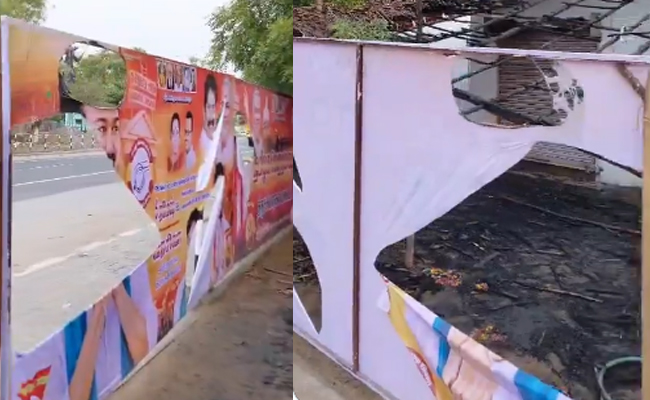
Tiruchirapalli (PTI): A campaign office of the actor Vijay-led TVK was allegedly torched by unidentified miscreants in Kamanayakkanpalayam village near Srirangam in the early hours of Friday, police said.
According to the police, the damage is minimal. Fire had engulfed the thatched roof providing shade at the entrance of the building that served as the party’s election office for the Srirangam constituency.
While on social media, a CCTV footage of two unidentified men fleeing on motorbike is being circulated as the culprits, police said the video footage is yet to be verified.
Based on a complaint lodged by TVK, the Pettaivaithalai Police have registered a case and initiated a search for the perpetrators.
திருவரங்கம் தொகுதியில் த.வெ.க வேட்பாளரின் தேர்தல் அலுவலகம் மர்ம நபர்களால் தீவைக்கப்பட்டு சேதப்படுத்தப்பட்டுள்ளது. @TNelectionsCEO @ECISVEEP#TVKVijay #தமிழகவெற்றிக்கழகம் pic.twitter.com/ImDZfTkuAq
— Thanjavur_District_Head (TVK) (@TVK_Thanjai) May 1, 2026