JD(S) leader Kumaraswamy behind circulation of explicit videos, alleges Deputy CM Shivakumar
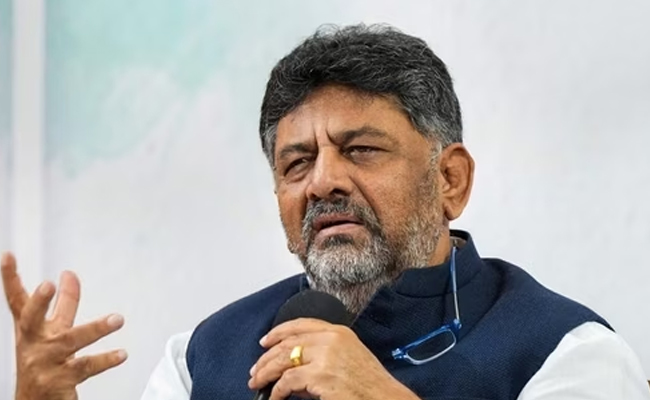
Chikkamgaluru (Karnataka) (PTI): Karnataka Deputy Chief Minister D K Shivakumar on Wednesday charged JD(S) leader H D Kumaraswamy with being behind the circulation of explicit videos allegedly linked to Hassan MP Prajwal Revanna, and called him "king of blackmailing" and the "lead,director, and producer of the story."
Shivakumar, also the state Congress President, was reacting to Kumaraswamy demanding his dismissal from the Cabinet, dubbing him a "key conspirator" in the circulation of alleged sex videos.
The 33-year-old JD(S) MP, who is Kumaraswamy's nephew, is facing sexual abuse charges. The scandal has raised a political storm with the ruling Congress and BJP-JD(S) engaged in a slugfest.
While the Congress government has formed a Special Investigation Team (SIT) to probe the cases, the BJP and JD(S) -- NDA partners -- have demanded that it be handed over to the CBI.
"Kumaraswamy knows about the pen-drive (containing explicit video clips) matter completely. A lawyer (Devaraje Gowda) and others are speaking. Kumaranna (Kumaraswamy) wants my resignation, it seems there is competition for Vokkaliga leadership. Let me give resignation, as he wants it," Shivakumar said sarcastically.
While speaking to reporters here, he said, "Finishing (politically) one after the other is his (Kumaraswamy) job. Blackmailing, (Kumaraswamy is) king of blackmail...he is threatening everyone, officers, politicians, what else he has for doing? Let him do it, there is time to discuss all this, let's discuss in the Assembly."
Kumaraswamy on Tuesday had claimed that 25,000 pen drives with videos of women being sexually abused allegedly by his nephew, Lok Sabha election candidate Prajwal Revanna, were distributed before polls, and accused Chief Minister Siddaramaiah and Shivakumar of a conspiracy.
The former CM also had sought to discredit the Special Investigation Team (SIT) formed by the Congress government on April 28 to probe the charges against Prajwal of sexually abusing several women after videos allegedly involving him started making the rounds on social media.
Kumaraswamy said his name and that of his father H D Deve Gowda should not be taken or linked to the explicit video clips case, as the Revanna family is seperate, Shivakumar pointed out and asked, "then why is he (Kumaraswamy) worried about the matter that is not linked to him? Having already said that action should be taken in accordance with law and the guilty should be punished, why is he speaking?"
"Is he (Kumaraswamy) a lawyer or a judge to issue the judgment? Let him go to court and argue point by point. He has called SIT -- Shivakumar Investigation team and Siddaramaiah Investigation Team, (Congress in-charge of Karnataka Randeep Singh) Surjewala Investigation Team. He is the lead of the story, he is the director, he is the producer, he is everything. We know what he is up to," he said.
Asked about allegations that Congress was behind the pen-drive circulation, Shivakumar said, "Kumaraswamy is getting things done by the BJP, he is behind everything, let the investigation happen."
"Let those speaking on the issue, if they have any shame, go to the victims' family and try to instill confidence and give them strength," he said.
Reacting to JD(S) staging a protest against him, Shivakumar said, they "can't sleep" without taking his name
"If they don't do it against me, their market won't run, without taking my name they won't get peace of mind, and even you (media) won't show them. More strong more enemies, less strong less enemies, not strong no enemies," he added.
Let the Truth be known. If you read VB and like VB, please be a VB Supporter and Help us deliver the Truth to one and all.
Congress using hijab issue to pacify minority anger, alleges Karnataka LoP R Ashoka
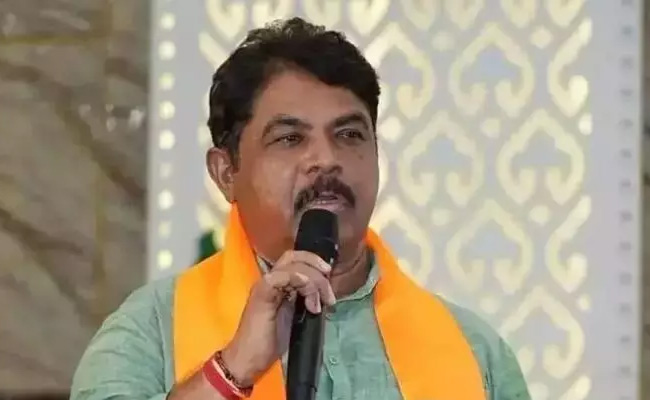
Bengaluru: Leader of Opposition in the Assembly R. Ashoka has accused the Congress government of using the hijab issue to placate what he described as discontent among minority voters after the Davanagere by-election.
In a post on X on Wednesday, Ashoka alleged that the state government, instead of addressing issues such as price rise, corruption, farmers’ distress and law and order, was attempting to retain its minority vote base by reviving the hijab issue.
Referring to the 2022 dress code introduced by the BJP government, which prohibited hijab in schools and colleges, Ashoka said the Karnataka High Court had upheld the policy and emphasised the importance of discipline in educational institutions.
He questioned the Congress government’s move to revisit the issue and asked whether setting aside the court-backed policy to benefit one community could be described as secularism.
Ashoka further alleged that while the government was willing to permit hijab, it continued to prohibit saffron shawls.
He accused the government of dividing students on religious lines rather than treating schools and colleges as spaces of equality.
Drawing a comparison with Mamata Banerjee’s government in West Bengal, Ashoka claimed that excessive appeasement politics had harmed the state and warned that the Congress in Karnataka could face a similar political response.
He said voters in Karnataka would teach the Congress a lesson for what he termed “vote-bank politics” and for compromising constitutional and judicial principles.