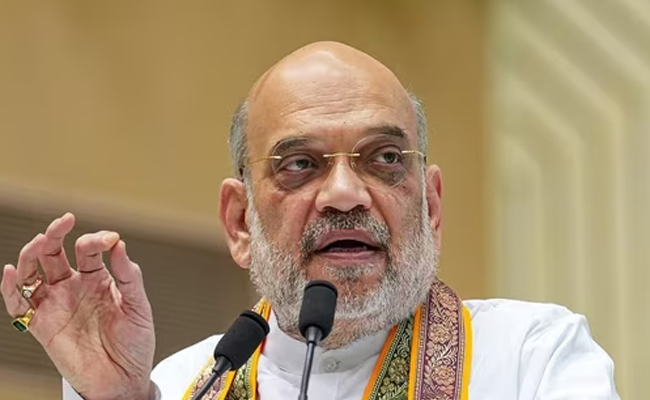
JD(S) leader Kumaraswamy leaves for Delhi for talks about alliance with BJP leadership
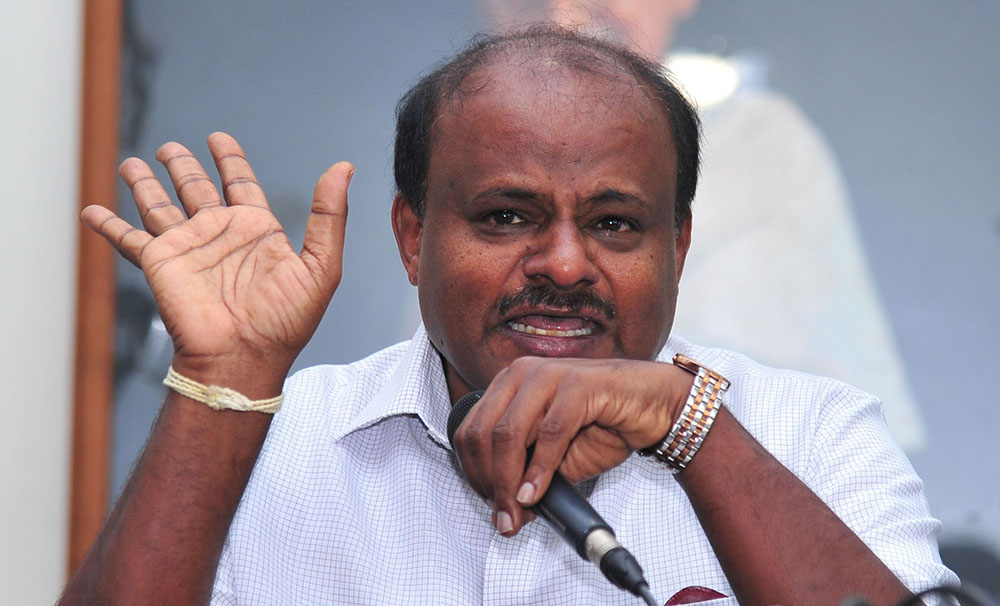
Bengaluru (PTI): JD(S) leader H D Kumaraswamy on Thursday left for New Delhi to meet Union Home Minister Amit Shah and BJP national President J P Nadda to discuss the alliance between the two parties in Karnataka for the 2024 Lok Sabha elections.
The former Chief Minister said Prime Minister Narendra Modi and JD(S) patriarch and former Prime Minister H D Deve Gowda also may hold talks on this, if required.
Gowda, who is a Rajya Sabha member from Karnataka, is in Delhi.
"This evening there is a meeting, once we have the outcome of the meeting, tomorrow I will share everything openly with your Delhi correspondents," Kumarswamy said before leaving for the national capital.
Speaking to reporters here, he said, there has been no discussion on seat sharing between both parties till now.
"Neither have we thought about it (seats) so far, nor have they (BJP) proposed anything in this regard. When we discuss in the evening, we will discuss in detail about the current situation in all 28 (Lok Sabha) seats, what was the situation in the earlier election and what is the situation after the 2023 Assembly polls," he added.
Asked whether the alliance will be finalised today, Kumaraswamy said, "Let's see."
To a question as to whom he will be meeting in Delhi, he said, "Discussion is with their (BJP) decision makers like Amit Shah (Home Minister) and their President J P Nadda. If required Narendra Modi and Deve Gowda will talk."
Talks on alliance between the two parties have been in the limelight ever since veteran BJP leader B S Yediyurappa, who is also a parliamentary board member of the party, had earlier this month said his party will have an understanding with JD(S) for the Lok Sabha elections, and the regional outfit will contest in four LS seats in Karnataka, which has a total of 28 constituencies.
However, Yediyurappa subsequently said discussions in this regard have not reached finality yet, and Modi and Shah, who are busy with other responsibilities, may discuss and decide on the issue in a few days.
The BJP had swept the 2019 Lok Sabha polls in Karnataka, winning 25 seats, while an independent (Sumalatha Ambareesh from Mandya) backed by it won one seat. The Congress and JD(S) won one seat each.
In the elections to the 224-member Assembly held in May this year, the Congress bagged 135 seats, while the BJP secured 66 and the JD(S) 19.
Following the Assembly poll results, there were reports that JD(S) would enter into an alliance with the BJP to fight the Lok Sabha polls. It was also said that the JD(S) leaders had met BJP central leadership in Delhi in this regard.
However, Deve Gowda had subsequently indicated the party will contest the Lok Sabha polls alone.
JD(S) had contested the 2019 Lok Sabha polls in alliance with the Congress, as both parties were then running an coalition government under the Chief Ministership of Kumaraswamy.
Following the Assembly poll debacle, BJP, wary of its performance in the Lok Sabha elections, seems to be open for an alliance with JD(S), aimed at regaining maximum number of seats, sources from both parties said, adding, it hopes JD(S) votes may get transferred to it, especially in the old Mysuru region where the regional party has significant presence.
For JD(S), it is a matter of survival, and the party hopes to better its prospects by forging an alliance with BJP in the backdrop of the Congress' reported attempts to weaken it by wooing its leaders, they said.
JD(S) had earlier formed governments in coalition with both BJP and Congress respectively for 20 months from January 2006, and for 14 months from May 2018, with Kumaraswamy as the chief minister.
Let the Truth be known. If you read VB and like VB, please be a VB Supporter and Help us deliver the Truth to one and all.
Udupi: Two men from Belthangady awarded life imprisonment for attempt to murder a woman in 2022
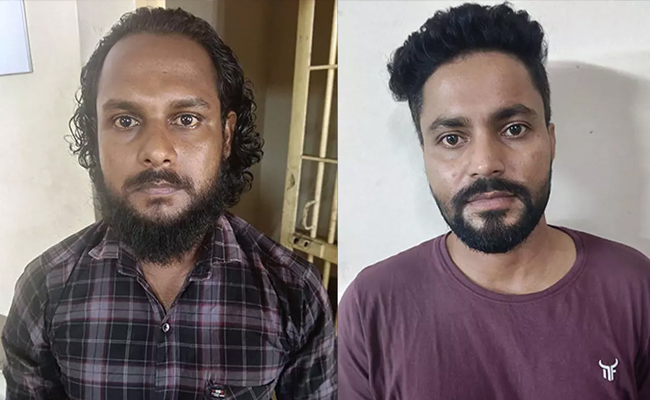
Udupi: Two men from Belthangady have been sentenced to life imprisonment by a court in Udupi for attempting to murder a woman in Manchikumeri in 2022.
The sentenced men, Mithun and Nagesh Poojary, are learned to have attempted to murder Sumathi, wife of Ramanath Rai, a resident of Manchikumeri, who had a Nandini Milk Parlour at Tiger Circle, Manipal.
On February 18, 2022, Sumathi was reportedly alone at home when, at around 7 pm, Mithun, learned to be her nephew, and his friend Poojary came to the house. As Sumathi opened the door, the duo barged in and tried to strangulate her with an intention of murdering her. Sumathi reportedly lost consciousness under the attack.
The men packed her body in a sack and were then putting the sack into a suitcase to carry the body out, when they noticed that Rai and neighbours had arrived. They are learned to have opened the door when Rai knocked the door and then tried to escape. They were, however, caught by the neighbours and handed over to the police.
Further, Sumathi was found by the group in an unconscious state inside the suitcase in the house. She was rushed to the Manipal Hospital and learned to have recovered after a week of medical treatment.
A case had been registered at the Manipal Police Station.
The Udupi Principal District and Sessions Court judge Kiran S Gangannavar, who heard the case, has declared both Mithun and Poojary guilty in the case. He has awarded them life imprisonment, fined them Rs 20,000 each and, under Column 325, sentenced them to rigorous imprisonment of 5 years and fined them Rs 5,000 each.
Judge Gangannavar has directed that, of the fine, Rs 45,000 be handed to the attack victim Sumathi as relief.
Jayarama Shetty represented the government as Public Prosecutor.