KAMS urges K’taka govt to reduce SSLC pass percentage from current 35 to 33 to match national norms

Bengaluru: In a bid to improve student outcomes in the SSLC examination, the Associated Managements of Primary and Secondary Schools in Karnataka (KAMS) has urged the state government to reduce the minimum pass percentage from the current 35% to 33%, bringing it in line with national standards.
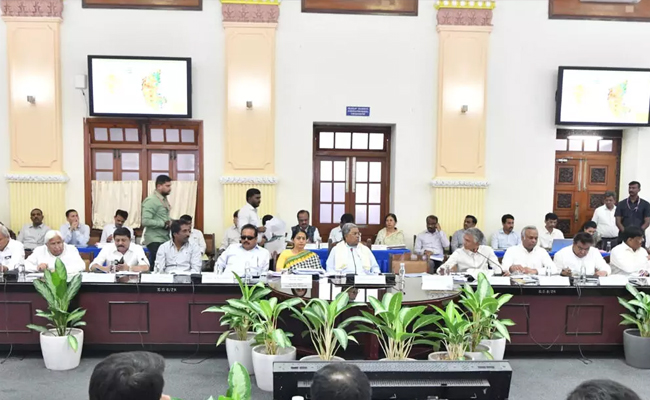
KAMS, an association of private school managements, has submitted a series of policy-level reforms and recommendations to improve the pass percentages in the SSLC exam to Rashmi Mahesh, Principal Secretary of the Department of School Education and Literacy. The proposal follow a comparative study of the education systems in Tamil Nadu, Telangana, Andhra Pradesh, Kerala, and the Union Territory of Puducherry, as reported by The Hindu on Sunday.
The association has requested the government to form a high-level committee on SSLC exam reforms immediately. It pointed out that Karnataka’s pass criteria are stricter than in other regions. “While in Karnataka it is 35%, CBSE has it at 33%. In Kerala, it is 30% in all subjects and also in total. In Andhra Pradesh, students must score 35% in each subject except in Hindi (20%). Overall 32.5% is required,” KAMS noted.
The association also highlighted disparities in assessment models. While states such as Kerala and Telangana follow a blended approach combining internal and external assessments, Karnataka mandates a minimum of 35% solely in the final written examination, with no weight given to internal assessments. For instance, Telangana includes 20 internal marks per subject, and Kerala allots 130 marks to internal evaluations out of a total of 650. CBSE allocates 20 marks for internals and 80 for externals, requiring students to score 33% overall to pass the exams.
KAMS further recommended the introduction of a dual exam option in mathematics and science in Karnataka, similar to the CBSE system that offers students a choice between basic and standard mathematics. This, the association argues, would reduce academic burden on students, the report added.
To ensure broader reforms, KAMS also recommended aligning Karnataka’s textbooks and curriculum with those of the National Council of Educational Research and Training (NCERT). In addition, improving teacher training and strengthening the Continuous and Comprehensive Evaluation (CCE) process were among the other reforms suggested.
Let the Truth be known. If you read VB and like VB, please be a VB Supporter and Help us deliver the Truth to one and all.
Centre spent Rs 76.13 lakh on print media ads for RSS centenary, reveals RTI
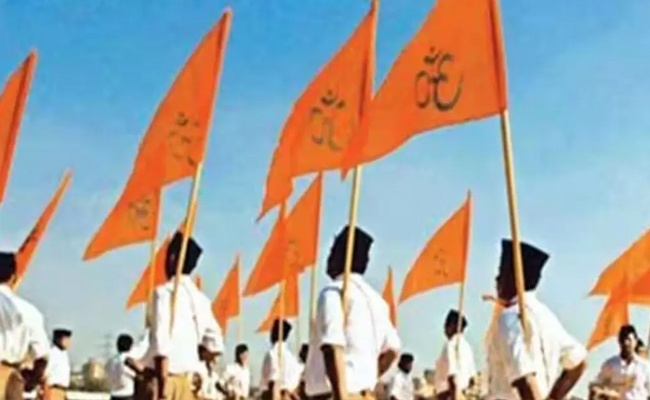
New Delhi: The Union Ministry of Culture allegedly spent Rs 76.13 lakh on print advertisements marking the 100-year celebrations of the Rashtriya Swayamsevak Sangh (RSS), according to a Right to Information (RTI) reply.
The information was sought by RTI activist Ajay Basudev Bose, who filed an application seeking details on expenditure incurred by the ministry for advertisements commemorating the RSS centenary.
Bose shared a picture of the reply from the ministry on his official ‘X’ handle.
“It is informed that an amount of Rs 76,13,129 has been spent on advertisement given in various print media by the Ministry of Culture on the occasion of the completion of 100 years of RSS,” the government’s reply stated.
RTI reply shows Min of Culture Govt of India spent a Whopping Rs 76L,13K,129 on Advertisement in Print Media on occasion of 100 yrs of #RSS
— AJAY Basudev Bose (@AjayBos93388306) April 16, 2026
When Everyone knows RSS is Not Registered & Does not Pay any Tax is it justified to spend Tax Payers Money on such Private event??@RSSorg… pic.twitter.com/dW4IUtdNCg
Bose questioned the expenditure in the post X, “when Everyone knows RSS is Not Registered & Does not Pay any Tax is it justified to spend Tax Payers Money on such Private event??”
Reacting to the development, Karnataka’s IT-BT and Panchayat Raj Minister Priyank Kharge also criticised the spending.
In a post on X, he asked why public money was being used for what he described as a “private ideological project.”
"Modi Sarkar spent Rs 76,13,129 of public money on newspaper advertisements to celebrate 100 years of the RSS. Why is Government spending taxpayers money on an unregistered, non-tax-paying organisation to celebrate their centenary?," he added.
Why is public money being used to serve a private ideological project?
— Priyank Kharge / ಪ್ರಿಯಾಂಕ್ ಖರ್ಗೆ (@PriyankKharge) April 16, 2026
Modi Sarkar spent ₹76,13,129 of public money on newspaper advertisements to celebrate 100 years of the RSS.
Why is Government spending taxpayers money on an unregistered, non-tax-paying organisation to… pic.twitter.com/EoZ6Pim3IM
According to reports, the RSS describes itself as a volunteer-based organisation and has stated that it functions as a body of individuals rather than a registered entity.
Founded by Keshav Baliram Hedgewar in 1925, the organisation is marking its centenary year beginning from Vijaydashami in 2025, with the milestone observed on October 2.