Kanakapura: Dalits denied entry to temple; Peace meeting fails, clash erupts between two groups
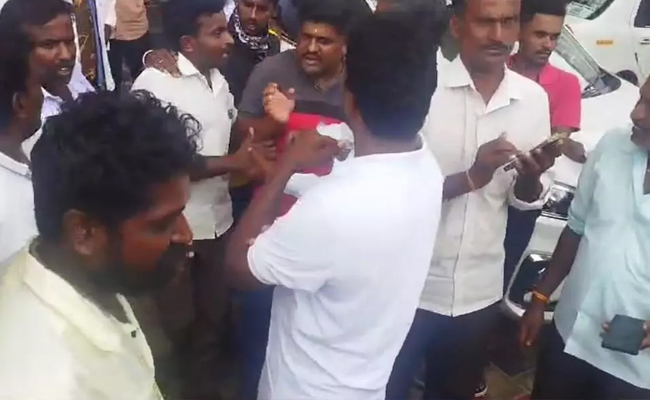
Kanakapura: A peace meeting convened at the Kanakapura Taluk office to address the alleged denial of temple entry to Dalits in Kunoor village, Kasaba Hobli, ended in chaos on Thursday, leading to a clash between two groups and the matter escalating to a police complaint.
Last week, a dispute erupted in the village after Dalits were reportedly denied entry to the Basaveshwara and Maramma temples. Despite efforts by the Taluk administration, social welfare department, and police officials to hold a peace meeting and raise awareness in the village, the entry restrictions remained. This led to the authorities scheduling another meeting on Thursday.
The peace meeting, led by Tahsildar Manjunath and Circle Inspector K.L. Krishna at the Taluk office, began with a debate over temple entry rights for Dalits. Tahsildar Manjunath reiterated that every individual has the right to access temples as per the Constitution and that no one should practice untouchability or follow superstitious beliefs. However, some upper-caste leaders opposed the view, arguing that traditional practices must be maintained, and new customs should not be introduced in the village. Amidst the heated debate, several upper-caste leaders walked out of the meeting.
Dalit leaders Prashanth and Shivalingayya explained that Dalits have been denied entry to the temple in Kunoor for years. They cited an incident 15 years ago when a young Dalit accidentally touched the deity during a temple procession, which angered the villagers and led to an assault on Dalits. Since then, Dalits have been barred from participating in temple rituals during the annual fair.
Following the incomplete peace meeting, tensions flared outside the Taluk office, resulting in a verbal altercation that escalated into a clash between the two communities over temple entry rights. Police, who were aware of the situation, immediately intervened and dispersed the groups. However, Dalit leaders Srinivasamurthy, Muniyappa, Madesh, Ramu, and Pradeep expressed dissatisfaction and accused the village leaders of instigating the caste conflict.
Several village leaders, including Shivanna, Raghu Aras, Gadaraju, and Nagaraju, were present at the meeting.
Dalit leader Srinivasamurthy has lodged a complaint at the Kanakapura Town Police Station regarding the failed peace meeting and the caste clash outside the Taluk office, demanding action against the village leaders.
Let the Truth be known. If you read VB and like VB, please be a VB Supporter and Help us deliver the Truth to one and all.
UP SIR: Over 84 lakh voters added in final list, total electorate rises to 13.39 crore
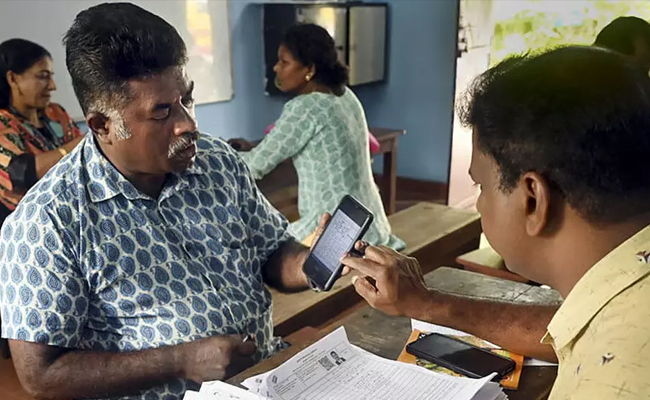
Lucknow (PTI): Uttar Pradesh's electorate grew by over 84 lakh to 13.39 crore after the completion of the Special Intensive Revision (SIR), according to the final voter list published on Friday.
Addressing a press conference at the Lok Bhawan Media Centre here, Uttar Pradesh's Chief Electoral Officer Navdeep Rinwa said the SIR exercise was conducted from October 27, 2025, to April 10, 2026, covering all 75 districts, 403 assembly constituencies and polling stations across the state.
He said the 166-day exercise was carried out with the contribution of 75 District Election Officers (DEOs), 403 Electoral Registration Officers (EROs), 12,758 Assistant EROs, 18,026 BLO supervisors and 1,77,516 Booth Level Officers (BLOs). In addition, 5,82,877 booth-level agents of recognised political parties and crores of voters extended cooperation.
Print, electronic and digital media also played a key role in awareness efforts, he added.
Rinwa said the draft electoral roll published on January 6, 2026, had a total of 12,55,56,025 voters, including 6.88 crore male voters, 5.67 crore female voters and 4,119 third gender voters.
The number of voters in the 18-19 age group stood at 3,33,981, while the gender ratio was 824 female voters per 1,000 male voters.
The final electoral roll published on April 10 shows the total number of voters at 13,39,84,792, he said.
Of these, male voters number 7,30,71,071 (around 54 per cent), female voters 6,09,09,525 (45.46 per cent) and third gender voters 4,206 (less than 0.01 per cent).
The number of voters in the 18-19 age group has risen to 17,63,360, accounting for 1.32 per cent of the total electorate. The gender ratio has also improved to 834 female voters per 1,000 male voters.
Comparing the draft and final rolls, Rinwa said the total increase in the number of voters is 84,28,767. This includes an increase of 42,27,902 male voters, 42,00,778 female voters and 87 third gender voters.
The 18-19 age group registered a rise of 14,29,379 voters, while the gender ratio improved by 10 points from 824 to 834, he said.
Among districts, Prayagraj recorded the highest increase in voters at 3,29,421, followed by Lucknow at 2,85,961, Bareilly at over 2,57,000, Ghaziabad at 2,43,666 and Jaunpur at 2,37,590.
The CEO said the successful completion of the revision exercise reflects coordinated efforts by election officials, political parties and voters across the state.