Karnataka again extends HSRP deadline to March 31
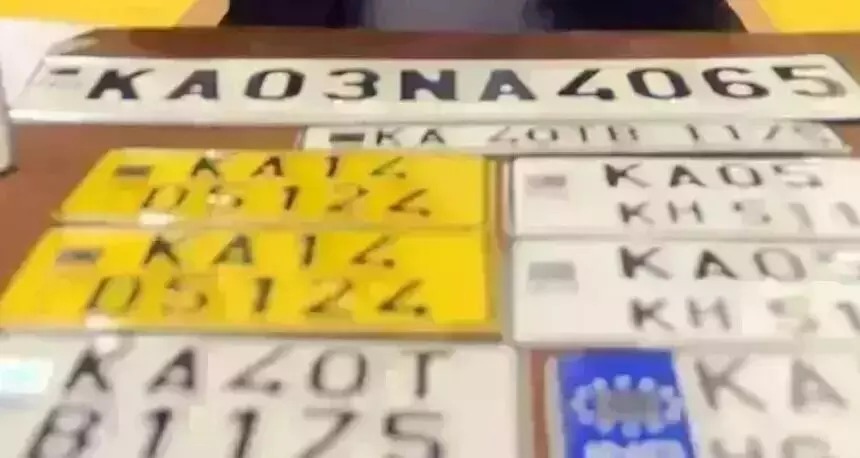
Bengaluru: The Karnataka Transport Department has reportedly extended the deadline for vehicle owners to fix High Security Registration Plates (HSRPs), pushing it to March 31, 2025. This marks the seventh time the deadline has been extended since the introduction of the mandate.
HSRPs are mandatory for all vehicles registered before April 1, 2019. They are designed to bolster vehicle security and reduce misuse, featuring tamper-proof locks that break if the plate is removed.
A Transport Department official told The Hindu that HSRP plates follow a standard format, featuring a blue ‘chakra’ emblem on the left. The background colour varies depending on the vehicle category; white with black numerals for private vehicles and yellow with black numerals for commercial ones. To ensure authenticity, the word ‘INDIA’ is hot-stamped onto the plate.
Both four-wheelers and two-wheelers require two plates, one for the front and one for the rear. In the case of four-wheelers, a sticker with the vehicle’s registration number and HSRP number is also placed on the windshield.
Let the Truth be known. If you read VB and like VB, please be a VB Supporter and Help us deliver the Truth to one and all.
Asha Bhosle's last rites to be held with state honours in Mumbai's Shivaji Park
_vb_13.jpeg)
Mumbai (PTI): The last rites of legendary singer Asha Bhosle will be performed at Shivaji Park in Mumbai on Monday afternoon with state honours.
The 92-year-old singer who ruled Bollywood for over seven decades with her wide range of memorable songs passed away on Sunday due to multi-organ failure at Breach Candy Hospital in Mumbai.
Later, her mortal remains were brought to her residence in Lower Parel.
Maharashtra Chief Minister Devendra Fadnavis paid last respects to Bhosle at her residence on Sunday evening and offered floral tributes.
State Cultural Affairs Minister Ashish Shelar, along with legislators Sunil Shinde and Prasad Lad, also paid their respects.
"Asha Bhosle will be accorded a state funeral, which will take place at 4 pm on April 13," Shelar said.
The singer's son, Anand, said people can pay their last respects to her at 11 am on Monday at Casa Grande, Lower Parel, where she lived.
"Her last rites will be performed at 4 pm on Monday at Shivaji Park," he told reporters.
Ashatai, as the legendary singer was popularly known, was a recipient of the Padma Vibhushan and Maharashtra Bhushan awards.
_vb_24.jpeg)
_vb_42.jpeg)