Karnataka Assembly passes bill to cut salaries of legislature members by 30 percent
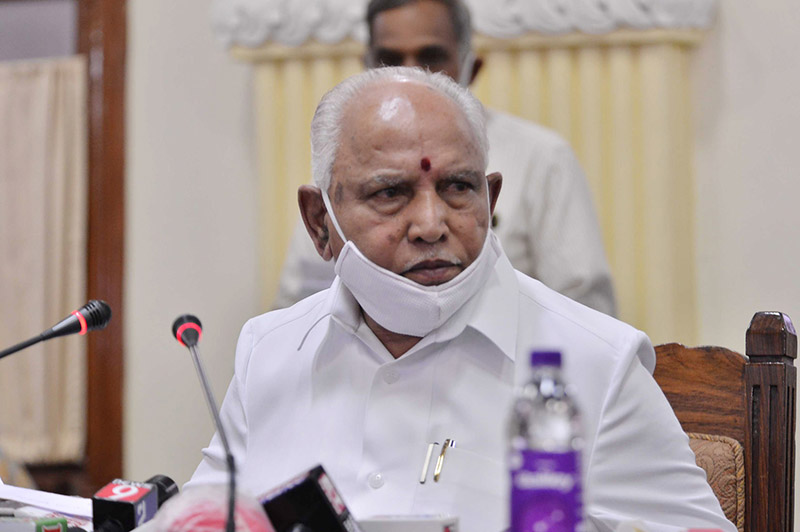
Bengaluru: The Karnataka assembly on Tuesday passed a bill to reduce salaries and allowances of members of the state legislature by 30 percent for a year to augment financial resources required to fight the COVID-19 pandemic.
The state expects to save somewhere between Rs 16 crore to Rs 18 crore by this exercise, Law and Parliamentary Affairs Minister J C Madhuswamy said, while moving the 'Karnataka Legislature Salaries, Pensions and Allowances and Certain Other Law (Amendment) Ordinance, 2020' to effect the changes.
"In the wake of COVID-19, we discussed with leaders of our party and also the opposition that as a gesture, ministers, MLAs and MLCs, heads of authorities, the Speaker and Deputy Speaker should agree to a 30 percent salary cut," Madhuswamy told the Assembly.
Appreciating the move, Arkalgud JD(S) MLA A T Ramaswamy demanded to know how the government-approved hike in salaries of judicial officers during the pandemic when the state was facing a financial crunch.
"During this coronavirus period, the state is facing financial problems. It is our duty to rush aid for relief work.
However, should this law be applied to all or only to the Karnataka Legislature?" Ramaswamy asked the Law Minister.
He alleged that judicial officers in Karnataka had on their own, hiked their salaries, and then the government gave its nod.
"Is this appropriate? Has the government lost its strength? Without seeking your consent, without the approval of the legislature, if they hike their salaries and you give your nod later, are they above the law or the Constitution? You need to clarify this," Ramaswamy said.
To this, Madhuswamy said he was not in a position to immediately give an answer as he did not have the facts.
He, however, assured Ramaswamy that he would gather the information and provide it to him.
Let the Truth be known. If you read VB and like VB, please be a VB Supporter and Help us deliver the Truth to one and all.
HC says Bhojshala complex is Goddess Saraswati temple, scraps ASI order on namaz on premises
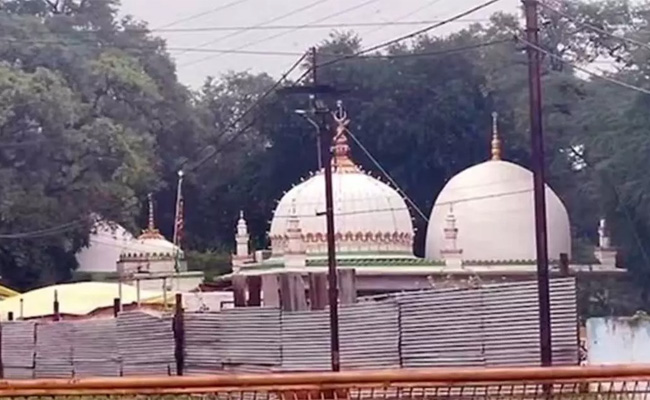
Indore (PTI): In a big win for the Hindu side, the Madhya Pradesh High Court on Friday declared that the disputed Bhojshala complex in Dhar district is a temple dedicated to Goddess Saraswati, and the Centre and ASI can decide on its administration and management.
The HC's Indore bench, which was hearing the case, also said the Muslim community, which called the 11th century monument Kamal Maula Mosque, may approach the state government for allotment of separate land in the district for construction of a mosque.
In its much-awaited verdict in the Bhojshala Temple-Kamal Maula Mosque complex dispute, the court observed that there were indications of a Sanskrit teaching centre and a temple of Goddess Saraswati existing in Bhojshala.
The religious character of the disputed complex of Bhojshala-Kamal Maula Mosque indicates it is a temple of Goddess Saraswati, noted the HC.
ALSO READ: Bihar CM walks to secretariat from official residence after PM's appeal to spend wisely
"If the Maulana Kamaluddin Welfare Society applies for land allotment for building a mosque in Dhar district, the state government can consider it," maintained the division bench.
The HC scrapped the 2003 Archaeological Survey of India (ASI) order which allowed Muslims to offer Friday prayers on Bhojshala premises.
Nearly 1,200 police personnel were deployed in and around the complex ahead of the HC ruling.
Dhar Collector Rajeev Ranjan Meena warned of strict action against anyone spreading objectionable content on social media, as the administration erected barricades at the site where Friday prayers coincided with the court verdict.
The long-running dispute pertains to the religious nature of the ASI-protected monument in Dhar district.
The Hindu community considers Bhojshala to be a temple dedicated to Vagdevi (Goddess Saraswati), while the Muslim side calls the monument Kamal Maula Mosque. A petitioner from the Jain community claims the disputed complex is a medieval Jain temple and gurukul.
After the controversy over the Bhojshala complex erupted, the ASI issued an order on April 7, 2003, permitting Hindus to worship at the complex every Tuesday and Muslims to offer namaz there every Friday. The Hindu side challenged the order in the HC, seeking exclusive rights to worship at the complex.
A division bench of Justices Vijay Kumar Shukla and Alok Awasthi of the HC's Indore bench began regular hearings on five petitions and one writ appeal related to the case on April 6 this year.
After hearing all the parties against the backdrop of differing religious beliefs, historical claims, complex legal provisions, and thousands of documents related to the disputed monument, the bench had reserved its decision on May 12.
During the hearing, petitioners from the Hindu, Muslim, and Jain communities presented detailed arguments and sought exclusive worship rights for their communities at the monument.
The ASI, after conducting a scientific survey of the monument, indicated in its over 2,000-page report that a massive structure dating back to the reign of the Parmar kings of Dhar predated the mosque, and that the current disputed structure was built using repurposed temple components.
The Hindu side claimed that coins, sculptures, and inscriptions found by the ASI during its scientific survey prove the complex was originally a temple.
However, the Muslim side argued in court that the ASI's survey report was "biased" and prepared to support the claims of the Hindu petitioners.
Refuting this, the ASI told the court the scientific survey process was carried out with the help of experts, including three from the Muslim community.
The HC had ordered the ASI to conduct a scientific survey of the Bhojshala Temple-Kamal Maula Mosque complex on March 11, 2024. The ASI began the survey on March 22 that year and, after a detailed 98-day survey, submitted its report to the High Court on July 15.