Karnataka BJP to launch agitation against corruption in housing scheme
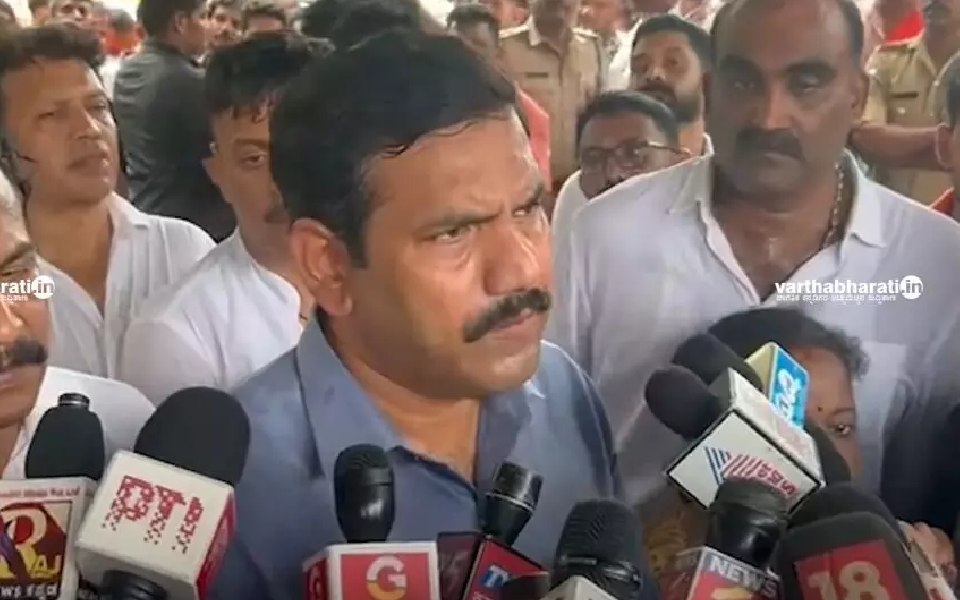
Bengaluru, Jun 22 (PTI): Against the backdrop of ruling Congress MLA B R Patil's allegation of corruption in the housing schemes for the poor, the BJP in Karnataka on Sunday said it would launch an agitation in the state. However, the party did not specify when it would be held.
BJP state president B Y Vijayendra said Patil's statement exposed corruption prevailing in the government.
Patil, who also serves as the Deputy Chairman of the Karnataka State Policy and Planning Commission, had alleged bribery in the allotment of houses in a phone conversation with Housing Minister B Z Zameer Ahmed Khan's private secretary, Sarfaraz Khan.
The audio clip of the conversation went viral, causing embarrassment to the ruling Congress government.
The Aland MLA later confirmed the voice in the audio was his.
"It is my voice in the audio. I have spoken... I have said whatever I had to. I don't know what the chief minister will do. If he calls me, I will go and speak to him," Patil told reporters on Saturday.
He maintained that he had only spoken the truth.
Reacting to this, Vijayendra told reporters, "Senior leader and Congress MLA B R Patil has thrown light on the grave situation prevailing in the state. Patil has exposed the corruption within the department entrusted with providing housing to the poor."
Vijayendra, who is also an MLA from Shikaripura, alleged that ruling party leaders were trying to intimidate Patil.
"One thing is for sure -- this Congress government has become a curse for the poor people of the state. The Siddaramaiah government is not working in favour of the underprivileged," the BJP state chief said.
He added that when his father B S Yediyurappa was chief minister, several pro-people measures were implemented.
Vijayendra alleged that corruption was rampant in the current administration.
"This is a state government that encourages corruption. There is sponsored corruption in Karnataka. All of this is now coming to light through B R Patil's statement," he said, and added that "the BJP will take to the streets on this issue."
Let the Truth be known. If you read VB and like VB, please be a VB Supporter and Help us deliver the Truth to one and all.
K’taka HC asks Centre to examine broadcasts, digital content on media trial against actor Darshan
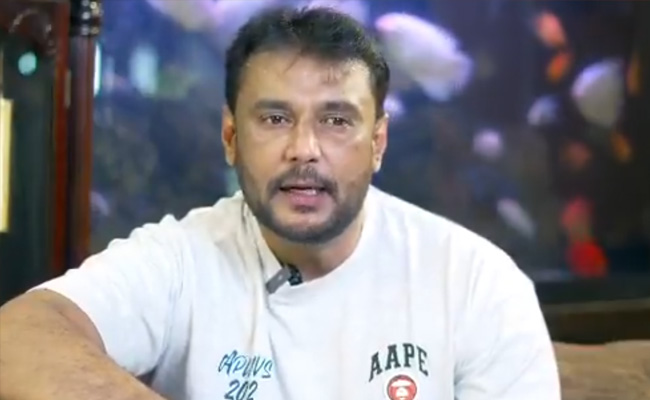
Bengaluru (PTI): The High Court of Karnataka has directed the Ministry of Information and Broadcasting and the Ministry of Electronics and Information Technology to examine broadcasts and digital content related to Kannada actor Darshan in connection with the Renukaswamy murder case.
It has also asked them to take necessary action if any violations of the rules are found.
Darshan and his friend, actress Pavithra Gowda, are among the 17 accused in the Renukaswamy murder case. He is currently lodged in jail under judicial custody.
“Respondent Nos. 1 and 2 (Ministries) are directed to forthwith examine the impugned broadcasts and digital content relating to the petitioner and the subject crime. Upon being satisfied that the same are violative of Rule 6 of the Programme Code framed under the Cable Television Networks (Regulation) Act, 1995, they shall take immediate action in accordance with Sections 19 and 20 of the Act,” Justice Sachin Shankar Magadum said in his order dated April 30, while partly allowing the petition.
“This may include regulating, suspending, prohibiting, or directing discontinuance of such telecast, broadcast, streaming, or dissemination, pending inquiry and final consideration of the complaint,” he added.
Darshan, in his petition, had claimed that he is aggrieved by a sustained and targeted media campaign in connection with the murder case.
He said that despite the trial being at a nascent stage, various television channels and digital platforms have indulged in media-driven adjudication, disseminating speculative narratives, selectively leaked materials, and unverified allegations, thereby shaping public perception and impairing the petitioner’s right to a fair trial.
Despite judicial interdictions, the petitioner alleged that the media continues to telecast content in violation of statutory provisions and binding court orders.
The court said the material placed on record, particularly the clippings produced, unfortunately, depicts a disturbing trend wherein the broadcast media has gone to the extent of recreating courtroom proceedings, with only the face of the presiding judge masked, while the faces of the accused and counsel are openly displayed.
Such programmes are telecast on every date of hearing, thereby converting pending judicial proceedings into a form of public spectacle, it said.
The judge said, “This Court cannot but observe that such conduct amounts to a calculated media-driven adjudication, fostering a parallel narrative and engendering prejudicial pre-trial publicity. The continued telecast of such content, in the teeth of subsisting injunction orders, reflects a blatant disregard for judicial authority and contributes to the creation of a ‘carnival atmosphere of justice.’”
By virtually staging courtroom scenes and projecting selective narratives, the media not only risks subverting due process but also erodes adjudicatory neutrality, impairing the petitioner’s right to a fair trial, he said.
The court further said that the material on record discloses violations of the Programme Code under the Cable Television Networks (Regulation) Act, the Contempt of Courts Act, and the Information Technology Act and Rules.
“The material on record discloses prima facie violations of statutory provisions and judicial orders. The ongoing media narrative poses a serious threat to the petitioner’s right to a fair trial under Article 21,” it said.
“Freedom of speech is a cherished constitutional value; however, when it degenerates into media-driven adjudication, it ceases to be a safeguard of democracy and becomes a threat to it,” the judge said.
“The press is a watchdog, but when it assumes the role of judge, jury, and executioner, the rule of law stands imperilled. Courts cannot permit the course of justice to be overshadowed by the glare of studio lights,” he added.
The court has also asked the ministries to examine the necessity of prohibition of broadcast, suspension or revocation of permissions or licences, imposition of penalties, and initiation of such further statutory proceedings as are permissible in law; to conduct an inquiry into the alleged violations of the Programme Code and pass appropriate orders.
It has directed them to file a compliance report before the court within twelve weeks.
The judge also stated that liberty is reserved to the petitioner to initiate appropriate proceedings under the Contempt of Courts Act, 1971, if so advised.