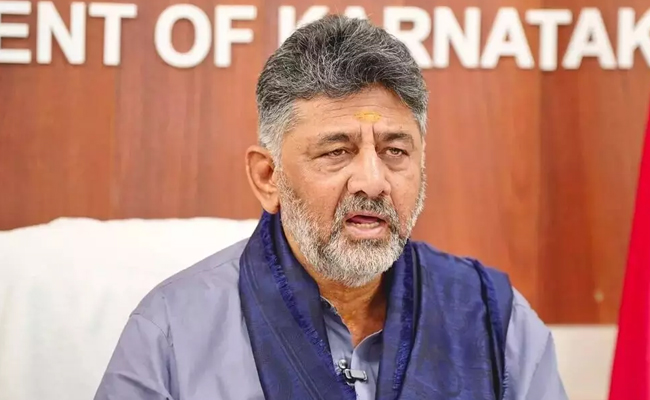
Karnataka bypolls: Voting underway in two assembly constituencies

Bengaluru, Oct 30: Voting is underway for the bypolls in Sindgi and Hangal assembly constituencies in Karnataka, election officials said on Saturday.
The polling began at 7 am will go on till 7 pm.
A total of 19 candidates are in the fray in the two constituencies, including six from Sindgi and 13 from Hangal. Two candidates from Sindgi are women.
The counting of votes will take place on November 2.
There are a total of 4,39,148 eligible voters, including 230 service voters from both the constituencies, who can cast their votes at 560 polling stations.
The by-elections have been necessitated as the seats fell vacant following the death of Sindgi JD(S) legislator M C Managuli and BJP's C M Udasi from Hangal.
While Ramesh Bhusanur, who came second behind Managuli in 2018 polls, is the BJP candidate from Sindgi, Shivaraj Sajjanar is its candidate from Hangal constituency.
The Congress has named M C Managuli's son Ashok Managuli, who has joined the party, as its candidate from Sindgi, while former MLC Srinivas Mane is its candidate from Hangal.
The JD(S), which was the first to announce its candidates, has fielded 33-year-old post graduate Naziya Shakeel Ahmed Angadi from Sindgi and 35-year-old B.E, M.Tech graduate Niyaz Shaikh from Hangal.
This is the first electoral challenge for Chief Minister Basavaraj Bommai after taking charge. Retaining Hangal is even more important for him as it is the neighbouring constituency to his Shiggaon assembly segment.
The Congress, by ensuring a win, wants to give momentum for its preparations in the run up to 2023 assembly polls in the state, while the JD(S) is looking to retain Sindgi seat and thereby prove that it still commands a support base in the northern districts.
Congress leaders have alleged that the JD(S) deliberately fielded minority candidates for the Hangal and Sindgi by-elections to help the BJP.

Let the Truth be known. If you read VB and like VB, please be a VB Supporter and Help us deliver the Truth to one and all.
India says no payment issues with Iran, crude supplies fully secured
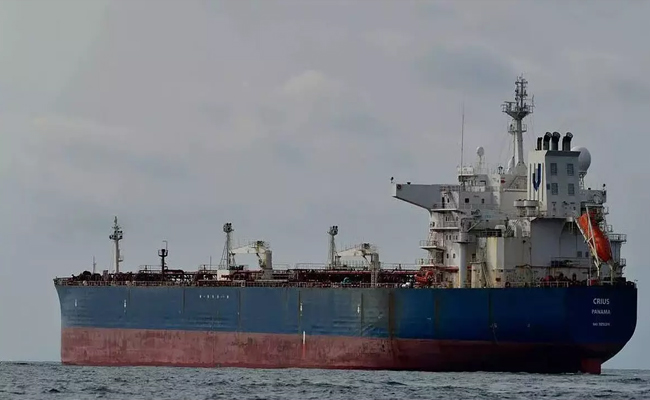
New Delhi (PTI): India said on Saturday that there are no payment issues with Iran for crude imports and that refiners continue to source oil from the country, as well as from a wide range of global suppliers.
In a post on X, the Ministry of Petroleum and Natural Gas dismissed reports that an oil tanker carrying Iranian crude had rerouted mid-voyage from its previously indicated destination of India, which would have marked the first such shipment in nearly seven years, to China, saying the claims overlooked standard industry practice where cargoes can change destination during transit based on trade optimisation and operational flexibility.
Terming as "factually incorrect" assertions that the cargo was diverted from its previously indicated destination of Vadinar in Gujarat to China due to payment hurdles, the ministry said, "there are no payment hurdles for Iranian crude imports".
"India imports crude oil from 40+ countries, with companies having full flexibility to source oil from different sources and geographies based on commercial considerations," it said.
"Amid Middle East supply disruptions, Indian refiners have secured their crude oil requirements, including from Iran, and there is no payment hurdle for Iranian crude imports, contrary to the rumours being circulated."
Ship-tracking firm Kpler on Friday stated that Aframax tanker Ping Shun, built in 2002 and sanctioned by the US in 2025, is now signalling Dongying in China as its destination instead of Vadinar in Gujarat, which it had indicated earlier this week.
Oil on Ping Shun would have been the first Iranian crude that India would have purchased since 2019. Indian refiners have been looking at opportunities to purchase a few cargoes of Iranian oil on water following the recent sanctions waiver by Washington.
The ministry clarified that changes in vessel destinations during transit are common in global oil trade, as bills of lading often indicate tentative discharge ports and cargoes may be rerouted mid-voyage for operational and commercial reasons.
"Claims on vessel diversion ignore how the oil trade works. Bills of Lading often carry indicative discharge ports, destinations and on-sea cargoes can change destinations mid-voyage based on trade optimisation and operational flexibility," the ministry said.
"It is reiterated that India's crude oil requirements remain fully secured for the coming months."
The ministry also said that an LPG vessel, Sea Bird, carrying about 44,000 tonnes of Iranian LPG, berthed at Mangalore on April 2 and is currently discharging cargo.
Historically, India was a major buyer of Iranian crude, importing significant volumes of Iranian light and heavy grades due to strong refinery compatibility and favourable commercial terms.
Following sanctions tightening in 2018, imports ceased in May 2019, with volumes replaced by Middle Eastern, US and other grades. At peak, Iranian crude accounted for 11.5 per cent of India's total imports.
India used to buy 5,18,000 barrels per day of Iranian oil in 2018, which slowed to 2,68,000 bpd between January and May 2019 when the US granted waivers to a few buyers. There have been no imports since.
The key grades that Indian refiners used to purchase are Iran light and Iran heavy crudes.
The US last month waived sanctions on the purchase of Iranian oil at sea for 30 days in its latest attempt to ease oil prices that have been driven up by the US-Israeli war on Iran.
That window expires April 19. An estimated 95 million barrels of Iranian oil are on vessels at sea, of which around 51 million barrels could be sold to India, and the remaining are better suited for buyers in China and Southeast Asia.
Ping Shun is estimated to be carrying about 6,00,000 barrels of oil that was loaded from Kharg Island around March 4. Its declared ETA to Vadinar was April 4, according to Kpler.