Karnataka Cabinet expansion: 24 ministers inducted in Siddaramaiah Ministry
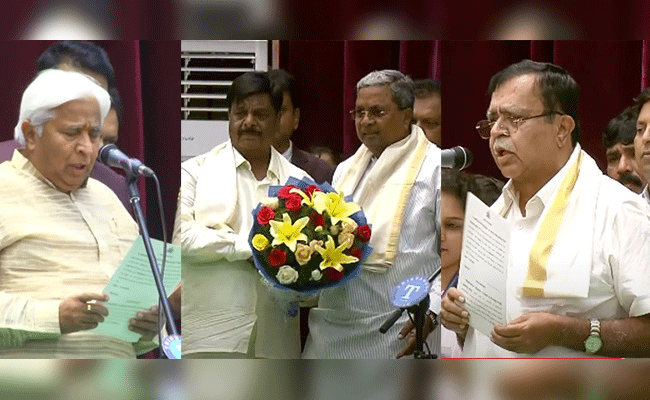
Bengaluru (PTI): The Congress government in Karnataka expanded its cabinet on Saturday by inducting 24 ministers thereby filling all the 34 ministerial positions a week after assuming power in the state. Governor Thaawarchand Gehlot administered the oath of office and secrecy to these 24 ministers.
These ministers include 23 MLAs and the Congress high command's surprise candidate N S Boseraju, who is neither an MLA nor an MLC.
"Boseraju, a former MLA and an MLC, is the All India Congress Committee secretary. Hailing from Raichur, he is a committed Congress worker. His name was cleared by the Congress high command yesterday," a Congress leader told PTI.
There were very rare instances of all the sanctioned ministerial positions being filled in Karnataka, a Congress office-bearer said.
The Karnataka government can have 34 ministers. Ten of them, including Chief Minister Siddaramaiah and his deputy D K Shivakumar, were sworn in on May 20. Amid tight security, the swearing in took place at the Raj Bhavan.
MLAs H K Patil, Krishna Byregowda, N Cheluvarayaswamy, K Venkatesh, H C Mahadevappa, Congress working president Eshwar Khandre and former state Congress president Dinesh Gundu Rao are among those who took oath.
Others in the list are: Kyathasandra N Rajanna, Sharanabasappa Darshanapur, Shivanand Patil, Ramappa Balappa Timmapur, S S Mallikarjun, Shivaraj Sangappa Tangadagi, Sharanaprakash Rudrappa Patil, Mankal Vaidya, Laxmi Hebbalkar, Rahim Khan, D Sudhakar, Santosh Lad, N S Boseraju, Suresha B S, Madhu Bangarappa, M C Sudhakar and B Nagendra.
During the oath taking ceremony, supporters of those MLAs who were denied ministerial positions such as M Krishnappa, a four-time MLA, who was also a minister in the previous Congress government led by Siddaramaiah, raised slogans and held placards demanding cabinet berths for their leaders.
Laxmi Hebbalkar, Madhu Bangarappa, D Sudhakar, Cheluvaraya Swami, Mankul Vaidya and M C Sudhakar are close to Shivakumar, according to Congress sources.
Chief Minister Siddaramaiah has struck a balance by giving caste and region-wise representation along with giving due respect to senior as well as junior MLAs, an official statement said on Friday night.
It also said the cabinet will have eight Lingayats. Within them, different sub-sects of the community have been given representation.
There will be five Vokkaligas, including Shivakumar, the statement said.
The cabinet will have nine Scheduled Caste ministers, it said. The portfolios have not been allotted yet. State Minister K H Muniyappa said the portfolios will be announced by evening.
Both Siddaramaiah and Shivakumar had been in Delhi for the past three days and had held several rounds of discussions with the party leadership.
The names of the 24 ministerial candidates were decided after hours of hectic deliberations between Siddaramaiah, Shivakumar and the top central leaders, including AICC general secretaries K C Venugopal and Randeep Surjewala.
Congress president Mallikarjun Kharge and former party chief Rahul Gandhi gave the final nod to the list.
Earlier, the two Karnataka leaders also met Sonia Gandhi, for the first time after government formation in the state. Differences between Siddaramaiah and Shivakumar had emerged over names of probable ministers but these were sorted out during the discussions, the sources said.
The Congress stormed into the Vidhana Soudha by winning 135 seats in the 224-member assembly leaving the ruling BJP as a distant second, which won 66 seats while the JD(S) stood third with 19 seats.
Let the Truth be known. If you read VB and like VB, please be a VB Supporter and Help us deliver the Truth to one and all.
'Shocked' SC summons police commissioner, IO on Apr 13 in Ghaziabad rape-murder case of minor
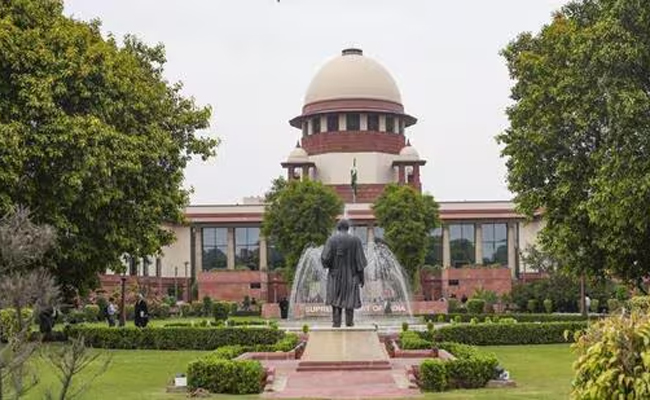
New Delhi (PTI): Expressing deep shock, the Supreme Court on Friday intervened in the harrowing rape-murder case of a four-year-old girl in Ghaziabad and summoned the police commissioner and the investigating officer on April 13 with the case records.
A bench comprising Chief Justice of India (CJI) Surya Kant and Justices Joymalya Bagchi and Vipul M Pancholi took note of the submissions of senior lawyer N Hariharan, appearing for the victim's father, a daily wager, and expressed its displeasure over the manner in which the state police had conducted the investigation so far in the case.
The CJI lambasted the state police and two private hospitals, which refused to treat the girl before she succumbed to her injuries post-alleged rape, for their "complete indifference" and "insensitive approach".
On March 16, the victim was allegedly lured away by a neighbour on the pretext of buying chocolates and when the child did not return, a search led the father to find her lying unconscious and covered in blood. She later succumbed to her injuries at a government hospital in Ghaziabad.