Karnataka cabinet to take up caste census report amid internal opposition
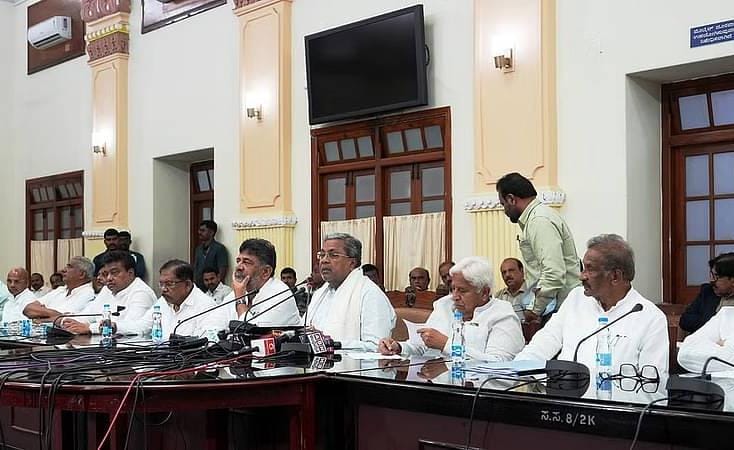
Bengaluru (PTI): Amid what appears to be a caste conundrum, the Karnataka cabinet will hold a special meeting on Thursday to discuss the contentious Socio-Economic and Education Survey report, popularly known as 'caste census'.
According to official sources, the cabinet is considering referring the report to a cabinet sub-committee or an expert committee for further examination.
With Siddaramaiah already indicating that the report will be debated in both houses of the state legislature, sources said it may also be referred to a joint legislative committee. There is also the possibility of convening a special session of the legislature.
The cabinet is likely to deliberate on the report’s recommendation to increase OBC reservation in the state from the current 32 per cent to 51 per cent, sources said adding that the demand for a fresh survey or recounting may also come up.
Several communities, especially Karnataka's two dominant ones -- Vokkaligas and Veershaiva-Lingayats -- have voiced strong objections to the survey, terming it "unscientific". They have demanded that the report be rejected and a fresh survey be conducted.
Objections have also been raised by various sections of society, including from within the ruling Congress party.
However, not all voices are critical. Several leaders and organisations representing Dalits and OBCs among others are in support of it and want the government to release it, pointing out that about Rs 160 crore of public funds has been spent on the exercise.
Given the strong disapproval from the two politically influential communities, the report may turn out to be a political hot potato for the government, as it may set the stage for a confrontation with Dalits and OBCs among others demanding its release and implementation.
The survey's findings are said to be at odds with the "traditional perceptions" of the caste composition in Karnataka, especially the numerical strength of Veerashaiva-Lingayats and Vokkaligas, making it a politically sticky issue. Ministers from these communities are expected to voice their objections during the cabinet meeting, sources said.
Both Veershaiva-Lingayats and Vokkaligas and a few other communities have claimed that their sub-castes have been divided among different categories of OBC, resulting in a decrease in the population. They have alleged that many households were left out from the survey or undercounting.
Amid growing opposition to the survey report, the CM had on Wednesday assured that his government would not let any injustice happen to anyone.
After a long wait, the Karnataka State Commission for Backward Classes' report was placed before the cabinet for the first time on April 11.
The Siddaramaiah-led government (2013-2018) had in 2015 commissioned the survey in the state.
The State Backward Classes Commission, under its then chairperson H Kantharaju, was tasked with preparing a caste census report. The survey work was completed in 2018 towards the end of Siddaramaiah's first tenure as Chief Minister, and the report was finalised by his successor K Jayaprakash Hegde in February 2024.
Let the Truth be known. If you read VB and like VB, please be a VB Supporter and Help us deliver the Truth to one and all.
Barakah International School records 100% results in CBSE class 10, over 38 distinctions
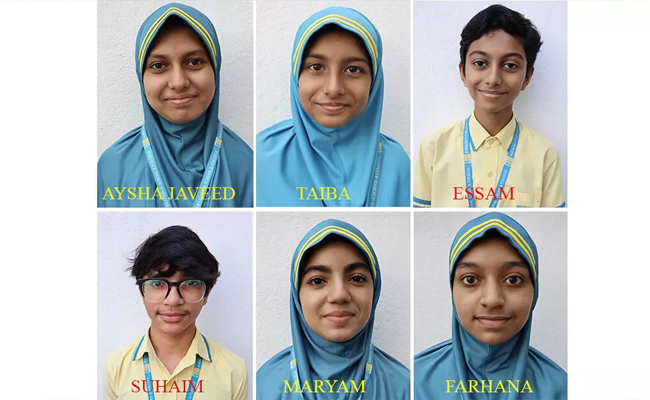
Mangaluru: Barakah International School and College has once again recorded a 100% pass result in the Central Board of Secondary Education (CBSE) Class 10 examinations, with students securing high scores and a significant number of distinctions.
The results of the examinations held for the academic year 2025–26 were announced by the board on Wednesday, April 15.
Leading the batch, school topper Aysha Saleem Javeed secured 96.4 %. She was closely followed by Maryam Taybah, who scored 94.4 %, while Inas Syed and Fidha Falaq secured 92 % each. Essam Khalid Syed and Suhaim scored 90.6 %, and Maryam Mohammed Iqbal along with Fathima Farhana secured 90% each.
Notably, over 38 students achieved distinction, highlighting the collective dedication, perseverance, and hard work of the students, as well as the unwavering commitment of the teaching faculty.
The management, principal, and staff of Barakah International School expressed their heartfelt appreciation for the students’ achievements.
They also acknowledged the vital role played by parents in supporting their children’s academic journey,
Barakah International School and College, Adyar, offers education from Pre-KG to degree level.