Karnataka CM, BJP in war of words over don's arrest
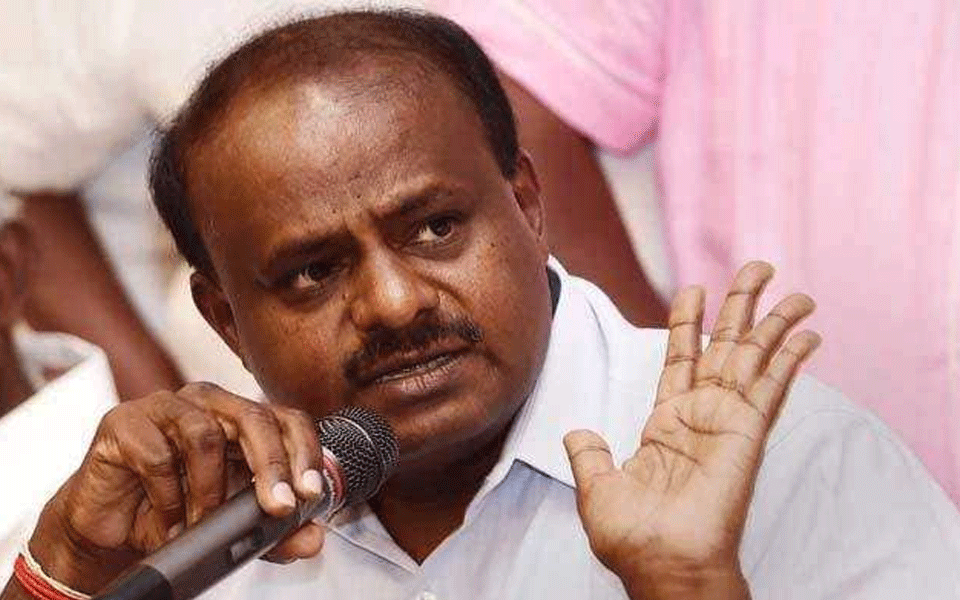
Bengaluru: Karnataka BJP Saturday hit out at Chief Minister H D Kumaraswamy for claiming credit for the arrest of underworld gangster Ravi Pujari from Senegal and asked him to show "some guts" and stop crimes in the state.
It also took a dig at Kumaraswamy by referring to him as "Anna" (big brother), as the chief minister is usually referred to.
The party also asked the chief minister show his "virility" by arresting Congress MLA J N Ganesh, absconding for nearly a week since he was booked on an attempt-to-murder charge after he allegedly assaulted lawmaker Anand Singh during a brawl at a resort here.
Reacting to the BJP barb, Kumaraswamy questioned why the party did not get Pujari arrested when it was in power. He assured action against Ganesh in accordance with law.
Pujari, facing more than 30 cases, including a 2009 murder case, in Mangaluru was arrested on January 19 from Senegal.
"CM @hd_kumaraswamy claiming credit for arrest of criminal Ravi Poojari by West African police is like @H_D_Devegowda claiming credits for killing of Bin Laden by US. Wake up & first show some guts to stop the crime in Karnataka. Governing a state isnt like producing movies (sic)," Karnataka BJP said in a tweet.
"Anna (Big brother) Kumaranna, before giving kudos to your self by claiming that Ravi Pujari was arrested by the coalition government, show your virility by arresting Kampli MLA Ganesh," it said in another tweet in Kannada.
On Friday, Kumaraswamy said the Congress-JD(S) government in Karnataka played a leading role in getting Pujari arrested.
On Saturday, he asserted BJP need not have any doubt and he would not compromise for the sake of power and protect those who indulged in illegal activity.
"Ravi Pujari's illegal activities had started in 2001; BJP also ruled the state for five years. BJP has tweeted with respect- calling me Anna- I want to ask that brother (BJP) what did you do for five years when you were in power," he said.
Speaking to reporters in Mysuru, Kumaraswamy said his government had made efforts in the last six months to arrest Pujari.
The state government officials maintained a constant communication with the Senegal government. "We have already given instructions to arrest Ganesh. Whoever has committed mistake will not be protected at any cost and action will be taken against them in accordance with law, but there are procedures for it. Case has been booked and officials have initiated action," he added.
The Congress has suspended Ganesh from the party.
Let the Truth be known. If you read VB and like VB, please be a VB Supporter and Help us deliver the Truth to one and all.
AIITA welcomes Karnataka’s ban on obscene songs in school events
Bhatkal: The Karnataka unit of the All India Ideal Teachers Association (AIITA) has welcomed the Karnataka government’s decision to strictly ban school children from dancing to obscene songs during educational and cultural programmes in government, aided, and private schools across the state.
AIITA Karnataka State President M. R. Manvi congratulated the government for taking what he termed an important step to preserve the sanctity of education.
“Such decisions to safeguard the dignity of school children and uphold the values of education are the need of the hour. This rule should not be limited to government schools alone but must be strictly implemented in all private educational institutions as well,” he said.
He further urged the government to address other concerns within school programmes.
“The government should not only prohibit obscene dances in the name of school anniversaries, but also ensure that plays and dialogues that incite religious hatred are avoided. Schools should be centres of harmony, not platforms for spreading hatred,” he added.
According to a recent circular issued by the Department of School Education and Literacy, obscene dances are adversely affecting the mental health and moral values of students.
In this regard, schools have been advised to use songs that promote nationalism, positive thinking, the greatness of Kannada culture, and value-based traditions instead of inappropriate content during programmes.
The circular also emphasises that students should be dressed in decent attire.
AIITA also backed the department’s warning that disciplinary action would be taken against head teachers if such guidelines are violated. The association has further demanded that district Deputy Directors of Public Instruction strictly monitor the implementation of these rules.