Karnataka CM drops hint on banning PFI, SDPI, other organisations; here’s what he said
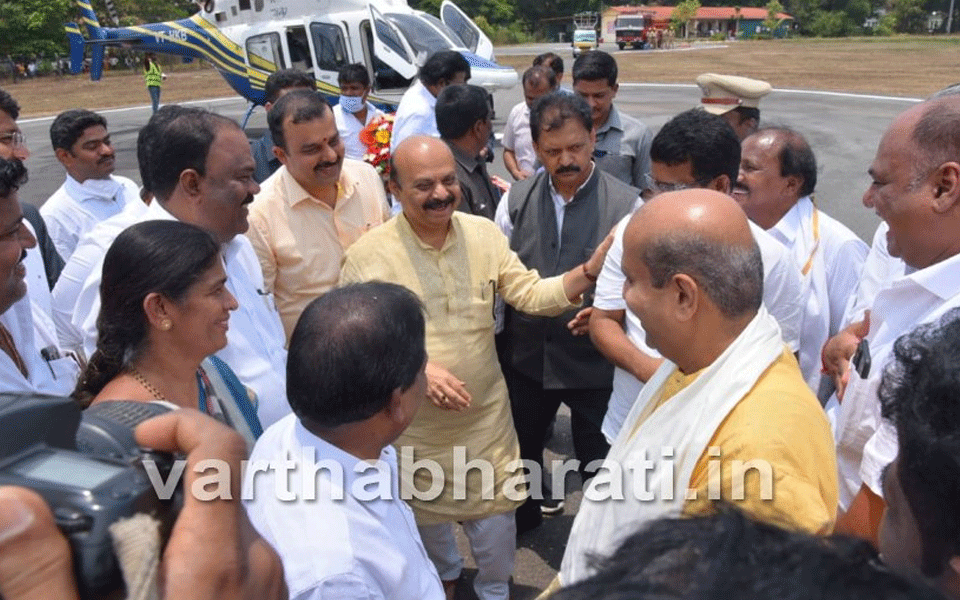
Udupi: Karnataka Chief Minister Basavaraj Bommai on Monday while replying to a question posed by reporters in Udupi reacted to the reports of a ban on several organisations in the state.
Speaking to reporters during his official visit to Udupi on Monday, reporters questioned the CM about the allegation of the opposition parties that the government has remained silent on the recent hate-inciting incidents in the state.
Replying to the question, the CM said “We know how to handle and manage the situation, and we will do it accordingly. We don’t have to learn anything from those in opposition.”
He further added “When their government was in power, they dropped cases against several organisations which were involved in the killing of Hindu youths. Where was their sense of duty then?”
On a prompted question by reporters, if those organisations will be banned by his government, the CM replied “You will see it for yourself in coming days.”
Although the CM did not specifically name any organisations during his interaction with the media reporters, right-wing Hindutva groups and BJP have repeatedly alleged that the organisations like PFI, SDPI, and others were involved in the killings of Hindu activists and youths in the state.
Let the Truth be known. If you read VB and like VB, please be a VB Supporter and Help us deliver the Truth to one and all.
TN seeks duty-free cotton imports to support textile sector: CM Vijay writes to PM
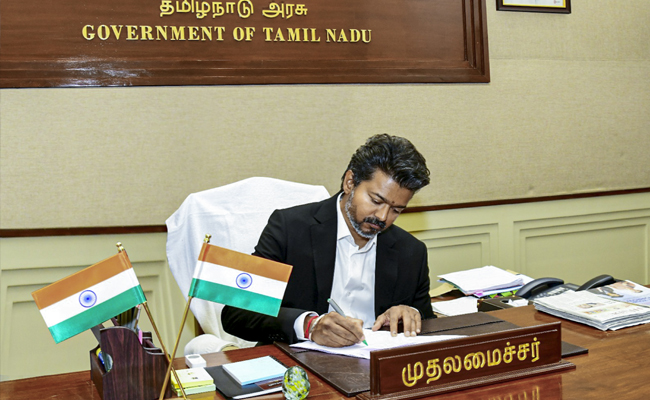
Chennai (PTI): Tamil Nadu Chief Minister C Joseph Vijay on Thursday urged Prime Minister Narendra Modi to remove the import duty on cotton.
In his first letter to Modi after taking over as chief minister of the state, he said Tamil Nadu is the country’s largest textile and apparel exporting state.
Lakhs of people are dependent on this sector for both direct and indirect employment, especially women from rural and semi-urban backgrounds, Vijay pointed out.
Stating that the industry is facing a severe crisis due to an increase in cotton prices and consequently yarn prices, he said, “I understand this is caused primarily due to a shortage in cotton production and increased trading activity in the country.”
Pointing out that the price of cotton has increased from Rs 54,700 to Rs 67,700 per candy—an increase of 25 per cent over the last two months—while yarn prices have increased from Rs 301 to Rs 330 per kg, he said, “In this situation, the continued supply of raw material can be ensured only through imports.”
However, there is an import duty of 11 per cent on cotton, he said, adding that in such a situation, permitting duty-free cotton imports will help the industry meet increasing export commitments and remain globally competitive.
Vijay said that after agriculture, the textile and apparel sector is one of the largest employment-generating sectors.
“There is a significant responsibility on the government to safeguard the employment of lakhs of people and ensure the sustainability of the textile value chain," he said.
“Hence, I request your intervention to remove the import duty on cotton from the existing 11 per cent to 0 per cent to ensure the availability of raw material. This measure will enable the textile and apparel industry to remain globally competitive, enhance exports, and protect jobs,” he added.