Karnataka CM Siddaramaiah vows to get caste-wise census report commissioned during his first stint
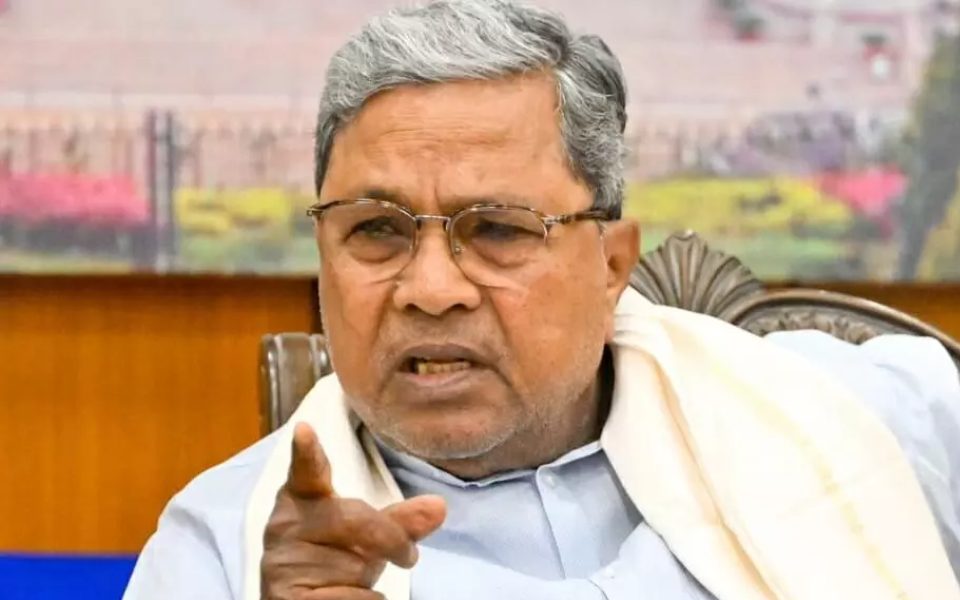
Bengaluru, Jul 2: Karnataka Chief Minister Siddaramaiah on Sunday vowed to get the caste-wise census report which he had commissioned during his first stint as CM from 2013-18.
He said the caste-based census was a must to bring those communities in the mainstream of the society who were subjected to injustice due to casteism.
Siddaramaiah alleged that the then Chief Minister H D Kumaraswamy during whose tenure (May 2018-July 2019) the caste-based census report was ready, scuttled its tabling by threatening the then Backward Classes Welfare Minister C Puttaranga Shetty.
Speaking after performing the ground-breaking ceremony of Sri Kaginele Mahasansthan Kanaka Gurupeeth, here today, Siddaramaiah said the Kuruba (shepherds) community, which he belonged to, constitute about seven per cent of the total population of the state.
"We are seven per cent in the total population (in the state), which means that out of seven crore population, we are 49 lakh. That's why to find out the caste-wise population I had assigned the then chairperson of the Karnataka Backward Classes Commission H Kantharaj," Siddaramaiah said.
ALSO READ: JD(S) won't participate in BJP's opposition parties' meeting: H D Kumaraswamy
According to the Chief Minister, the main purpose behind commissioning the caste-wise census was to find out where people stand socially and economically.
He added that the caste-wise census did not happen even after the independence of the country.
Siddaramaiah said during his previous stint, he had even allocated Rs 162 crore for caste-wise census.
He dismissed the allegation that it was ready during his previous tenure.
"If it was ready, I would have received it definitely. I wouldn't have bothered about anything," Siddaramaiah said.
He could not receive the report because it was not signed by the member secretary of the commission. By the time he could receive the report, Congress lost power in the state in 2018.
"In the coalition government led by Chief Minister Kumaraswamy, Puttaranga Shetty became the Backward Classes Minister. The report was ready by then.
"I told Puttaranga Shetty to get the backward classes commission report. So, he fixed a date to receive the report. Kumaraswamy directed Shetty not to receive the report. The then Minister Bandeppa (Kashempur) threatened him. So Shetty did not receive it. The report is still lying as it is," the Chief Minister claimed.
Siddaramaiah vowed to get the report saying that it will help giving preferential treatment to those communities which remained backward socially, economically and politically.
However, according to him, there is a glitch because the member secretary did not sign the document. In this regard, he said he would speak to the current chairperson of the commission K Jayaprakash Hegde.
"We will certainly receive it. It has to be signed first. There is some technical problem. We will take it definitely because we have to give preferential treatment accordingly," Siddaramaiah said.
He said, "It is necessary for tabling the budget to know the population of each caste and also their socio-economic and political status. Then only we can give them preferential treatment. Otherwise, it cannot be given. For this reason we have to receive the report."
Stating that he had commissioned the caste-wise census during his first stint as Chief Minister, Siddaramaiah said he now got another opportunity to head the state and will get the report tabled.
The Chief Minister also promised to implement the five guarantees announced during the election irrespective of the difficulties his government may face.
Let the Truth be known. If you read VB and like VB, please be a VB Supporter and Help us deliver the Truth to one and all.
MP: Woman, lover conspire to get husband killed; police looking for contract killer

Dhar (MP) (PTI): A 25-year-old woman and her lover have been arrested in the district for allegedly conspiring to kill her husband by hiring a contract killer, police said on Thursday.
The case was solved within 36 hours of the murder though the woman initially tried to mislead the police by claiming that robbers killed her husband, an official said.
Dev Krishna Purohit (28) was stabbed to death on the intervening night of Monday and Tuesday at his house in Gondikheda Charan village, about 60 km from here.
Superintendent of Police Mayank Awasthi told reporters that accused Priyanka Purohit (25) was married to Dev Krishna when she was around 15 years old. Priyanka moved to her matrimonial home after attaining adulthood but was unwilling to live with her husband, leading to frequent disputes between them.
During investigation, it emerged that she was in a relationship with Kamlesh (32), the SP said.
The duo allegedly hatched a plan to kill Dev Krishna and hired a man identified as Surendra for Rs 1 lakh do the job, he said
After Dev Krishna was killed, Priyanka told police that unidentified persons broke into the house, attacked her husband with a sharp weapon while holding her captive in another room, and fled with valuables.
But the inconsistencies in her statements raised suspicion, and eventually she confessed to hatching the murder conspiracy, the SP said.
While she and Kamlesh were arrested, police are looking for the contract killer, the official added.