Karnataka CM to meet MPs & Ministers from State in Delhi tomorrow; Cauvery issue on top of the agend
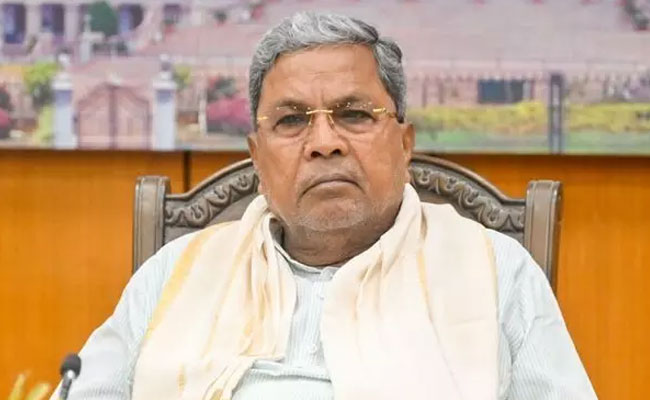
Bengaluru (PTI): Chief Minister Siddaramaiah will be holding a meeting with all Members of Parliament and Union Ministers from Karnataka in the national capital on Wednesday, to discuss a host of issues concerning the state, especially the release of Cauvery river water to neighbouring Tamil Nadu.
Several stalled developmental projects and those waiting Centre's clearances are likely to come up for discussion at the meeting, during which the Chief Minister is likely to urge the Union Ministers and MPs from the state to use their good offices for intervention of the Prime Minister Narendra Modi and the Government of India on the Cauvery issue.
The meeting has gained significance, with the Cauvery Water Management Authority (CWMA) on Monday asking Karnataka to continue releasing 5,000 cusecs of water to Tamil Nadu for another 15 days.
According to the Chief Minister's tour plan released to the media on Tuesday, Siddaramaiah will leave for Delhi tonight and will be holding a breakfast meeting with all MPs from Karnataka including Union Ministers on Wednesday.
He is later scheduled to meet several other Union Ministers during the visit, and his return journey has been kept "open".
According to official sources, Siddaramaiah is also likely to meet the legal team, representing the state in the Supreme Court, ahead of the Cauvery water release issue coming up before the top court, probably later this week.
The Chief Minister recently has been critical of Prime Minister Modi, for not responding to his letter seeking time to meet an all-party delegation, and to discuss with him on issues concerning the state including Cauvery water release.
Deputy Chief Minister D K Shivakumar will also be traveling to Delhi, and is expected to accompany the CM at meetings with MPs from the state and Union Ministers.
Shivakumar earlier today said the state is in a "catch 22 situation", following the CWMA direction to release water to Tamil Nadu, and sought the Centre's intervention to resolve the issue.
Also, Water Resources Minister Shivakumar urged the opposition BJP, its leaders and Members of Parliament to prevail upon the Prime Minister to bail out Karnataka, while noting that he will be travelling to Delhi to meet MPs and the Union Ministers during the ongoing Parliament session.
He also defended the state's decision to release water to Tamil Nadu, citing advice of the legal team in view of the case coming up in the Supreme Court for hearing later this week, where non-compliance of CWMA orders may be viewed seriously.
Let the Truth be known. If you read VB and like VB, please be a VB Supporter and Help us deliver the Truth to one and all.
Mamata visits Bhabanipur EVM strong room, warns against counting irregularities
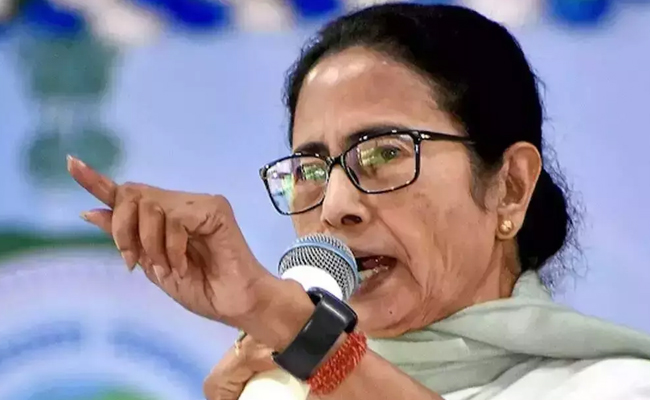
Kolkata (PTI): West Bengal Chief Minister and TMC supremo Mamata Banerjee early Friday warned against any attempt to tamper with the counting process, hours after she visited an EVM strong room in Bhabanipur, alleging possible malpractice.
Banerjee, who emerged around 12:07 am after spending nearly four hours at the counting centre for her Bhabanipur constituency housed in Sakhawat Memorial School in south Kolkata, said only one person would be allowed inside the designated counting area.
"Either the candidate or one agent can stay upstairs. I have also suggested installation of a CCTV camera for the media," she told reporters.
Stressing the need for transparency, she said, "It is essential to maintain transparency. People’s votes must be protected. I rushed here after receiving complaints. The central forces initially did not allow me to enter."
Sounding a stern note ahead of the May 4 counting, she added, "If there is any plan to tamper with the counting process, it will not be tolerated."
On Thursday evening, Banerjee had reached the Bhabanipur Assembly segment counting centre, which houses the strong room for EVMs used in the April 29 polling, citing suspicion of tampering with the machines.
She entered the premises along with her election agent and remained inside for hours, even as Kolkata Mayor and TMC candidate from the Kolkata Port segment Firhad Hakim reached the spot but could not meet her.
"I reached here upon learning that the chief minister has arrived. But I couldn’t meet her since she was already inside the premises, exercising her right as a candidate to visit strong rooms. I wasn’t allowed there. I will not be able to confirm what exactly is transpiring inside," Hakim said.
The development coincided with protests by TMC candidates Kunal Ghosh and Shashi Panja outside the Khudiram Anushilan Kendra in north Kolkata, where they staged a sit-in alleging irregularities and possible tampering of EVMs stored in strong rooms, leading to face-offs between TMC and BJP supporters.
Earlier in a video message, Banerjee had urged party leaders, workers and polling agents to maintain a 24-hour vigil on EVM strong rooms, alleging that the BJP could attempt to tamper with the machines before counting begins.
Her remarks come amid heightened political tension in the state following a fiercely contested Assembly election, with parties closely monitoring arrangements and raising concerns over transparency.