Karnataka CM unveils three policies to transform state into global destination for innovation
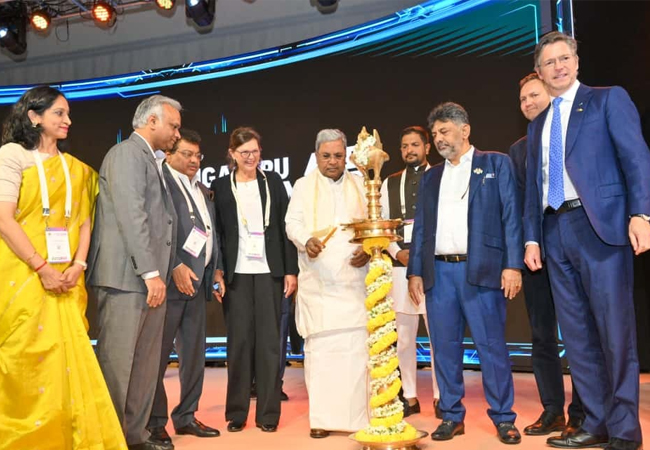
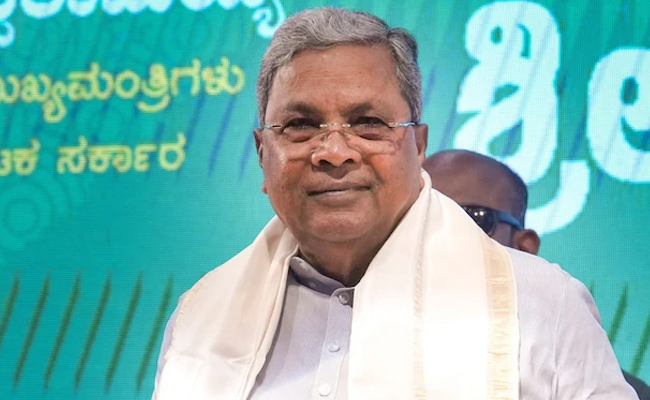
Bengaluru (PTI): Karnataka Chief Minister Siddaramaiah on Tuesday unveiled three major policies -- Information Technology Policy, SpaceTech Policy and Startup Policy -- to transform the state into a global destination for innovation and deep tech solutions.
This will strengthen the state's position as India's leading technology hub, he said, asserting that Karnataka is "not merely participating in the global tech revolution, but leading it".
The chief minister said this during the inauguration of the 28th edition of the Bengaluru Tech Summit 2025 here, organised by the Karnataka Department of Electronics, IT and BT and Software Technology Parks of India (STPI).
Noting that Karnataka has always led India in policy innovation, the CM said, "We launched India's first IT policy in 1997 and continue this leadership with new policies.
"At this summit, we are also taking a historic step with the launch of three transformative policies: The Karnataka Information Technology Policy 2025-2030, the SpaceTech Policy 2025-2030, and the Startup Policy 2025-2030. With this data-driven, emerging technology-ready Karnataka Information Technology Policy, we aim to transform the state into a global destination for innovation and deep tech."
With the SpaceTech Policy 2025-2030, Siddaramaiah said, "We aim to position Karnataka as India's leading space technology hub, capturing 50 per cent of the national market and 5 per cent globally by 2034."
"The new Startup Policy is being launched, and this policy aims to enable the creation of 25,000 startups over the next five years through strategic interventions in funding, market access, infrastructure, talent development, and social inclusion," he said, asserting that this forward-looking governance enhances Karnataka's competitiveness in a rapidly evolving global tech landscape.
Themed "Futurise", the three-day summit will bring together global leaders, policymakers, investors, startups, and innovators to explore emerging frontiers across DeepTech, Biotech & HealthTech, Semiconductors, and Startup Innovation.
Siddaramaiah said that Karnataka continues to remain one of India's top states for FDI inflows, global partnerships, and multinational investments due to its stability, predictability and transparency.
"The ecosystem blends world-class engineering, transparent policy, strong IP culture, and vibrant global communities. Our business environment is supported by top-tier legal, financial and technical expertise along with strong global connectivity," he added.
The chief minister highlighted that Bengaluru's temperate climate, multicultural character, and open civic culture attract people from across the world.
"Karnataka offers everything businesses require, from research to markets, from infrastructure to talent. Innovation thrives where quality of life thrives. Karnataka is not simply participating in the global tech revolution. It is leading it," he added.
Reiterating the government's focus on building future-ready infrastructure for deep-science and advanced engineering, the chief minister said that the state has already established Centres of Excellence in AI, cyber-security, data science, animation and robotics, and is the first in India to launch a dedicated roadmap for quantum technologies.
He said that inclusivity is a defining feature of the state's approach.
Through the "Beyond Bengaluru" initiative, the chief minister said, "We are consciously decentralising our technology economy by developing Tier-2 cities as the next generation innovation clusters. This is not merely an economic strategy, it is a commitment to equitable growth".
"Every district in Karnataka must have access to the opportunities of the digital age. Every young person, whether in a metro or a small town, should have the chance to build a career in high-value technology and research."
Reiterating the government's commitment to fostering a supportive innovation ecosystem, the chief minister said Karnataka remains open and welcomes global and domestic players.
"Our message to the world is simple and sincere: the Government of Karnataka is here to support you. Whether you are a global company seeking to establish an R&D centre, a startup building your first prototype, an academician conducting frontier research, or an investor searching for transformative ideas, Karnataka is your home. We will provide the infrastructure, the skills, the policy environment, the talent pipeline, and above all, the confidence that your ambition will find every possible support here," he said.
Calling for collaboration, Siddaramaiah urged innovators, researchers, founders, investors, students, and leaders gathered to help shape the future.
"Let us work together to ensure that Artificial Intelligence becomes a force for inclusion, that Quantum Technologies unlock new frontiers of science, that Biotechnology and SpaceTech push the boundaries of human progress, and that DeepTech solutions address the biggest challenges of our time," he added.
Let the Truth be known. If you read VB and like VB, please be a VB Supporter and Help us deliver the Truth to one and all.
Man arrested in Hyderabad for impersonating police officer using AI videos

Hyderabad (PTI): A 27-year-old man was arrested in Hyderabad for allegedly impersonating a police official and uploading fabricated videos on social media platforms to gain followers, police said on Wednesday.
The accused, who worked as a delivery executive with a food delivery aggregator, created and circulated misleading videos using AI-based software.
He falsely depicted himself as a police official and showcased weapons, potentially causing panic and misleading the public, a release from Hyderabad Police said.
Police said it came to their notice that fake videos were being circulated on social media, showing individuals posing as police personnel and displaying weapons.
Upon preliminary inquiry, it was found that the videos were fabricated using AI software and did not represent any real police activity.
The accused unlawfully impersonated a police official and created deceptive digital content, which is a punishable offence under relevant provisions of law.
Such acts can erode public trust and create unnecessary alarm, the release said.
Acting on credible information, police teams apprehended the accused and seized a mobile phone used in the offence.
A case under relevant sections of the BNS and the IT Act, 2000, was registered at Kalapathar Police Station.
Further investigation is underway to determine whether any other persons were involved in the creation and dissemination of such content, police added.