Karnataka CM's attempt to blame Centre for sugarcane price issue 'unjust, cruel joke': Pralhad Joshi
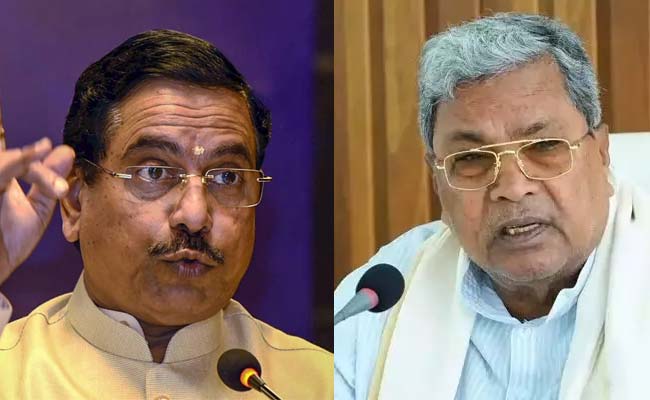
Bengaluru (PTI): Asserting that Prime Minister Narendra Modi has consistently worked for the welfare of farmers, Union Minister Pralhad Joshi has said Karnataka Chief Minister Siddaramaiah's attempts to blame the Centre for sugarcane price issues are not only "unjust" but also a "cruel joke".
The farmers in the northern districts of the state are demanding a procurement price of Rs 3,500 per tonne for sugarcane, and CM Siddaramaiah has on Friday announced a revised price of Rs 3,300 per tonne.
In a post on 'X', Joshi shared a letter he has written to Siddaramaiah on this and said the Central government under the leadership of PM Modi is always committed to the welfare of the farmers of the nation. Various policy initiatives have been brought out to help and benefit the sugarcane farmers in the country.
"While the cane arrear from the Central Govt for the sugar season 2022-23 and 2023-24 is NIL, and for 2024-25 is around Rs 50 lakh, the CM of Karnataka pointing fingers at the Centre is not only unjust but also a cruel joke which is unfair to the farmers of the region," he said.
On Friday, Siddaramaiah made an announcement fixing the procurement price of sugarcane, yielding 11.25 per cent recovery, at Rs 3,300 per tonne in response to the ongoing farmers protest in northern districts seeking a fair price for their produce.
The CM also appealed to protesting sugarcane farmers to cooperate by accepting the revised price and withdrawing the agitation.
On Thursday, Siddaramaiah had written to Prime Minister Narendra Modi seeking an urgent appointment to discuss "the serious situation" arising out of the ongoing farmers' agitation.
The CM had claimed that the root of the problem lies in central policy levers: the Fair and Remunerative Price (FRP) formula, the stagnating Minimum Support Price (MSP) for sugar, export curbs and the under-utilised ethanol offtake from sugar-based feedstock.
Responding to this, in a letter to Siddaramaiah dated November 7, Union Minister Joshi reminded him that the Central Government fixes the Fair and Remunerative Price (FRP) of sugarcane for every sugar season (October-September) on the recommendations of the Commission for Agricultural Costs and Prices (CACP).
According to him, the approved FRP of Rs 355 per quintal for 2025-26 covers the cost of production for all sugarcane-producing states and gives a margin of 105.2 per cent over the cost of production. With each 0.1 per cent increase in recovery, farmers will get an additional Rs 3.46 per quintal. At an average recovery of 10.5 per cent in Karnataka, the FRP will be Rs 363 per quintal.
Joshi stated that the FRP of sugar has increased from Rs 210 per quintal in the sugar season 2013-14 to Rs 355 per quintal for the sugar season 2025-26, reflecting a strong upward trend during these years.
"The powers for enforcing the provisions of the Sugarcane Control (Order), 1966, to ensure timely payment to the farmers within 14 days have been delegated and vested with the state governments. The Karnataka Government may also announce a State Advised Price (SAP) for sugarcane, as being done by UP, Uttarakhand, Punjab and Haryana," he added.
Joshi said the Central Government has always been receptive to the issue of timely payment to cane farmers. Under various schemes, financial assistance of about Rs 16,500 crore was provided during 2014-15 to 2020-21 to sugar mills to enable them to clear cane dues.
To address the problem of excess sugar, the Government has been encouraging sugar mills to utilise excess sugarcane for ethanol.
"For the purpose, the Union Government has provided financial assistance of Rs 435.42 crore under the Ethanol Interest Subvention Scheme for setting up ethanol distilleries in Karnataka. Allocation of ethanol to distilleries in Karnataka has increased from 85 crore litres in ESY 2022-23 to 133 crore litres in ESY 2025-26. These measures have provided an alternative revenue stream to sugar mills and helped improve their liquidity," he stated.
Joshi also highlighted that in January this year, when ex-mill prices were showing a downward trend, the Central Government permitted sugar mills to export 10 LMT sugar to manage surplus sugar in the country.
"Ex-mill prices of sugar improved from about Rs 3,370 per quintal to Rs 3,700 - 3,930 per quintal in Karnataka after the decision on export," he said.
"As a result of the above pro-farmer measures taken by the Central Government, the cane arrear payment position has improved significantly in the country, including Karnataka. Prior to 2014, there were agitations by farmers for cane payments; now, cane payments are being made on time. In Karnataka, cane arrear for sugar season 2022-23 and 2023-24 is nil, and for 2024-25 sugar season only Rs 50 lakh is pending as on September 30, 2025," he added.
Let the Truth be known. If you read VB and like VB, please be a VB Supporter and Help us deliver the Truth to one and all.
Sujit Nair raises concerns over speculation of DMK-AIADMK understanding to block TVK
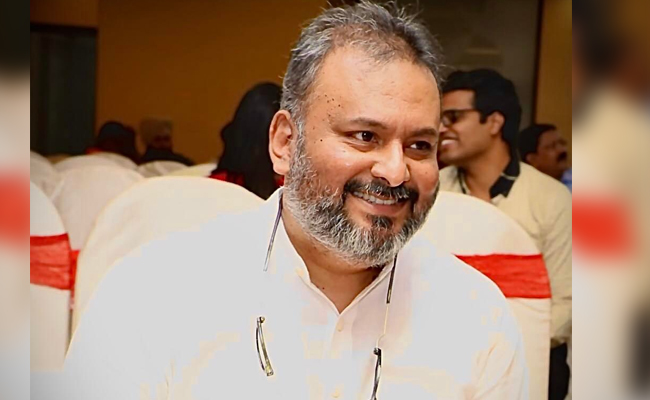
Chennai: Journalist and political commentator Sujit Nair has expressed concern over speculation that the Dravida Munnetra Kazhagam and the All India Anna Dravida Munnetra Kazhagam could explore a post-poll understanding to prevent Vijay-led Tamilaga Vettri Kazhagam from forming the government in Tamil Nadu.
In a social media post, Sujit Nair said the election verdict in Tamil Nadu reflected a clear public demand for political change and argued that the mandate should be respected irrespective of political preferences.
Referring to reports and political discussions surrounding a possible understanding between the DMK and AIADMK, he said he hoped such developments remained only speculative conversations and did not turn into reality.
Nair stated that if such an alliance were to take shape, it would raise serious questions about ideological politics in the country. He said TVK had emerged through a democratic electoral process and that the legitimacy to govern in a parliamentary democracy comes from the people’s verdict.
According to him, attempts to prevent an electoral winner from forming the government through unexpected political arrangements may be constitutionally valid, but many people could view them as politically opportunistic.
He further said that such a move could particularly affect the political image of the DMK, which has historically projected itself around ideology, social justice and opposition politics. Nair said that in ideological terms, the DMK appeared closer to TVK than to the AIADMK, and joining hands with its long-time political rival only to remain in power could weaken its broader political narrative.
He added that the same questions would apply to the AIADMK as well, as the party had spent decades positioning itself against the DMK and such an arrangement could create discomfort among its cadre and supporters.
Drawing a comparison with Maharashtra politics in 2019, Nair said he had expressed similar views when the Shiv Sena formed an alliance with the Indian National Congress and the Nationalist Congress Party after the Assembly elections.
He said post-poll alliances between long-standing political rivals often create a public perception that ideology and electoral mandates become secondary when political power equations come into play.
Nair also said such developments increase public cynicism towards politics and reinforce the belief among voters that ideology is often sidelined after elections.
He maintained that the Tamil Nadu verdict was emphatic and said respecting both the spirit and substance of the mandate was important for the credibility of democratic politics.