Karnataka coalition ministry expanded with 25 cabinet ministers
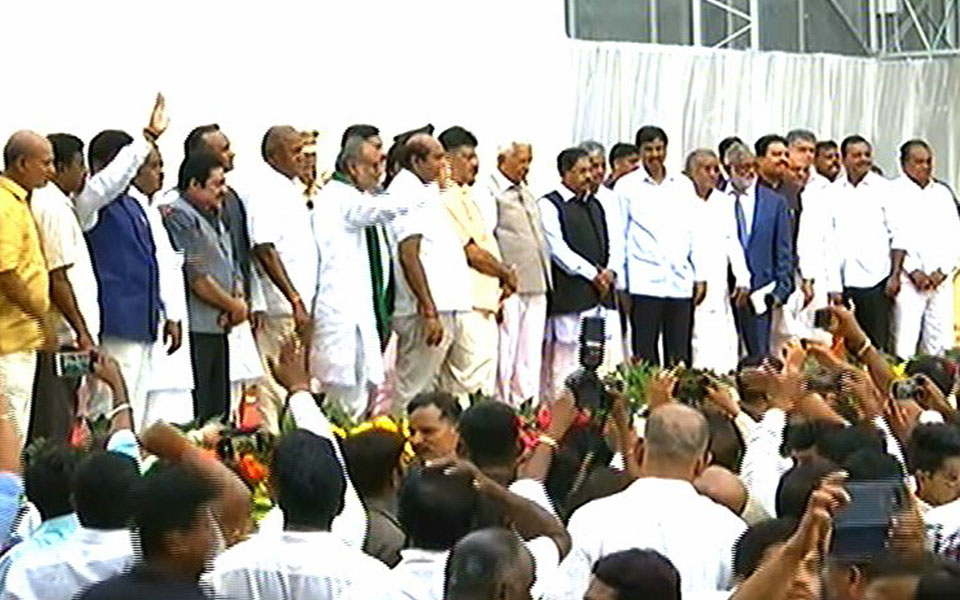
Bengaluru, June 6 : The Janata Dal-Secular (JD-S)-Congress coalition government in Karnataka was expanded on Wednesday, with the induction of 25 legislators as cabinet ministers including 23 from the alliance partners and one BSP MLA and an Independent.
Of the 23 from the alliance, 14 are from Congress and 9 from JD-S.
Governor Vajubhai R. Vala administered the oath of office and secrecy to the ministers at Raj Bhavan in the city centre.
Former Kannada actress and legislative council member Jayamala of the Congress is the lone woman minister. N Mahesh of the Bahujan Samaj Party (BSP) was also sworn in. The BSP is a pre-poll ally of the JD-S.
Independent R. Shankar, who supported the alliance, is another cabinet minister.
Besides Chief Minister H.D. Kumaraswamy of the JD-S and Deputy Chief Minister G. Parameshwara of the Congress, senior leaders and several legislators of both the alliance partners and senior officials were present at the hour-long ceremony.
The 14 legislators of the Congress and nine of the JD-S took oath in Kannada and in the name of either god, Allah, 14th century Kannadiga social reformer Basavanna and parents.
Among the Congress ministers were R.V. Deshpande, D.K. Shivakumar, K.J. George, Krishna Byre Gowda, Shiva Shankar Reddy, Ramesh Jarkiholi, Priyank Kharge, U.T. Khader, Zameer Ahmed Khan, Shivanand Patil, Venkat Ramanappa, Rajasekhar Basavaraj Patil, Puttaranga Shetty and Jayamala.
Among the JD-S ministers are H.D. Revanna, Bandeppa Kashempur, G.T. Deve Gowda, D.C. Thammanna, M.C. Managuli, S.R. Srinivas, Venkatrao Nadegouda, C.S. Puttaraju and S.R. Mahesh.
Revanna is the second son of JD-S supremo H.D. Deve Gowda and elder brother of Kumaraswamy. He represents Holenarsipur assembly segment from Hassan district.
Priyank is the son of Congress leader in the Lok Sabha Mallikarjun Kharge from Chittapur in Gulbarga district.
Let the Truth be known. If you read VB and like VB, please be a VB Supporter and Help us deliver the Truth to one and all.
Hubballi: Gym trainer assaulted; police say clash due to personal reasons
Hubballi: A gym trainer was allegedly assaulted by a group of people following accusations of sexual assault and ‘love jihad’, even as both families involved in the case traded serious allegations.
According to police, a group of individuals went to the residence of Sameer Mulla, a resident of Vijayanagar, and questioned him over his friendship with a woman he had met at a gym. The situation escalated into a clash, during which he was allegedly dragged away and assaulted. He sustained minor injuries and was admitted to KIMS hospital.
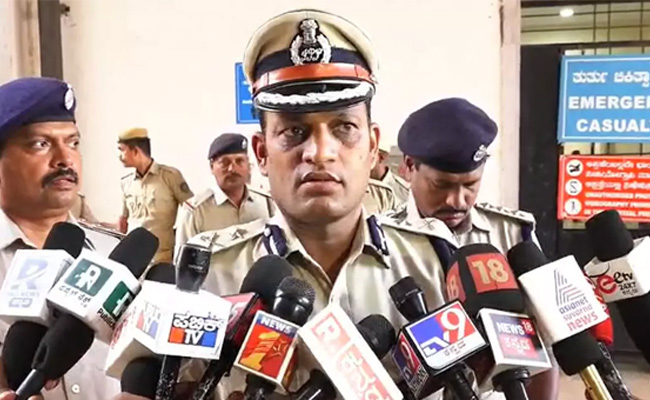
N. Shashikumar said that after this incident, members from Sameer’s side went to the woman’s house, leading to another clash in which one person was injured. “It was wrong for groups to go near houses. We will take necessary legal action,” he said, adding that the incident appears to have arisen from personal reasons. Police have taken some individuals into custody and are investigating the matter.
Sameer Mulla was reportedly thrashed by a group of Sangh Parivar activists and later handed over to police at the Old Hubballi Police Station after relatives of the woman and members of Hindu organisations gathered at his residence in Rajnagar.
The woman’s family alleged assault and threats from Sameer’s relatives at their Vikas Nagar residence.
Meanwhile, Sameer’s family denied the allegations and accused the woman’s relatives and others of assaulting and kidnapping him. His sister said the two had been in a relationship for three years and that the allegations were baseless.
Police said statements from both sides have been recorded, and a detailed investigation is underway. Sameer remains hospitalised, and appropriate legal action will be taken based on findings.
In a video statement shared on social media, the 20-year-old woman alleged that Sameer had given her an intoxicant, recorded videos without her consent, and sexually assaulted her. She lodged a complaint alleging rape and blackmail, which police are investigating.
In another video, Sameer denied the allegations, claiming the video was recorded with consent and that the accusations were made under pressure.
Former Hubballi-Dharwad Urban Development Authority (HDUDA) chairman Nagesh Kalburgi termed the incident a serious matter and urged police to take strict action.
Police said the case involves multiple complaints from both sides, and further investigation is underway.