Karnataka collects Rs 11,112.31 crore in toll revenue through FASTag in three years
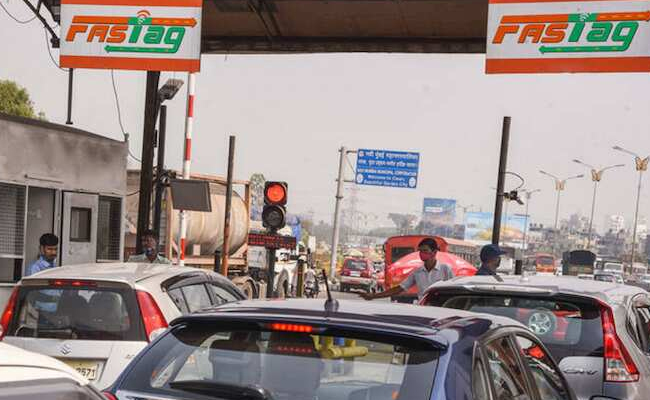
New Delhi: Karnataka has collected Rs 11,112.31 crore in toll revenue through FASTag transactions over the last three financial years, reflecting the growing adoption of electronic toll collection across National Highways in the state, The Hindu reported on Monday.
According to data provided by the Ministry of Road Transport and Highways, the state collected Rs 3,049.09 crore in 2022-23. The amount rose to Rs 3,839.14 crore in 2023-24 and further increased to Rs 4,224.08 crore in 2024-25.
Replying to an unstarred question by MP G. C. Chandrashekhar in the Rajya Sabha on February 11, Union Minister for Road Transport and Highways Nitin Gadkari said that Electronic Toll Collection (ETC) now accounts for more than 98% of user fee collection across the country, including Karnataka. The figures indicate near-universal use of FASTag at toll plazas, significantly reducing cash transactions.
The Minister explained that FASTag payments are processed through a secure system involving the Toll Management System Software at toll plazas, the acquiring bank, the National Payments Corporation of India (NPCI) acting as the central clearing house, and the FASTag issuer bank. No transaction can be completed without the participation of all three stakeholders. Each toll deduction is communicated to the user and recorded in a central repository, ensuring transparency and accountability in toll operations.
To prevent toll evasion and revenue leakage, the National Highways Authority of India (NHAI) issued a Standard Operating Procedure (SOP) on January 25, 2024. The SOP mandates surprise inspections and regular monitoring to ensure all transactions are processed only through the Toll Management System Software.
On toll revisions, Minister Gadkari clarified that user fees are collected under the National Highways Fee (Determination of Rates and Collection) Rules, 2008. Rates at publicly funded toll plazas are revised annually based on changes in the Wholesale Price Index (WPI). In contrast, toll plazas operated by concessionaires revise rates in accordance with the terms specified in their concession agreements.
He said that toll charges may also increase if the tolling length under a plaza is expanded. Fees vary by vehicle category, with cars, jeeps and vans paying the lowest rates, while multi-axle heavy vehicles are charged higher fees in proportion to road usage, and the wear and tear they cause.
Let the Truth be known. If you read VB and like VB, please be a VB Supporter and Help us deliver the Truth to one and all.
Media dinner shooting suspect wrote about targeting of administration officials, Trump says
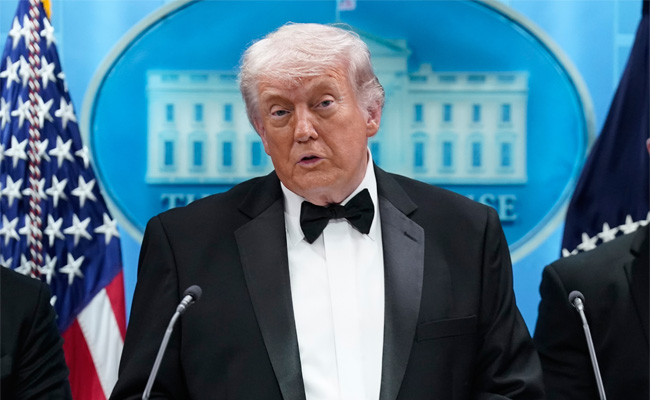
Washington (AP): The man accused of trying to storm the ballroom at the White House Correspondents' Association dinner with guns and knives had written about targeting Trump administration officials, and his family raised concerns with law enforcement before the event, President Donald Trump said Sunday in an interview on Fox News Channel.
The accused gunman's family had alerted police in Connecticut, Trump said, revealing new details about a chaotic encounter that disrupted one of Washington's glitziest annual events the night before.
The suspect, identified by law enforcement officials as 31-year-old Cole Tomas Allen of Torrance, California, was expected to face criminal charges on Monday from the Justice Department, whose acting leader, Todd Blanche, said the suspect travelled by train from California and checked in as a guest days earlier at the Washington hotel where the Saturday night gala dinner was held with its typically tight security.
Law enforcement officials who have interviewed Allen's relatives, examined the gunman's electronic devices and his writings preliminarily believe he intended to target administration members in attendance at the dinner.
He attempted to charge into the cavernous ballroom at the Washington Hilton but was tackled to the ground in a violent scene that resulted in shots being fired, Trump being hurried off the stage and guests ducking for cover beneath their tables.
“It does appear that he did in fact set out to target folks who work in the administration, likely including the president,” Blanche told NBC's “Meet the Press.”
The suspect is believed to have purchased the two firearms he carried within the last couple of years, Blanche said. He is not being cooperative and is expected to face multiple charges on Monday.
Video posted by Trump showed the suspect running past security barricades as Secret Service agents ran toward him. One officer was shot in a bullet-resistant vest but was recovering, officials said. The gunman was taken into custody and was not injured, but was being evaluated at a hospital, police said.
“He failed,” Blanche said on CBS's “Face the Nation.” “Law enforcement did their jobs.”
Authorities believe the suspect fired the shot that hit the Secret Service officer, who is expected to make a full recovery, Blanche said.
“He's going to be great, he's going to be fine, and thank God he was wearing a bulletproof vest,” Blanche said Sunday on ABC's “This Week.”
Social media posts that appear to match the suspect show he is a highly educated tutor and amateur video game developer.
A May 2025 profile photo of Allen appears to match the appearance of the man in a photo of the alleged attacker being taken into custody that was posted Saturday night by Trump.
The photo, posted to the social networking site LinkedIn, shows him in a cap and gown after graduating with a master's degree in computer science from California State University, Dominguez Hills.
Allen earned a bachelor's degree in 2017 in mechanical engineering from the California Institute of Technology in Pasadena. He listed his involvement there in a Christian student fellowship and a campus group that battled with Nerf guns.
The shooting at the security barricades happened minutes after the event got underway.
The Secret Service and other authorities swarmed the room as guests ducked under tables by the hundreds. Gasps echoed through the ballroom as guests realised something was happening. Hundreds of journalists immediately got on phones to call in information.
“Out of the way, sir!” someone yelled. Others yelled to duck. From one corner, a “God Bless America” chant began as the president was escorted offstage. Outside the hotel, members of the National Guard and other authorities flooded the area as helicopters circled overhead.
After an initial attempt to resume the event, it was scrapped for the night and will be rescheduled.
Trump was unusually conciliatory after what he saw as a third attempt on his life in less than two years. He suggested that his personal politics had made him a repeated target, but he also called for unity and bipartisan healing in an increasingly violent world.
“It's always shocking when something like this happens. Happened to me, a little bit. And that never changes,” Trump told reporters in a hastily organised news conference at the White House late Saturday.