Karnataka Congress has received over 60 applications from leaders to join party: D K Shivakumar
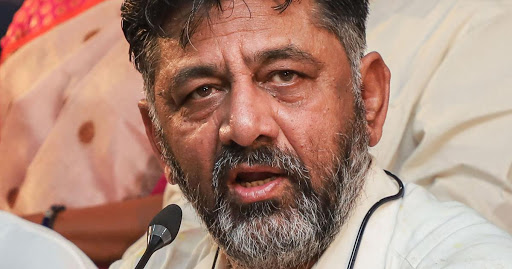
"More than 60 applications have come wanting to join Congress from different districts. Allum Veerabhadrappa (senior leader) led committee will scrutinise the applications before inducting people into Congress," Shivakumar said.
Speaking to reporters after inducting former JD(S) leader Ramesh Babu into the party, he said several applications are under consideration at the local level.
"Those who want to join our party should be able to work by taking local leaders and workers into confidence.So, the applications are being discussed at the local level," he said.
Shivakumar had in June constituted the 12-member committee headed by former state unit chief Veerabhadrappa to screen leaders wanting to join or rejoin the party and give its recommendations.
Inducting Babu, a former MLC, the KPCC chief said it was decided to process his application fast keeping in mind the upcoming Legislative Council polls.
Meanwhile, according to Congress sources, noted transgender activist Akkai Padmashali is expected to join the party on Sunday.
She had recently held discussions with Shivakumar and Congress Legislature party chief Siddaramaiah.
Let the Truth be known. If you read VB and like VB, please be a VB Supporter and Help us deliver the Truth to one and all.
India calls for UNSC expansion, says lack of reform 'constrains' global body
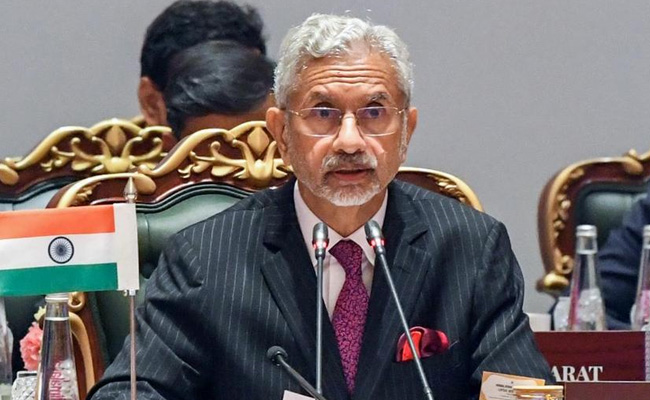
New Delhi (PTI): India on Friday strongly called for expansion of the UN Security Council with External Affairs Minister S Jaishankar saying that the effectiveness and credibility of the global body will remain "constrained" without reforming it.
Jaishankar made the remarks at a conclave of the foreign ministers of the BRICS nations in New Delhi.
"We meet at a time when the effectiveness of global governance and the credibility of multilateralism are under increasing scrutiny," he said.
"The world today is more interconnected, complex, and multipolar than when many of our current institutions were created. Yet, the structures that underpin global governance have not kept pace with these changes," he noted.
Jaishankar listed four specific points to press for reforming the key international bodies and multilateral trading systems, and asserted that the reform of the United Nations and its subsidiary bodies remains "central".
"The membership of the United Nations has expanded significantly, and its responsibilities have grown. Yet, key structures, particularly the Security Council, continue to reflect an earlier era," he said.
"Without meaningful reform, including expansion in both permanent and non-permanent categories, the effectiveness and credibility of the UN will remain constrained. Representation of Asia, Africa, and Latin America is essential," he noted.
India has been a strong contender for a permanent seat at the UN Security Council.
Elaborating his second point, Jaishankar said the time has come for serious negotiations for reform of the UN Security Council.
"BRICS itself has debated this issue deeply, especially at the Johannesburg Summit. Our outcome documents have reflected that consensus. But much more has to be done to make reform a reality," he said.
"Third, there is an urgent need to reform the international financial architecture," the external affairs minister said.
He said there is a need to reform the global financial architecture to effectively deal with various economic challenges including vulnerabilities in supply chains, pressures on food and energy security, and inequalities in accessing critical resources.
"Fourth, the multilateral trading system must be strengthened and reformed. Non-market practices, concentration of supply chains, and uncertain market access have exposed the global economy to new risks," he said.
Jaishankar said a rules-based, fair, open, and inclusive trading system, with the World Trade Organisation at its core, remains essential.
"At the same time, it must address asymmetries and reflect the concerns of developing countries," he said.