Karnataka: Counting for bypolls to one LS, 2 assembly segments tomorrow
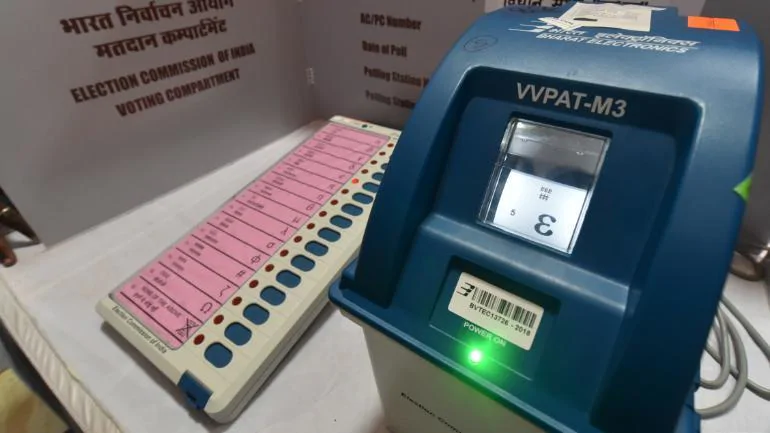
Bengaluru, May 1: Political parties in Karnataka are keenly awaiting the outcome of the bypolls to one Lok Sabha seat and two assembly segments, counting for which will get underway on Sunday.
The voting took place for Belgaum Lok Sabha and Maski and Basavakalyan assembly constituencies on April 17.
There were 30 candidates in the fray -- 10 in Belgaum, 12 in Basavakalyan and eight in Maski.
The bypolls to Belgaum and Basavakalyan took place following the demise of the sitting public representatives Suresh Angadi (BJP) and B Narayan Rao (Congress) due to COVID, while Maski seat fell vacant due to the disqualification of Congress MLA Prathapagouda Patil.
Patil was among Congress MLAs who had resigned from the Assembly in 2019, was disqualified and later joined the BJP later to contest the bypoll on the party ticket.
The contest in Belgaum and Maski is mainly between Congress and the BJP.
In Belgaum, the BJP had fielded Late Suresh Angadi's wife Mangala Suresh Angadi against Congress Karnataka working president Satish Jarkiholi, the Yamkanmardi MLA.
In Maski, BJP's Pratapagouda Patil was in a direct fight against Basanagouda Turvihal of Congress.
JD(S) contested only in Basavakalyan, fielding Syed Yasrab Ali Quadri, while the Congress nominee was Rao's wife Mallamma and Sharanu Salagar was chosen by the BJP.
The victory or defeat will not have any bearing on the stability of the BJP government which has a majority with 118 seats (excluding speaker) in the house of 224 members.
A win will, however, increase Yediyurappa's hold in the party, as well as the government and silence his critics within the party, who want him to be removed.
If the Congress wins the bypolls, it will give ammunition to target the government on the issue of 'failure' to provide good governance and check corruption.
Let the Truth be known. If you read VB and like VB, please be a VB Supporter and Help us deliver the Truth to one and all.
AI-based monitoring strengthens PPP dialysis programme in Karnataka: Health Minister
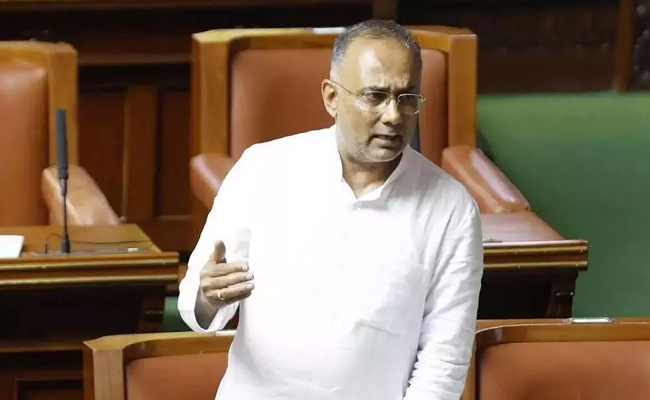
Bengaluru (PTI): The introduction of an AI-enabled monitoring system will significantly enhance patient safety and treatment quality under Karnataka's public-private partnership dialysis programme, Health Minister Dinesh Gundu Rao said on Thursday.
Launching the AI-based smart monitoring system at KC General Hospital in Bengaluru, the minister said such technological innovations bring dialysis services delivered under the PPP model on par with private healthcare standards.
"The introduction of an AI-enabled monitoring system will significantly strengthen patient safety and treatment quality under Karnataka's PPP dialysis programme," he said.
The system, introduced by dialysis care provider NephroPlus, enables real-time monitoring of critical treatment parameters such as blood pressure, fluid removal and electrolyte balance during dialysis, aiming to improve patient outcomes through continuous oversight, a statement said.
Currently deployed across seven dialysis centres, the platform tracks 28 key parameters, including patient care, safety, bed availability, staff alertness, emergency preparedness, infection control, hygiene and operational efficiency, NephroPlus said in a statement.
It allows administrators and clinical teams to take data-driven decisions through continuous performance monitoring, it added.
Officials said the technology replaces periodic audits with always-on monitoring, offering a more transparent and robust governance framework.
NephroPlus CEO Rohit Singh said continuous monitoring is critical in dialysis care and the AI-based system ensures consistent quality standards across centres while enabling safer and more reliable treatment for patients.
The launch event also featured a live demonstration of AI-powered dashboards, showcasing real-time tracking of dialysis procedures.