Karnataka forms panel to study criteria for granting Tulu official language status
Mangaluru: The Karnataka government has set up a five-member committee to study the criteria followed by Andhra Pradesh in granting official status to a second language, as part of its effort to recognise Tulu as the state’s second official language.
The committee, chaired by Gayatri K.M., Director of the Department of Kannada and Culture, will conduct a detailed study in Andhra Pradesh, as reported by The New Indian Express.
The committee also includes Vanitha, Deputy Secretary of the Law Department; Moorthy K.N., Deputy Secretary of the Department of Personnel and Administrative Reforms; Taranath Gatti Kapikad, President of the Karnataka Tulu Sahitya Academy; and Sudhakar Shetty, a member of the Yakshagana Academy.
The panel has been tasked with examining the standards and procedural framework allegedly followed by Andhra Pradesh when it recognised another regional language as an additional official language, added the report.
The Karnataka government had previously collected information on Andhra Pradesh's linguistic policies.
The committee has been directed to complete its study and submit a report within three months, focusing on how Andhra Pradesh implemented the status of a second official language, its legal recognition, and the scope of its application.
Let the Truth be known. If you read VB and like VB, please be a VB Supporter and Help us deliver the Truth to one and all.
Congress using hijab issue to pacify minority anger, alleges Karnataka LoP R Ashoka
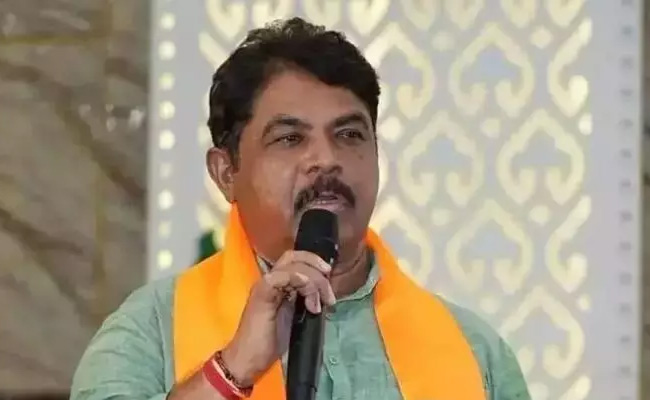
Bengaluru: Leader of Opposition in the Assembly R. Ashoka has accused the Congress government of using the hijab issue to placate what he described as discontent among minority voters after the Davanagere by-election.
In a post on X on Wednesday, Ashoka alleged that the state government, instead of addressing issues such as price rise, corruption, farmers’ distress and law and order, was attempting to retain its minority vote base by reviving the hijab issue.
Referring to the 2022 dress code introduced by the BJP government, which prohibited hijab in schools and colleges, Ashoka said the Karnataka High Court had upheld the policy and emphasised the importance of discipline in educational institutions.
He questioned the Congress government’s move to revisit the issue and asked whether setting aside the court-backed policy to benefit one community could be described as secularism.
Ashoka further alleged that while the government was willing to permit hijab, it continued to prohibit saffron shawls.
He accused the government of dividing students on religious lines rather than treating schools and colleges as spaces of equality.
Drawing a comparison with Mamata Banerjee’s government in West Bengal, Ashoka claimed that excessive appeasement politics had harmed the state and warned that the Congress in Karnataka could face a similar political response.
He said voters in Karnataka would teach the Congress a lesson for what he termed “vote-bank politics” and for compromising constitutional and judicial principles.