Karnataka government bans private, personal vehicles at Nandi Hills
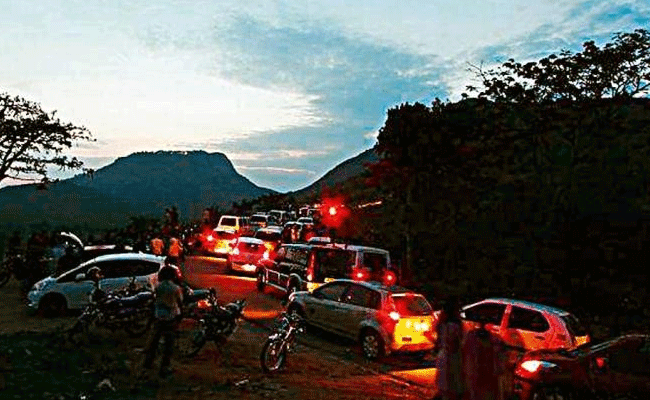
The Karnataka government has announced its decision to prohibit private and personal vehicles from entering Nandi Hills, a popular weekend destination located 60km from Bengaluru, known for its heavy traffic congestion. Instead, the government plans to introduce electric buses to transport tourists.
This initiative is part of the tourism department's strategy to transform Nandi Hills into a one-day tourism destination within the next 6-8 months. The goal is to eliminate vehicular traffic in the area, creating a safe and pleasant environment for travelers to appreciate the scenic beauty and historical significance of the location. Additionally, there will be an option for adventurous tourists to access Nandi Hills via a cable car.
Preliminary estimates suggest that the cost of a cable car ride may range from Rs 250-300 per person. Kapil Mohan, Additional Chief Secretary, stated, "We are developing Nandi Hills as a tourism destination for Bengalureans, along with the 9th-century Bhoga Nandishwara temple, featuring night lighting and a sound-and-light show. The development approach is ecologically sensitive, with a focus on heritage, archaeology, and adventure tourism."
To enhance safety in what is considered an accident-prone area, authorities had already imposed restrictions on motorcycles and four-wheelers entering the 2km stretch connecting the hills to the plains during New Year and other major holidays. To further ensure the well-being of visitors, the government plans to prohibit private vehicles from accessing Nandi Hills and provide a fleet of small electric buses for transportation from the foothills to the summit.
Let the Truth be known. If you read VB and like VB, please be a VB Supporter and Help us deliver the Truth to one and all.
Bhojshala complex registered as 'mosque' in old revenue records: Muslim side to MP HC
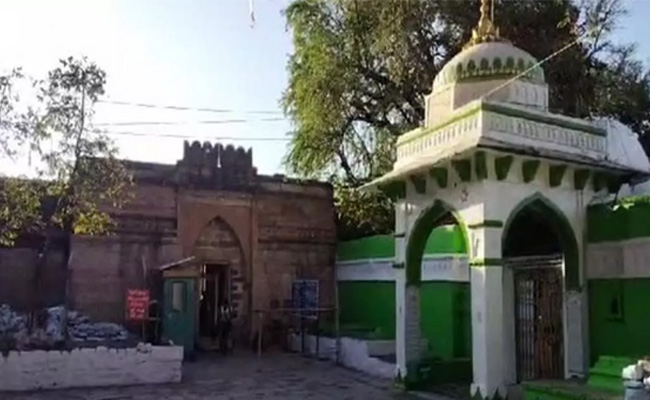
Indore (PTI): The disputed Bhojshala Temple-Kamal Maula Mosque complex has historically been registered as a 'mosque' in revenue records and available sources don't clearly mention any Saraswati temple established by then-king Raja Bhoj, the Muslim side has told the Madhya Pradesh High Court.
The Hindu community considers Bhojshala a temple dedicated to Goddess Saraswati, while the Muslim side calls the 11th-century monument Kamal Maula Mosque. The disputed complex located in Dhar district is protected by the Archaeological Survey of India (ASI).
During the hearing before the HC's Indore bench of Justices Vijay Kumar Shukla and Justice Alok Awasthi on Wednesday, Qazi Moinuddin questioned two PILs filed as intervenors in the Bhojshala case by an organisation named Hindu Front for Justice, one Kuldeep Tiwari and another individual.
Moinuddin claims to be a descendant of Sufi saint Maulana Kamaluddin Chishti and the 'Sajjadanashin' (spiritual head, guru, or successor of a Sufi shrine, khanqah, or religious site).
The PILs state that Bhojshala is actually a Saraswati temple and only Hindus should be granted the right to worship at the disputed complex.
Moinuddin's lawyer, Noor Ahmed Sheikh, claimed in the court that his client's ancestors, who are descendants of Maulana Kamaluddin Chishti, have historically held titles to the complex, and the site was also recorded as a "mosque" in government revenue records.
He contended that those associated with the management of the Kamal Maula Mosque, located within the complex, have been in "continuous and peaceful occupation" of the site for a long time.
Citing Muslim law, Sheikh argued that in the case of religious property, particularly a mosque or its related properties, officials such as the Sajjadanashin and Mutawalli (person entrusted with management, maintenance, and administration of a Waqf), and their descendants, not only have the right to intervene, but also have the right to manage and use such a structure.
Citing provisions of the Ancient Monuments Preservation Act 1904, the Muslim side's lawyer said the term "in-charge of the property" is used in this law, which makes it clear that the person or party who has been in charge of a property for a long time has rights over it.
During the hearing, Touseef Warsi, the lawyer representing the Maulana Kamaluddin Welfare Society of Dhar, claimed that Hindu parties in both PILs had made "misleading representations" regarding historical facts before the high court.
He further claimed that available historical sources do not clearly mention the existence of a Saraswati temple established by Raja Bhoj, the legendary king of the Parmar dynasty who ruled Dhar from 1010 to 1055.
The ASI, a central government agency, has adopted three different positions in the lawsuits filed regarding the Bhojshala dispute, changing its answers from time to time, and this situation raises serious questions about judicial scrutiny of the complex, Warsi submitted.
He raised objections regarding the ASI's process of scientific survey of the Bhojshala complex, carried out on the HC order in 2024, and the method of videography and requested the court to examine these objections.
The hearing in the Bhojshala case will continue on Thursday.
The HC has been regularly hearing four petitions and one writ appeal since April 6, contesting the religious nature of the monument.