Karnataka govt comes out with framework for proposed fact-check body
Bengaluru: To curb fake news and misinformation on social media and other platforms, the Karnataka Government on Thursday came out with a framework for its proposed fact-check body.
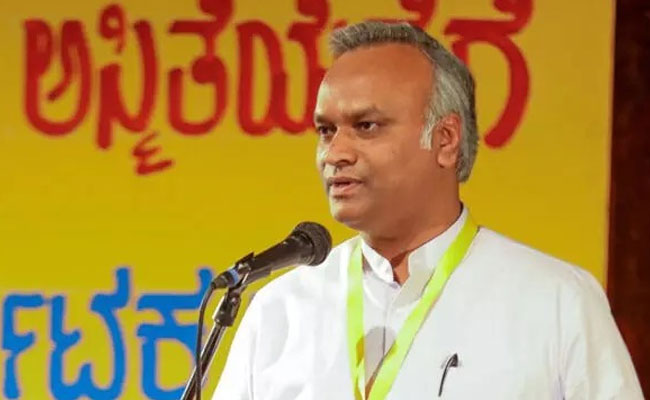
Sharing details about the structure of the proposed body at a press conference here, Karnataka IT & BT Minister Priyank Kharge said it would be a “misinformation combat cell”, which will have an oversight committee, a single point of contact to review, and nodal officers.
He said the team would be responsible for conducting fact checks and managing communications and outreach. It will also have an analytics team which would be responsible for monitoring the information ecosystem, providing early intelligence, and tracing of key information disorder nodes.
It will also have a capacity building team that will focus on awareness campaigns for the public and build applications for strengthening the ecosystem.
The announcement comes days after the Karnataka Police registered an FIR against a Hindi news channel and it’s Consulting Editor on allegations of spreading misinformation about a commercial vehicle subsidy scheme of the state government for minorities.
“Right from Chief Election Commission to the CGI to Prime Minister agree that fake news is a threat to democracy and there are various reports that are suggesting fake news misinformation, disinformation and mal-information is creating chaos in our society. Well within the framework of the constitution, we are coming up with a working model to curb the misinformation and fake news,” he told reporters here.
As per the structure proposed, the oversight committee would include key members from various backgrounds – Head of Department of Information Technology, Biotechnology and Science &Technology; Additional Director General of Police (Intelligence/CID); a representative from Department of Information and Public Relations; MD of Karnataka Innovation and Technology Society; Dean of Electrical, Electronics, and Computer Sciences at Indian Institute of Science (IISc); Additional Advocate General; Central Head of CySecK (Centre of Excellence in Cyber Security); and representatives from civil society.
Stressing that the model would be transparent, apolitical and unbiased, the minister said that hunting of misinformation, disinformation and mal-information will be conducted in Kannada, English and other regional languages.
“It will rely on primary sources wherever available and disclose all sources referred. Where facts are not clear, (it will) provide all available, unambiguous information, and provide details of methodology adopted, and (issue) transparent corrections when new facts come to light,” he said.
Kharge said If there is any malafide intent to disturb communal harmony in the society or cheating in the posting of fake news on platforms, it will be forwarded to the home department so that a complaint is filed and necessary action is taken.
Explaining the process, he said that once the content in submitted to the public, fact-checking agencies will initiate investigation, conduct initial analyses and accordingly, submit their conclusions to the state government. And if the content needs to be blocked, it will be referred to the Central government to do the needful.
“Every social media platform has its own public policy and if content needs to be pulled down, the social media platform concerned will be informed as it is in violation of the law of land,” he added.
Let the Truth be known. If you read VB and like VB, please be a VB Supporter and Help us deliver the Truth to one and all.
Mumbai Metro lines 9 and 2B open for commuters
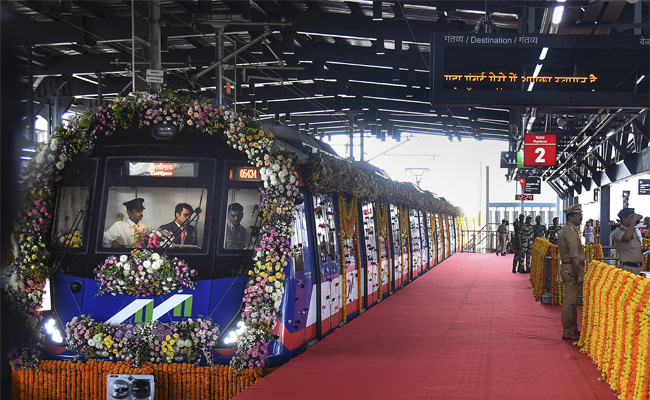
Mumbai (PTI): Commercial operations on the first phases of Mumbai Metro corridors 9 and 2B began on Wednesday morning, a day after Maharashtra Chief Minister Devendra Fadnavis inaugurated the mass-transit routes, officials said.
While the Metro 9 marks the first direct connectivity between a suburb in Mumbai and a part of Thane city in the metropolitan region, the Line 2B will provide the first metro connectivity on the Harbour Line in Mumbai.
The 5.6-km elevated Phase 1 stretch of Metro Line 9 comprises four stations -- Dahisar East, Pandurangwadi, Miragaon and Kashigaon. The 5.53-km Phase 1 of Metro Line 2B has five stations, including Deshbhakt N G Acharya Udyan (Diamond Garden), Chhatrapati Shivaji Maharaj Chowk, Deonar, Mankhurd and Maharashtra Nagar–Mandale.
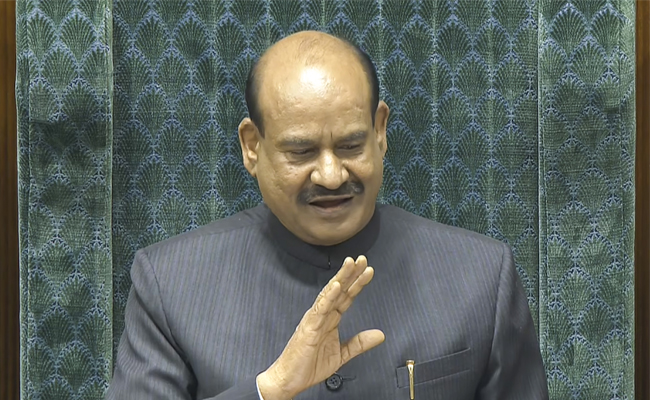
ALSO READ: Speaker Om Birla to inaugurate CPA India Region meet in Panaji on Thursday
According to the Mumbai Metropolitan Region Development Authority (MMRDA), Line 9 is expected to cut travel time between Mira-Bhayandar in Thane district and Mumbai to around 30 minutes from the current one to two hours. Built at Rs 6,607 crore, it will eventually provide seamless connectivity to south Mumbai through interlinking with other lines.
With the addition of the two new lines, Mumbai’s operational Metro network has expanded to six corridors, including Line 1 (Ghatkopar-Andheri-Versova), Line 2A (Andheri West-Dahisar East), Line 7 (Dahisar East-Andheri East) and the underground Line 3 (Colaba-Bandra Kurla Complex-SEEPZ).
As per MMRDA, the revised timetable for Line 2A and Line 7 came into effect on Wednesday, aimed at improving frequency, predictability and overall commuter experience.
It said that with the inauguration of Line 9, Metro Line 2A will now operate as a standalone corridor between Andheri West and Dahisar East, with services from 5.50 am till around 11 pm and a peak frequency of about six minutes.
The integrated Line 7-9 corridor (Gundavali to Kashigaon), spanning 19.79 km, will operate from 5.50 am to 11 pm, with a peak frequency of under six minutes and 276 services on weekdays.
Metro Line 2B (Phase 1) services commenced at 6 am and will run till around 10.30 pm at intervals of approximately nine-and-a-half minutes, operating 209 services daily, according to officials.
MMRDA said the integration of Line 7 with Line 9 enables direct connectivity from Andheri East to Mira-Bhayandar, while Lines 2A and 7 will function as separate corridors.
A seamless interchange facility at Dahisar station will allow passengers to switch between Lines 2A and 7 without exiting the “paid” (ticketed) area.