Karnataka govt excludes stilt floors from building height calculation to promote in-premise parking
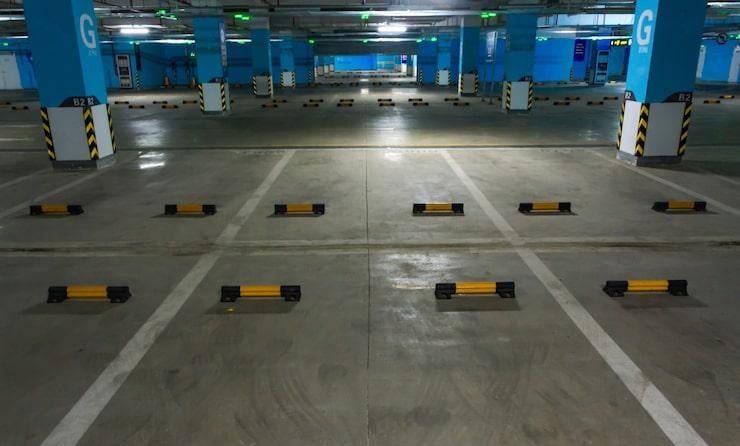
Bengaluru: In a bid to promote parking within private premises, the Karnataka government has issued a significant amendment to its building regulations, excluding stilt floors used for parking from the overall calculation of a building’s height.
As per a recent government notification, cited by Deccan Herald on Monday, the maximum permissible height for stilt floors has been capped at 3 metres, replacing an earlier proposal of 4.5 metres. The initial draft was revised following public feedback over concerns of potential misuse for commercial purposes.
Previously, the permissible stilt floor height was limited to 2.4 metres—considered insufficient by many, particularly due to frequent damage by vehicles to water and sanitary pipelines affixed to the ceilings. The new rules apply to properties falling within the jurisdiction of the Bruhat Bengaluru Mahanagara Palike (BBMP) and the Bangalore Development Authority (BDA), and are part of a broader set of revisions related to building height, stilt floor usage, and setback norms.
One of the key takeaways from the notification is that the stilt floor (measured from floor to floor) will now be excluded from the building’s height limit, allowing developers to construct stilt (ground) plus four floors, while still adhering to the existing 15-metre cap on building height.
Advocate Suhas Ananth Rajkumar flagged a possible inconsistency in the regulation. “One clause caps the building height at 15 metres, while another excludes the stilt floor from this calculation. This could be interpreted as permitting stilt plus five floors, resulting in a total height of up to 18 metres. If this isn’t the government’s intention, it must issue a clarification," DH quoted him as saying.
To prevent misuse, particularly in a city like Bengaluru where enforcement remains a challenge, the notification has prescribed compliance conditions: stilt floors must be used solely for parking. In cases of violations, civic authorities have been empowered to deny water and electricity connections to residential buildings and revoke trade licenses for establishments.
Speaking on the rationale behind the decision, Tushar Girinath, Additional Chief Secretary of the Urban Development Department, said the changes are designed to discourage parking of vehicles on roads. "We have exempted the stilt floor from total height calculation to make it attractive for the property owners to create parking space within his or her compound. The earlier proposal for a 4.5-metre stilt was dropped as many raised concerns about potential misuse,” DH quoted Girinath as saying.
Let the Truth be known. If you read VB and like VB, please be a VB Supporter and Help us deliver the Truth to one and all.
Congress using hijab issue to pacify minority anger, alleges Karnataka LoP R Ashoka

Bengaluru: Leader of Opposition in the Assembly R. Ashoka has accused the Congress government of using the hijab issue to placate what he described as discontent among minority voters after the Davanagere by-election.
In a post on X on Wednesday, Ashoka alleged that the state government, instead of addressing issues such as price rise, corruption, farmers’ distress and law and order, was attempting to retain its minority vote base by reviving the hijab issue.
Referring to the 2022 dress code introduced by the BJP government, which prohibited hijab in schools and colleges, Ashoka said the Karnataka High Court had upheld the policy and emphasised the importance of discipline in educational institutions.
He questioned the Congress government’s move to revisit the issue and asked whether setting aside the court-backed policy to benefit one community could be described as secularism.
Ashoka further alleged that while the government was willing to permit hijab, it continued to prohibit saffron shawls.
He accused the government of dividing students on religious lines rather than treating schools and colleges as spaces of equality.
Drawing a comparison with Mamata Banerjee’s government in West Bengal, Ashoka claimed that excessive appeasement politics had harmed the state and warned that the Congress in Karnataka could face a similar political response.
He said voters in Karnataka would teach the Congress a lesson for what he termed “vote-bank politics” and for compromising constitutional and judicial principles.