Karnataka govt eyes foreign companies seeking to move out of China
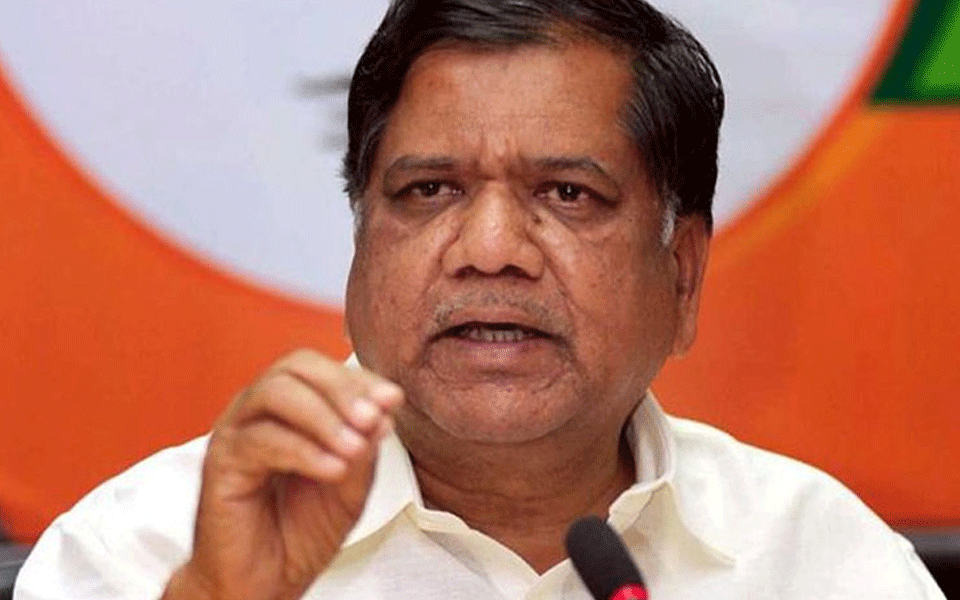
Bengaluru: The Karnataka government appears set to roll out red carpet welcome to foreign companies seeking to move out of China.
The State's Large and Medium Scale Industries Minister Jagadish Shettar said the Government plans to constitute a task force, under the Chairmanship of the Chief Secretary T M Vijay Bhaskar, to spearhead the drive to attract such investment.
A proposal to this effect has been sent to the Chief Minister B S Yediyurappa for approval, the Minister told P T I in an interview.
This panel would take feedback and suggestions from a consultative committee to be formed with prominent industrialists from the State and representatives of various countries located here, Shettar said.
In recent days, the Minister held consultations with industrialists such as co-founder and Non-Executive Chairman of Infosys Ltd, Nandan M Nilekani, Executive Chairperson of Biocon Ltd, Kiran Mazumdar-Shaw and Chairman of early-stage startup accelerator and venture fund Axilor Ventures Senapathy (Kris) Gopalakrishnan to fine-tune the States outreach push.
Shettar also held interactions with industry bodies, including Confederation of Indian Industry (CII), the Federation of Karnataka Chambers of Commerce and Industry (FKCCI), Bangalore Chamber of Industry and Commerce (BCIC) and Karnataka Small Scale Industries Association (KASSIA).
Industrialists who took part in the deliberations suggested to the government to focus on ease of doing business and improving the single window clearance system for approvals, as the Minister spelt out government's intent of further improving the investment climate to attract industries to Karnataka.
To boost the industry sentiment in the State, they also stressed the need on easing land acquisition regulations, and leveraging the knowledge base of Bengaluru to promote technology-based manufacturing.
"Given the interest shown by some companies in moving their manufacturing bases out of China, the industry leaders recommended that the State government identify a target list of 100 firms to reach out to for attracting to the State, and work out a strategy to bring them to Karnataka," an Industry department official said.
The industry leaders assured cooperation from the private sector in reaching out to and facilitating interactions with CEOs of these companies.
Shettar said restrictions on acquisition of agriculture land for starting industries have now been relaxed with the passage of an amendment to the land reforms act in the recent Legislature session.
This would facilitate immediate land allotment to industries, he added. The Minister has also submitted a proposal to the Chief Minister on relaxing labour laws.
Secretary General of industry body ASSOCHAM, Deepak Sood, told P T I recently that there is a broader consensus that the global manufacturing supply chain would be more spread than concentrated in major economies like China.
"If India comes out of the present crisis with minimum of impact, we can be the destination of choice for the global manufacturing giants in different sectors like electronics, computer hardware, pharmaceuticals, including medical devices, automobile, including components and other engineering products," Sood had said.
Gopalakrishnan, also co-founder of Infosys and former CII President, said India has to target companies which have operations in China, reach out to them, understand what their needs are and hold discussions with them.
"We have to make sure that their requirements are addressed, be it with regard to land, office space, faster approvals, and some concessions on local taxes. It depends on the businesses that the companies are in, and if we are able to respond to those requests, I think we will be able to attract them", he told P T I.
"All states will compete for this business (foreign investment)," Gopalakrishnan added.
Let the Truth be known. If you read VB and like VB, please be a VB Supporter and Help us deliver the Truth to one and all.
Biker injured, leopard dies in road accident near forest area in Shivamogga
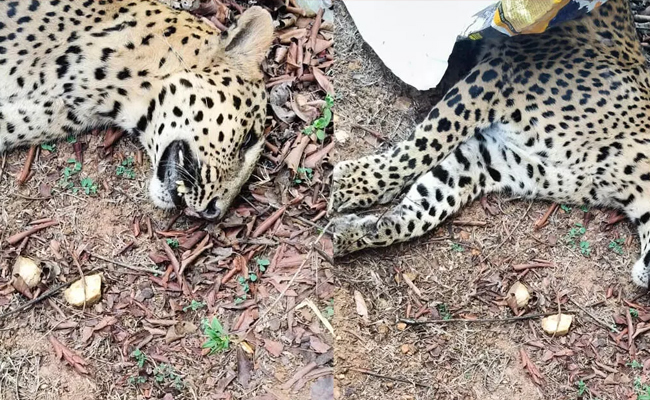
Shivamogga: A leopard was killed after being hit by a motorcycle near Mandagadde in Thirthahalli taluk of Shivamogga district.
According to reports, the biker was travelling from Shivamogga towards Thirthahalli when the leopard suddenly came onto the road from a nearby forest area near Mandagadde. The rider is said to have lost control of the bike and crashed into the animal.
The leopard suffered severe injuries in the impact and died on the spot. The biker also fell onto the road along with the motorcycle and sustained serious injuries. He was shifted to a hospital in Shivamogga for further treatment.
After receiving information about the incident, forest department officials, including Gajanur RFO Vinay Kumar, visited the spot and conducted an inspection.