Karnataka govt filed affidavit in SC to increase reservation cap: state HM Basavaraj Bommai
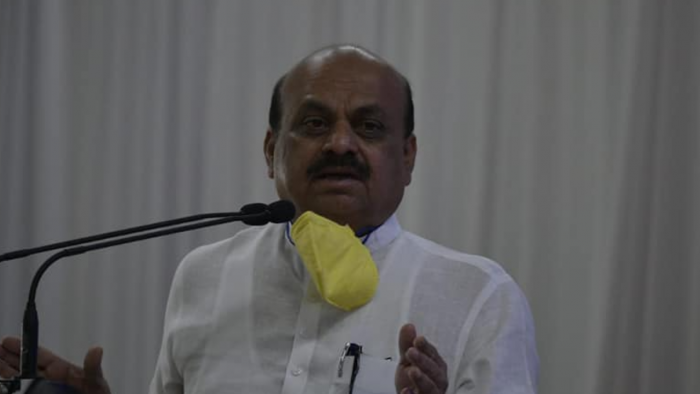
Harihar, Apr 4: With many communities demanding reservation under various categories, the Karnataka government has filed an affidavit to increase the reservation cap in the state, State Home Minister Basavaraj Bommai said on Sunday.
"The state government has filed an affidavit in the Supreme Court to increase the reservation to more than 50 per cent to protect the interests of the backward classes," Bommai said at a function at the Sri Kaginele Mahasamsthana Kanaka Guru Peeth, here.
According to him, there was a consensus in the Cabinet meeting in this regard and accordingly the affidavit was filed in the Supreme Court.
"We are expecting a good decision from the Supreme Court," the Home Minister said.
The minister said the state government was committed to increasing the reservation.
Since various communities have applied for reservation, including the Halumath community demanding ST tag, reservation limit has to be increased above 50 per cent.
Bommai also underlined that the Kuruba community wanted themselves to be categorised as Scheduled Tribe.
In this regard, the government would undertake a study of genealogy. He, however, pointed out that increasing reservation was a challenge because it has to be legally tenable, it should be practical and within the framework of the constitution.
To deal with the new challenge, a panel of experts, headed by a retired judge, has been formed so that no one should question this decision in future, the minister said.
Speaking about the BJP government in Karnataka, Bommai said the government has been looking after all the communities and religions equally without any bias.
He added that the Chief Minister has been extending every support to all the communities in the state.
Let the Truth be known. If you read VB and like VB, please be a VB Supporter and Help us deliver the Truth to one and all.
Inappropriate for MLAs seeking free IPL tickets, says D.K. Suresh
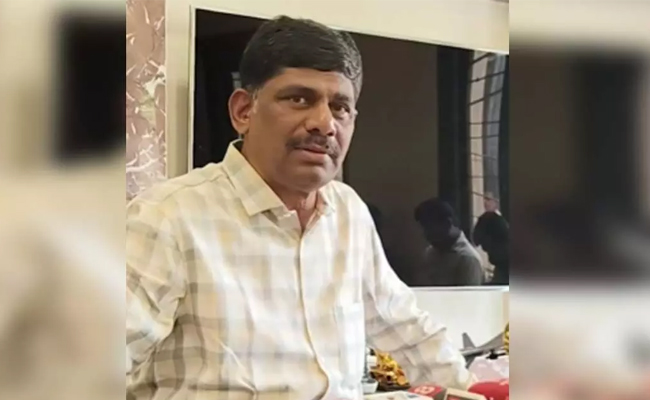
Bengaluru: Bengaluru Milk Union Ltd President D.K. Suresh on Monday said it is inappropriate for MLAs to seek free IPL tickets, adding that those interested in watching matches should pay for them personally.
Speaking to reporters near his residence in Sadashivanagar, he said, “IPL is a commercial tournament and does not represent the country. It is not right for public representatives to focus too much on such matters.”
Referring to the recent controversy during the RCB celebrations, he said, “let us find out who benefited the most from the statements made during the incident.” He also pointed out that BJP MLAs had received IPL tickets as well.
Responding to discussions about relocating the Chinnaswamy Stadium, Suresh said the government has already approved the construction of a new stadium at a location he had proposed.
“I had suggested building a stadium in Surya City and submitted a proposal for it. Bengaluru needs four stadiums in four directions to cater to its growing population and encourage youth participation in sports,” he said.
He noted that apart from Kanteerava Stadium, KSCA, and the Football Stadium, there are limited facilities in the city.
“When I was a Lok Sabha member, I had proposed allocating 100 acres in my constituency at Surya City. The land was later earmarked and the plan approved,” he added.
Suresh said he has discussed the project with Minister Zameer Ahmed Khan, Rajiv Gandhi Housing Corporation Chairman Shivalingegowda, and Anekal MLA Shivanna.
“The Cabinet has now approved the project, and a stadium will be developed on around 50–60 acres,” he said.
He further added that he has requested the Deputy Chief Minister to build another stadium at Shivarama Karanth Layout through the BDA, where 40 acres have been allocated. Plans are also being discussed to develop a well-equipped stadium in Bidadi.
Commending state government's recent bilingual policy move, Suresh said forcing children to learn three languages could affect their comprehension.
“It is a good decision to make two languages compulsory. Learning a third language should be left to the choice of students and parents,” he said.
Responding to criticism from BJP leaders, he said their tendency is to oppose every decision of the government.
“To please their central leadership, they take a pro-Hindi stance. Instead, they should advocate for the adoption of Kannada in all states,” he said.
When asked about the earlier three-language policy under Congress, he said, “the situation is different now. Today, the focus should be on quality learning. Kannada should remain the primary language, while students and parents can choose an additional language.”